
Getting started with residential real estate investing in the United States can feel overwhelming, especially when the market shifts and economic conditions create new challenges. You want to make confident investment decisions but face questions about market stability, financing options, and how to pick neighborhoods with real growth potential. It helps to know that trends like home prices stabilizing and predictable spending on home improvements are shaping a different investment landscape for 2026.
This guide brings together the most up-to-date strategies so you can avoid costly mistakes and position yourself for success. You will discover specific insights on market trends, clear goal setting, financing comparisons, and team building so you can invest with clarity and minimize risk.
If you are looking to turn your first real estate purchase into a smart long-term investment, the following steps will show you exactly how to get started and make informed choices, even when market conditions change.
Table of Contents
- Understand Current Market Trends in 2026
- Set Clear Investment Goals and Budget
- Research Profitable Neighborhoods and Markets
- Compare Financing Options for First-Time Investors
- Build a Reliable Team of Local Experts
- Evaluate Property Value and Potential ROI
- Leverage Community Resources and Mentorship
Quick Summary
| Takeaway | Explanation |
|---|---|
| 1. Track Local Market Trends | Regularly monitor housing demand, interest rates, and economic indicators for informed investing. |
| 2. Define Clear Investment Goals | Establish specific financial targets, timelines, and risk assessments to guide your investments. |
| 3. Research Neighborhood Potential | Identify emerging areas featuring population growth and job stability for investment opportunities. |
| 4. Evaluate Financing Options | Compare various mortgage products to find the most cost-effective financing for your needs. |
| 5. Build a Team of Local Experts | Assemble a network of professionals to navigate the complexities of the real estate market. |
1. Understand Current Market Trends in 2026
Navigating the residential real estate market in 2026 requires a strategic approach grounded in current economic realities. Investors need to recognize that the housing landscape is experiencing significant shifts driven by interest rates, demographic changes, and economic indicators.
The residential real estate market is showing signs of stabilization after years of volatility. According to the S&P CoreLogic Case-Shiller Home Price Index, home prices are leveling out, providing more predictable investment opportunities for newcomers. This trend suggests a more balanced market where careful analysis can yield solid returns.
Key market trends to watch include modest growth in single-family home sales, changes in home improvement spending, and regional variations in housing demand. The Harvard Joint Center for Housing Studies predicts home improvement spending will reach $522 billion by the end of 2026, indicating continued investment in residential properties despite economic challenges.
To succeed in 2026, investors should focus on:
- Tracking local market variations
- Understanding regional economic indicators
- Monitoring interest rate fluctuations
- Analyzing neighborhood development potential
- Assessing long-term growth prospects
Research is your most powerful tool. Dive deep into local market data, attend real estate investment seminars, and connect with local real estate professionals who understand current market dynamics.
Pro tip: Create a monthly market trend tracking spreadsheet to monitor key indicators like home prices, rental rates, and local economic developments in your target investment areas.
2. Set Clear Investment Goals and Budget
Successful real estate investing starts with crystal clear financial planning and goal setting. Your investment strategy must align with your personal financial landscape, risk tolerance, and long term objectives.
According to Columbia Business School’s Real Estate Investing Strategies, defining precise investment goals is fundamental to building a robust residential real estate portfolio. This means moving beyond vague aspirations to create measurable, specific targets that guide your investment decisions.
Most beginner investors should focus on establishing three core objectives:
Financial Goals
- Monthly passive income target
- Total annual return percentage
- Capital appreciation expectations
Investment Horizon
- Short term (1-3 years)
- Medium term (3-5 years)
- Long term (5+ years)
Risk Assessment
- Personal risk tolerance level
- Available liquid capital
- Emergency fund requirements
Create a comprehensive budget that accounts for purchase costs, renovation expenses, potential vacancy periods, and ongoing maintenance. The Harvard Extension School emphasizes the importance of building financial models that help investors stay within their financial means.
Pro tip: Develop a detailed spreadsheet tracking all potential investment expenses, including hidden costs like property taxes, insurance, and unexpected repairs, to avoid financial overextension.
3. Research Profitable Neighborhoods and Markets
Successful real estate investing hinges on identifying neighborhoods with strong growth potential and sustainable economic fundamentals. Your ability to conduct thorough market research will directly impact your investment returns.
The Milken Institute’s Best-Performing Cities report provides critical insights into metropolitan areas with robust economic vitality. Smart investors look beyond simple property prices to understand deeper market dynamics.
Key Research Factors
- Population growth trends
- Job market stability
- Local economic development
- Infrastructure investments
- Rental demand metrics
- Future development plans
Utilize multiple research methods to gain comprehensive market understanding:
Research Techniques
- Review local economic development reports
- Analyze census population data
- Study employment sector diversity
- Examine local government development plans
- Connect with local real estate professionals
The Texas Real Estate Research Center offers valuable quarterly data helping investors identify emerging market opportunities. Focus on regions showing consistent population growth and economic resilience.
Pro tip: Create a systematic neighborhood scoring matrix that objectively ranks potential investment locations based on predetermined economic and demographic criteria.
4. Compare Financing Options for First-Time Investors
Choosing the right financing strategy can make or break your real estate investment journey. First-time investors must understand the nuanced landscape of mortgage products and lending approaches.
According to Columbia Business School’s real estate program, investors should carefully evaluate multiple financing mechanisms to optimize their investment potential.
Financing Options to Consider
- Conventional mortgages
- FHA loans
- Portfolio loans
- Private money lending
- Hard money loans
- Owner financing
- Home equity lines of credit
Key Evaluation Criteria
- Interest rates
- Down payment requirements
- Loan term length
- Qualification standards
- Prepayment penalties
- Closing costs
- Flexibility for investors
The University of Michigan Economic Outlook highlights how broader economic conditions impact financing availability. Monetary policies and labor market trends directly influence mortgage rates and lending standards.
Thoroughly compare each financing option by creating a comprehensive spreadsheet tracking total costs, qualification requirements, and potential investment returns.
Pro tip: Request loan estimates from at least three different lenders and create a side-by-side comparison spreadsheet to objectively analyze total financing costs and terms.
5. Build a Reliable Team of Local Experts
Successful real estate investing is a team sport requiring strategic partnerships with local professionals who understand market nuances. Your network can make the difference between a good investment and a great one.
Columbia Business School’s real estate program emphasizes assembling a trustworthy team of experts who can navigate complex market conditions and uncover valuable opportunities.
Core Team Members to Recruit
- Local real estate agents
- Property managers
- Home inspectors
- Real estate attorneys
- Certified public accountants
- Reliable contractors
- Mortgage brokers
Recruitment Strategies
- Attend local real estate investor meetups
- Join professional networking groups
- Request referrals from experienced investors
- Interview potential team members
- Check professional credentials and references
- Evaluate communication skills
- Assess local market knowledge
Harvard’s housing study highlights how local expertise mitigates investment risks by providing critical insights into regional market conditions and opportunities.
Develop relationships gradually. Start with small projects to test compatibility and professional competence before committing to long term partnerships.
Pro tip: Create a standardized interview questionnaire for potential team members to ensure consistent evaluation of their local market expertise and professional capabilities.
6. Evaluate Property Value and Potential ROI
Understanding property valuation is the cornerstone of smart real estate investing. Your ability to accurately assess a property’s true value determines your potential for financial success.
Columbia Business School’s Real Estate Investing Strategies teaches crucial financial modeling techniques that help investors calculate meaningful investment metrics.
Key Valuation Metrics to Analyze
- Capitalization rate
- Net operating income
- Projected cash flows
- Appreciation potential
- Comparative market analysis
- Rental income potential
- Repair and renovation costs
Comprehensive Evaluation Approach
- Gather property history
- Review neighborhood trends
- Analyze recent comparable sales
- Estimate repair and upgrade costs
- Calculate potential rental income
- Project long term appreciation
- Consider local economic indicators
Investors can leverage the S&P CoreLogic Case-Shiller Home Price Index to understand historical property value trends and forecast potential returns.
Maintain a systematic approach by creating a detailed spreadsheet that tracks all financial considerations and potential income streams.
Pro tip: Develop a standardized property evaluation template with weighted scoring for different investment criteria to ensure consistent and objective property assessments.
7. Leverage Community Resources and Mentorship
Successful real estate investing is rarely a solo journey. Strategic networking and mentorship can significantly accelerate your learning and investment success.
Harvard Extension recommends seeking guidance from experienced investors to reduce learning curves and enhance investment outcomes.
Community Resources to Explore
- Local real estate investment groups
- Online investor forums
- Networking events
- Professional workshops
- Real estate investment seminars
- University extension programs
- Social media investor communities
Mentorship Engagement Strategies
- Attend local real estate meetups
- Join professional investment associations
- Follow experienced investors online
- Request informational interviews
- Offer value in professional relationships
- Shadow successful local investors
- Participate in community learning events
The Milken Institute highlights how local government resources provide critical insights for navigating regional real estate markets.
Remember that meaningful connections require genuine interest, humility, and a willingness to learn from others experiences.
Pro tip: Create a structured mentorship tracking document to document key learnings, insights, and action items from each investor interaction.
Below is a comprehensive table summarizing the steps and strategies for successful residential real estate investing discussed in the article.
| Primary Focus | Details and Key Actions | Outcomes and Benefits |
|---|---|---|
| Understanding Current Market Trends | Research and monitor trends such as interest rates and demographic changes. Stay informed on market conditions using data tools. | Make informed decisions and identify profitable opportunities. |
| Setting Clear Investment Goals | Define financial, risk, and time horizon objectives. Develop a budget addressing all investment aspects. | Align actions with long-term objectives and realistic expectations. |
| Identifying Profitable Neighborhoods | Study metropolitan and local areas for economic growth, infrastructure projects, and population stability. | Maximize investment potential with high-growth locations. |
| Exploring Financing Options | Compare mortgage and loan products among financial institutions based on costs and terms. | Optimize financing structures and minimize expenses and risks. |
| Building a Team of Local Professionals | Collaborate with agents, attorneys, accountants, and contractors to leverage their expertise and local knowledge. | Ensure comprehensive support for all stages of property management. |
| Evaluating Property Value | Analyze property details, market comparables, and investment metrics such as Cap Rate and ROI. | Accurately assess investment’s profitability and mitigate risks. |
| Leveraging Community Resources | Engage with investment groups, forums, and mentorships to gain insights and guidance. | Enhance expertise and expand professional networks. |
Unlock Your Residential Investment Success With Expert Support
Navigating the complex world of residential real estate investing in 2026 can feel overwhelming, especially when you need to track market trends, set clear goals, and build a reliable team. This article highlights the crucial challenges beginners face such as understanding financing options, evaluating property value, and connecting with local experts. If you are ready to overcome these pain points and turn your investment goals into reality, Bold Street AI offers the tools and guidance you need.
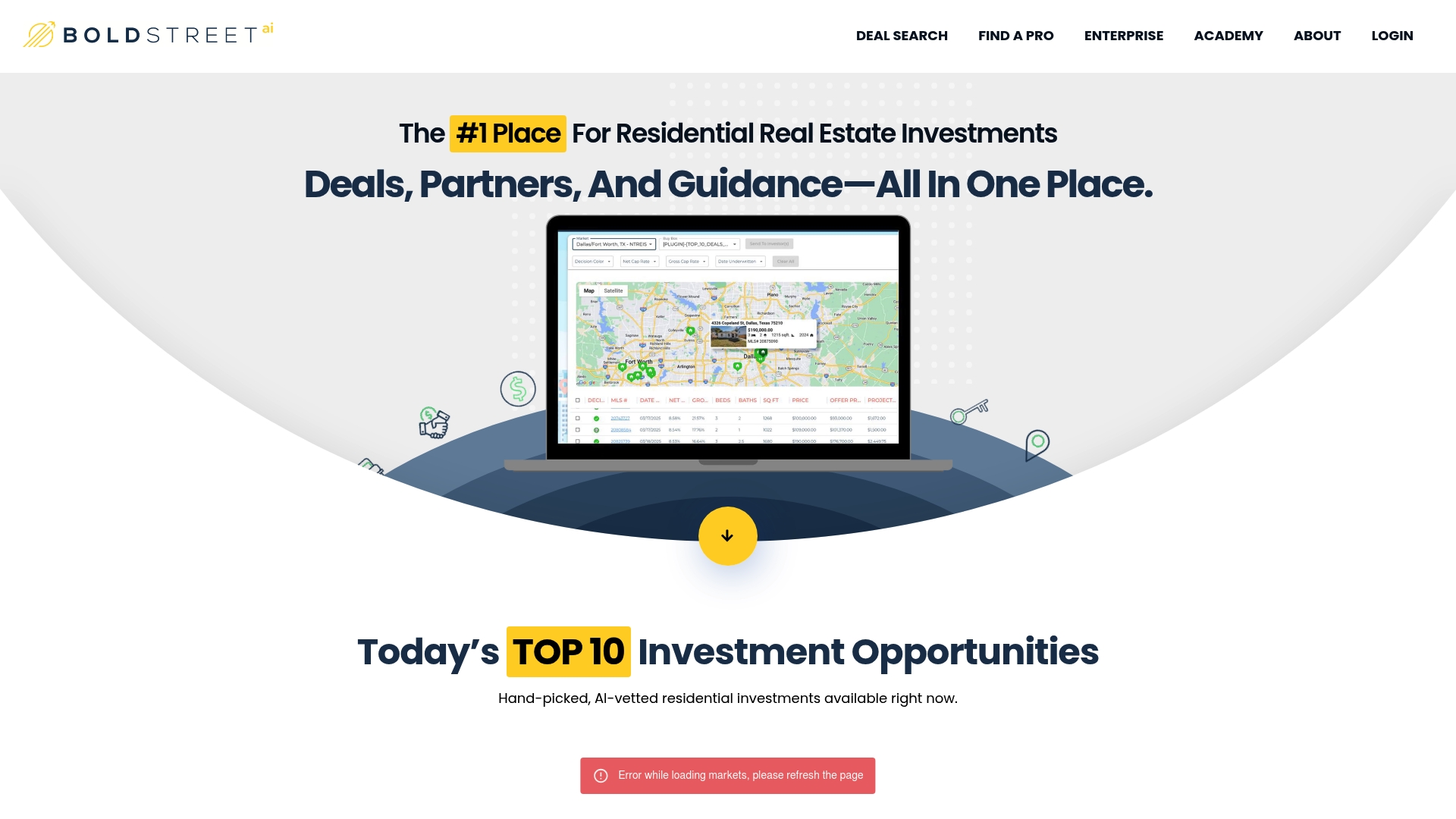
Discover curated investment opportunities and connect directly with trusted agents, lenders, and property managers through our platform. Whether you want to compare financing methods or access educational resources tailored for beginners at Bold Academy, everything is designed to simplify your journey and help you build your portfolio confidently. Act now to reduce risks and accelerate your success with the support of a vibrant investor community at Bold Street AI. Start turning your residential investing ambitions into real achievements today by visiting Bold Street AI and exploring how we can empower your next move.
Frequently Asked Questions
What are the key market trends to watch for in residential investing in 2026?
Understanding market trends like interest rates, housing demand, and demographic changes is crucial for investors. Monitor local market data regularly and attend real estate investment seminars to stay updated on these shifts.
How can I set clear investment goals as a beginner in residential real estate?
Establish specific and measurable goals such as monthly passive income targets and expected capital appreciation. Create a detailed spreadsheet to track these objectives and reassess them quarterly to ensure you stay on track.
What financing options should first-time residential investors consider?
Explore different financing strategies like conventional mortgages, FHA loans, and private money lending. Compare at least three options to determine the best fit for your financial situation and investment goals.
How can I evaluate the potential return on investment (ROI) for a property?
Assess key metrics such as capital appreciation, net operating income, and comparables in the area. Conduct a thorough comparative market analysis and create an evaluation template to consistently analyze property value across potential investments.
What resources can help me build a reliable team of local real estate experts?
Attend local real estate meetups and networking events to connect with professionals like agents, property managers, and inspectors. Evaluate their credentials and market knowledge by creating a standardized interview questionnaire.
How can mentorship assist me as a beginner in residential investing?
Engaging with a mentor can provide valuable insights and reduce your learning curve in real estate investing. Seek out experienced investors at networking events or online forums, and be proactive in asking for guidance on your investment strategies.
Recommended
- Why Invest in Residential Real Estate 2026 – Smart Wealth Strategies | Bold Street AI
- 7 Key Examples of Residential Investment Strategies | Bold Street AI
- Residential Real Estate Investing: Building Wealth in the U.S. | Bold Street AI
- 7 Types of Real Estate Investments for New Investors | Bold Street AI
- 7 Best Senior Relocation Best Practices for Loved Ones