
Nearly seventy percent of new American real estate investors report struggling to identify the right partners for their residential projects. As competition grows and market conditions shift across the United States, building strategic partnerships is no longer optional. If you want clear steps for defining your investment goals, connecting with trustworthy partners, and structuring successful agreements, this guide delivers practical insights tailored for American investors right at the starting line.
Table of Contents
- Step 1: Define Your Investment Goals And Target Partners
- Step 2: Research Potential Investors And Vet Opportunities
- Step 3: Craft A Compelling Partnership Pitch
- Step 4: Engage Investors And Initiate Discussions
- Step 5: Formalize Agreements And Verify Alignment
Quick Summary
| Key Point | Explanation |
|---|---|
| 1. Define Your Investment Goals | Establish clear objectives to create a strategic roadmap for real estate investments. Identify what you hope to achieve, ranging from income to property appreciation. |
| 2. Vet Potential Partners Thoroughly | Assess investor backgrounds to ensure alignment with your goals and to establish credibility. Look for proven track records and strong financial capabilities. |
| 3. Create a Compelling Pitch | Develop a concise presentation that highlights your unique value proposition. Tailor your pitch to address investors’ concerns and include market analysis and potential returns. |
| 4. Foster Authentic Relationships | Engage investors through meaningful dialogue and transparent communication. Show genuine interest in their investment preferences to build trust and collaboration. |
| 5. Formalize Agreements Clearly | Document every aspect of your partnership in a detailed legal agreement. Include financial contributions, responsibilities, and dispute resolution processes to protect all parties involved. |
Step 1: Define your investment goals and target partners
Defining clear investment goals and identifying potential partners are foundational steps for building successful real estate partnerships. This process transforms your investment vision from a vague aspiration into a strategic roadmap with actionable milestones.
Start by conducting a comprehensive assessment of your investment objectives. Real estate investment analysis requires understanding property types, market demands, and your personal financial targets. Are you seeking steady rental income? Long term appreciation? Fix and flip opportunities? Each goal demands a different partnership strategy. Create a detailed investment profile that outlines your preferred property types (single family homes, small multifamily units), target geographic markets, investment budget, expected return percentages, and risk tolerance.
Next, research potential investment partners who align with your specific goals. Look for individuals or groups with complementary skills financial resources and investment philosophies. Potential partners might include private investors, real estate investment groups, local contractors with capital, or high net worth individuals interested in passive real estate investments. Network through local real estate investment associations, professional meetups, and online platforms to connect with potential collaborators who share your investment vision.
Pro tip: Develop a one page investment partnership prospectus that clearly communicates your goals, strategy, and partnership expectations to attract serious potential collaborators.
Here’s a comparison of typical real estate investment partnership types and their unique advantages:
| Partnership Type | Key Features | Typical Investor Profile | Main Advantages |
|---|---|---|---|
| Joint Venture | Shared risk and responsibility | Experienced investors | Flexibility, resource pooling |
| Real Estate Syndicate | Centralized management | Passive high net worth individuals | Access to larger projects |
| Limited Partnership | Limited liability for investors | Private capital providers | Reduced risk exposure |
| Real Estate Club | Informal collaboration | Local investor group | Knowledge sharing, networking |
Step 2: Research potential investors and vet opportunities
Researching and vetting potential real estate investment partners requires a strategic approach that goes beyond surface level interactions. Your goal is to build a robust network of investors who align with your investment philosophy and financial objectives.
Begin by analyzing investor backgrounds comprehensively to understand their investment motivations, risk tolerance, and track record. Look for potential partners with demonstrated experience in residential real estate investing who bring complementary skills to your partnership. This means evaluating their financial capabilities, previous investment performance, professional network, and alignment with your specific investment goals. Request detailed financial statements, review past investment portfolios, and conduct thorough background checks to ensure credibility and compatibility.

When vetting opportunities, focus on understanding each potential investor’s specific investment criteria. Some investors might prioritize properties in specific geographic regions, while others may have strict return on investment requirements. Develop a systematic approach to presenting investment opportunities that highlights key metrics such as projected cash flow, appreciation potential, renovation costs, and risk mitigation strategies. Create comprehensive investment summaries that clearly demonstrate the value proposition and potential returns, making it easier for potential partners to evaluate the opportunity quickly and objectively.
Pro tip: Create a standardized investor information packet that includes your investment strategy, track record, financial projections, and partnership terms to streamline the vetting process and demonstrate professionalism.
Below is a summary of essential features for vetting potential real estate partners:
| Evaluation Criteria | Why It Matters | What to Look For |
|---|---|---|
| Track Record | Assesses credibility | Proven investment success |
| Financial Capability | Ensures project funding | Strong balance sheet, liquidity |
| Alignment of Goals | Promotes smooth partnership | Similar investment objectives |
| Professional Network | Adds resources and value | Industry connections, influence |
Step 3: Craft a compelling partnership pitch
Crafting a compelling partnership pitch is your opportunity to transform your real estate investment vision into an attractive opportunity that captures potential investors’ attention and imagination. Your pitch needs to be strategic powerful and tailored to your audience.
Develop a compelling pitch framework that communicates your unique value proposition concisely and effectively. Structure your presentation to address key investor concerns by showcasing your investment strategy market understanding and potential returns. Begin with a clear introduction that explains who you are and what specific real estate investment opportunity you are presenting. Highlight your expertise background and the distinctive elements that set your project apart from other potential investments. Include concrete data points such as projected returns market analysis and risk mitigation strategies that demonstrate your thorough preparation and professional approach.
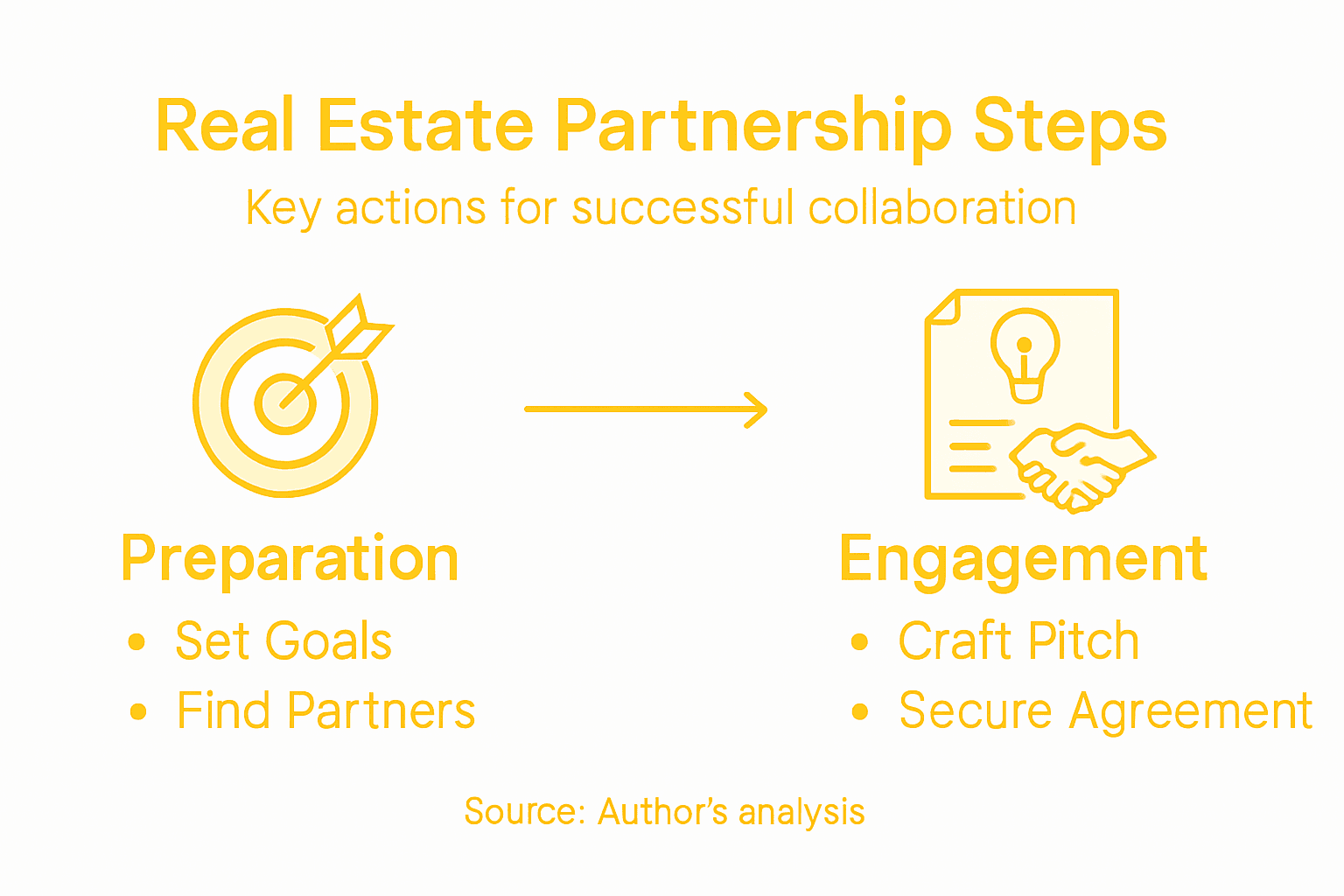
Practice delivering your pitch with precision and confidence. Anticipate potential questions investors might ask and prepare clear concise responses. Tailor your communication style to each potential partner understanding that different investors have varying communication preferences and investment priorities. Some may want detailed financial models while others prefer a high level overview of the opportunity. Develop multiple versions of your pitch that can be quickly adapted to different audiences ensuring you can effectively communicate your value proposition in 60 seconds or during an extended presentation.
Pro tip: Record yourself delivering the pitch and review it critically to refine your delivery tone and content ensuring you come across as professional confident and compelling.
Step 4: Engage investors and initiate discussions
Engaging potential investors requires a strategic approach that transforms initial connections into meaningful partnership opportunities. Your goal is to build genuine relationships that demonstrate your professionalism credibility and investment potential.
Develop transparent communication strategies that showcase your knowledge and build investor confidence. Start by scheduling initial conversations where you can dive deep into your investment vision. Prepare comprehensive materials that illustrate your understanding of market dynamics risk management and potential returns. During these discussions focus on creating a collaborative dialogue rather than delivering a one sided presentation. Ask thoughtful questions about their investment preferences past experiences and specific goals to demonstrate your genuine interest in understanding their perspective.
Adopt a multifaceted approach to investor engagement by leveraging various communication channels. Network through professional real estate associations industry conferences and targeted online platforms. Use these interactions to share your expertise showcase successful past projects and demonstrate your unique approach to real estate investing. Be prepared to provide detailed financial models market analysis and clear explanations of your investment strategies. Remember that trust is built through consistent transparent communication that shows both your professional competence and your ability to understand and address potential investor concerns.
Pro tip: Create a personalized follow up system that includes detailed notes from each investor interaction and a strategic timeline for maintaining ongoing communication.
Step 5: Formalize agreements and verify alignment
Formalizing investment partnerships requires meticulous attention to detail and strategic documentation that protects both parties interests. Your objective is to create a transparent comprehensive agreement that establishes clear expectations and operational guidelines.
Develop comprehensive partnership documentation that outlines every critical aspect of your real estate investment collaboration. Draft a detailed legal agreement that specifies each partner’s financial contributions operational responsibilities decision-making processes and profit distribution mechanisms. Include specific clauses addressing potential scenarios such as property sale timelines investment exit strategies dispute resolution and individual role definitions. Work with a real estate attorney specializing in investment partnerships to ensure your document covers all necessary legal protections and accurately reflects both parties intentions.
Ensure ongoing alignment by establishing clear communication protocols and periodic review mechanisms. Create structured check in processes that allow both parties to discuss progress evaluate performance and realign strategies as market conditions evolve. Include specific metrics for measuring investment success such as return on investment timelines and property performance benchmarks. Develop a transparent mechanism for addressing potential conflicts that includes escalation procedures and neutral mediation options. Remember that a well structured agreement is not about limiting flexibility but creating a framework that supports mutual trust and long term collaboration.
Pro tip: Schedule a comprehensive annual partnership review where both parties openly discuss performance challenges and future investment strategies to maintain ongoing alignment and trust.
Unlock Successful Real Estate Partnerships with Bold Street AI
Building strong investor partnerships requires clear goals, trusted connections, and transparent communication. This article highlights critical challenges like vetting investors, crafting compelling pitches, and formalizing agreements. If you want to overcome these obstacles and confidently grow your real estate portfolio Bold Street AI is your perfect ally. Our platform simplifies the entire investment journey by connecting you to investor-friendly agents lenders and property managers while providing educational tools that sharpen your pitch and partnership strategy.
Experience the ease of finding curated opportunities and like-minded collaborators through a single trusted hub. Whether you are just starting or looking to scale up your investments Bold Street AI offers guidance tailored to your unique goals. Take charge of your investment future today by exploring how our services match your needs and empower your decisions online at Bold Street AI.
Ready to transform your real estate partnerships into lasting success Discover how Bold Street AI can support you.
Don’t wait to build the investor network you deserve. Visit us now to connect learn and grow your residential real estate investments with confidence.
Frequently Asked Questions
What are the first steps to build investor partnerships in real estate?
Begin by defining your investment goals and identifying potential partners who align with those objectives. Conduct a thorough assessment of your investment profile, including desired property types and financial targets, to create a clear roadmap for attracting suitable collaborators.
How can I effectively research potential investors for real estate partnerships?
Research potential investors by analyzing their backgrounds and investment motivations. Look for individuals or groups with complementary skills, and review their previous investment performance to ensure they align with your financial goals and risk tolerance.
What should I include in my partnership pitch to attract investors?
Your partnership pitch should clearly communicate your investment strategy, highlight market opportunities, and showcase projected returns. Include concrete data points and a compelling value proposition, making it easy for investors to understand the benefits of partnering with you.
How do I build trust and engage investors after the initial pitch?
Engage investors through transparent communication and by initiating meaningful discussions about your investment vision. Leverage multiple communication channels, share your expertise, and be prepared to answer questions to build a strong rapport and demonstrate your professionalism.
What legal documents are necessary to formalize investor partnerships?
To formalize partnerships, develop a comprehensive legal agreement that outlines financial contributions, operational roles, and profit-sharing mechanisms. It’s crucial to work with a qualified attorney to ensure all aspects are covered, including potential scenarios like dispute resolution and investment exit strategies.
How can I maintain alignment and communication with my investment partners?
Establish clear communication protocols and schedule regular check-in meetings to discuss progress and evaluate performance. This ongoing dialogue will help address challenges promptly and ensure that both parties remain aligned with their investment goals.
Recommended
- Navigating the Terrain: Common Challenges for Real Estate Agents Working with Residential Real Estate Investors – Bold Street AI
- 2024 is the Perfect Time to Become a Real Estate Investor – Bold Street AI
- Discover The Secret Investment Playbook of Residential Real Estate – Bold Street AI
- Webinar with Mastermind Investor Agent Team Lead – Keena Bass – Bold Street AI