
Over four in ten American first-time real estate investors report feeling uncertain about where to begin. For new buyers, the process of purchasing a residential property can seem complicated, especially when faced with unfamiliar terms and financing choices. With trustworthy guidance on setting clear goals, evaluating funding options, and assembling a reliable support team, you can start your American real estate journey with confidence and clarity.
Table of Contents
- Step 1: Define Investment Goals And Financing Options
- Step 2: Research Markets And Identify Opportunities
- Step 3: Connect With Professionals And Build Your Team
- Step 4: Evaluate Properties And Make Informed Offers
- Step 5: Complete The Purchase And Set Up Management
Quick Summary
| Key Message | Explanation |
|---|---|
| 1. Define Clear Investment Goals | Establish your objectives such as rental income or property appreciation to guide all future decisions. |
| 2. Research Financing Options | Assess various funding methods, like traditional mortgages or government-backed loans, to determine the best fit for your goals. |
| 3. Build a Strong Professional Team | Include essential experts like real estate agents, attorneys, and inspectors to support successful transactions and investments. |
| 4. Evaluate Properties Systematically | Analyze financial metrics and property conditions to make informed offers that align with your investment strategy. |
| 5. Implement Effective Property Management | Establish procedures for tenancy, maintenance, and financial tracking to preserve property value and optimize cash flow. |
Step 1: Define investment goals and financing options
Defining clear investment goals and understanding financing options are foundational steps for any successful real estate investment strategy. Your objectives will drive every subsequent decision about property selection, funding approach, and long term portfolio development.
Start by assessing your financial situation and determining specific investment targets. Are you seeking monthly rental income, long term property appreciation, or a combination of both? Analyzing real estate finance principles involves evaluating metrics like potential return on investment, cash flow projections, and risk tolerance. Consider factors such as your current savings, credit score, and available capital for down payments or property improvements.
Explore multiple financing mechanisms that align with your investment goals. Traditional mortgage options typically require 20% down payment and offer lower interest rates, while alternative financing like private money lending or hard money loans provide faster approval but higher interest costs. Research government backed loan programs for first time investors, which might offer more flexible terms. Partner with a financial advisor who understands real estate investment strategies to help refine your approach and identify the most suitable funding sources.
Pro tip: Create a detailed spreadsheet tracking your investment goals, anticipated expenses, potential income streams, and financing requirements to maintain clarity and focus throughout your real estate investment journey.
Here’s how common real estate financing options compare:
| Financing Method | Down Payment Requirement | Approval Speed | Typical Interest Rate |
|---|---|---|---|
| Traditional Mortgage | 20% | Standard, several weeks | Low to moderate |
| Private Money Lending | Varies by lender | Fast, often days | Higher than bank loans |
| Hard Money Loan | 10-30% | Very fast, within days | Significantly higher |
| Government-Backed Loan | As low as 3.5% | Moderate, weeks | Low, flexible terms |
Step 2: Research markets and identify opportunities
Researching real estate markets and identifying investment opportunities requires a strategic approach that combines data analysis, local knowledge, and careful evaluation. Your goal is to uncover potential properties that align with your investment objectives and offer strong potential for appreciation or rental income.

Analyzing different real estate investment types demands understanding local zoning regulations, market dynamics, and property characteristics. Start by investigating specific neighborhoods and submarkets within your target region. Look for indicators of growth such as upcoming infrastructure projects, job market trends, population demographics, and economic development plans. Use online resources like local government websites, real estate databases, and market reports to gather comprehensive insights about potential investment areas.
Develop a systematic approach to evaluating potential opportunities by creating a detailed assessment framework. This should include metrics like average rental rates, property appreciation trends, vacancy rates, and potential renovation costs. Consider leveraging technology and data analysis tools to compare multiple properties and submarkets objectively. Network with local real estate professionals, attend investor meetups, and join online forums to gain insider perspectives and uncover emerging market opportunities that might not be immediately visible through standard research channels.
Pro tip: Create a standardized property evaluation spreadsheet with weighted scoring for key investment criteria to help you consistently and objectively compare potential real estate opportunities across different markets.
Step 3: Connect with professionals and build your team
Building a strong professional network is critical for successful real estate investing. Your team will serve as the foundation for identifying opportunities, navigating complex transactions, and mitigating potential risks throughout your investment journey.
Developing robust professional connections requires a strategic and intentional approach. Start by identifying key professionals you will need including a real estate agent specialized in investment properties, a reliable home inspector, a property attorney, a tax accountant with real estate expertise, and a mortgage broker. Attend local real estate investment meetups, join online forums and networking groups, and leverage professional platforms like LinkedIn to expand your connections. Consider participating in real estate investment associations where you can learn from experienced investors and potentially find mentors who can provide guidance.
When selecting team members, prioritize expertise and compatibility over convenience. Interview multiple professionals, check their credentials and track records, and seek recommendations from other successful investors. Request references and verify their experience in investment real estate specifically. Look for professionals who not only have technical skills but also understand your investment goals and can provide strategic advice tailored to your specific investment approach. Remember that building your team is an ongoing process and you should remain open to refining your network as your investment strategy evolves.
Pro tip: Create a standardized interview questionnaire for potential team members that covers their experience, specialization, communication style, and past investment success to ensure comprehensive and consistent evaluation.
A summary of key professional roles in your real estate investment team:
| Professional Role | Area of Expertise | Key Value Provided |
|---|---|---|
| Investment Real Estate Agent | Property acquisition | Finds suitable investment deals |
| Home Inspector | Property assessment | Identifies repair and safety issues |
| Real Estate Attorney | Legal contracts | Manages legal compliance |
| Tax Accountant | Tax planning | Optimizes investment tax strategy |
| Mortgage Broker | Financing | Sources optimal loan solutions |
Step 4: Evaluate properties and make informed offers
Successful real estate investing hinges on your ability to thoroughly evaluate potential properties and craft strategic, well researched offers. This step transforms your investment goals from theoretical concepts into actionable opportunities that align with your financial objectives.
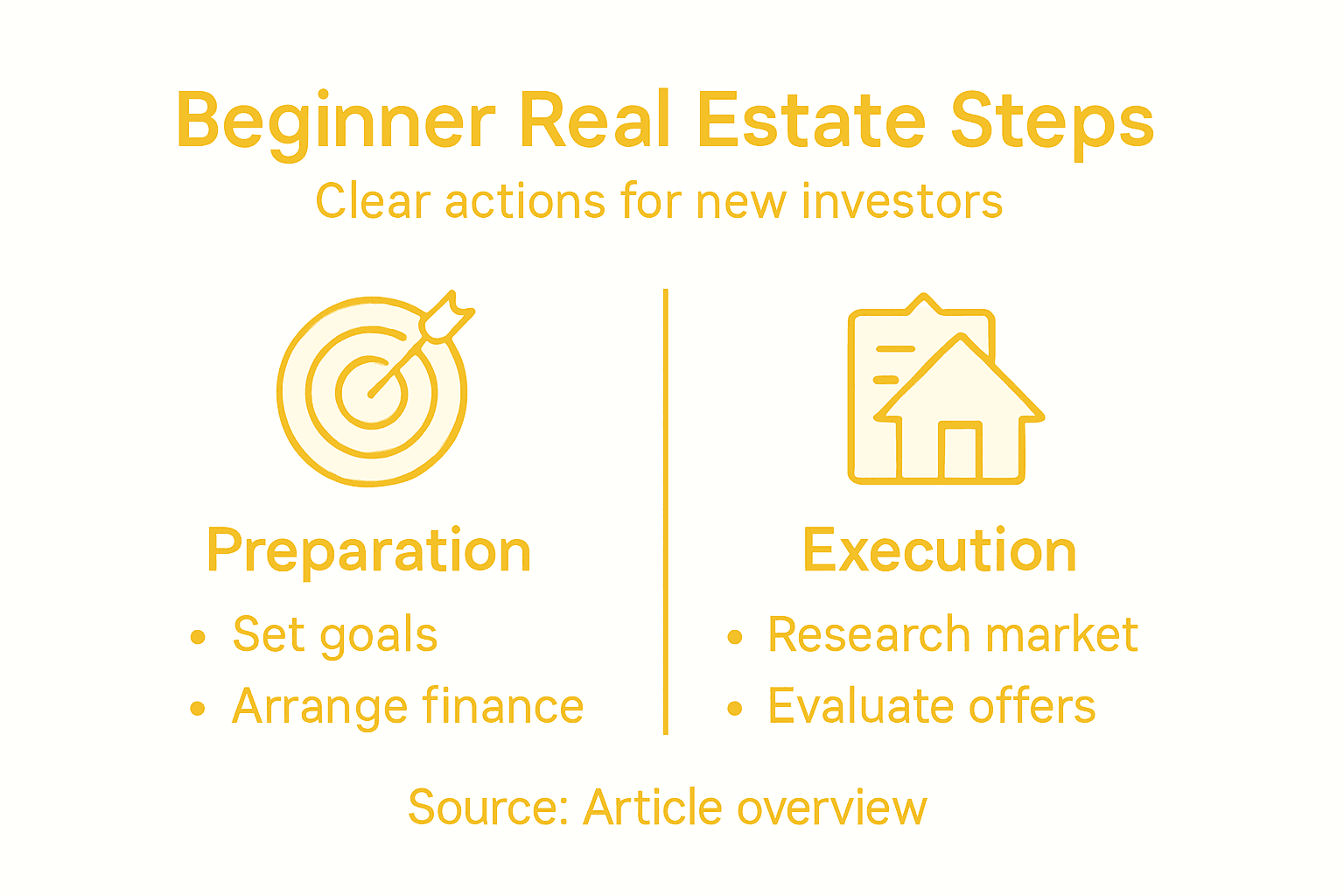
Analyzing investment property characteristics requires a comprehensive approach that examines multiple financial and structural factors. Begin by conducting a detailed inspection of the property’s physical condition, assessing potential repair or renovation costs, and understanding the local market dynamics. Evaluate key metrics including current market value, potential rental income, average vacancy rates, and expected appreciation. Calculate critical financial indicators like cash flow potential, capitalization rate, and potential return on investment to determine the property’s true economic viability.
When preparing to make an offer, develop a systematic approach that balances market research with your investment strategy. Review comparable property sales in the area, understand the seller’s motivation, and identify potential negotiation leverage points. Consider factors beyond price such as closing timelines, contingencies, and potential seller concessions. Always build in a financial buffer that accounts for unexpected expenses or market fluctuations. Work closely with your real estate agent to craft an offer that is competitive yet protects your investment interests and aligns with your overall investment goals.
Pro tip: Create a detailed property evaluation spreadsheet with weighted scoring criteria that objectively assesses each potential investment across financial, structural, and market performance metrics.
Step 5: Complete the purchase and set up management
Closing on a real estate investment property marks the beginning of your wealth-building journey. This critical phase transforms your strategic planning into tangible asset ownership, requiring careful attention to legal, financial, and operational details.
Successful property management strategies involve establishing systematic processes that protect and maximize your investment. Begin by conducting a final walkthrough of the property to confirm its condition matches the agreed terms. Work closely with your real estate attorney to review and complete all closing documents, ensuring all contingencies are met and legal transfer of ownership is smooth. Immediately after closing, update property insurance, transfer utility accounts, and secure necessary keys and access codes.
Establish a comprehensive property management framework that covers tenant screening, rent collection, maintenance protocols, and financial tracking. Decide whether you will self-manage or hire a professional property management company based on your time availability, local market complexity, and personal expertise. Create detailed documentation including lease agreements, maintenance request procedures, and financial reporting systems. Set up separate bank accounts for rental income and property expenses to maintain clear financial boundaries. Develop a proactive maintenance schedule that addresses routine repairs and anticipates potential future improvements to maintain the property value and attract quality tenants.
Pro tip: Create a digital property management folder with all critical documents, maintenance records, financial statements, and contact information for easy reference and seamless ongoing management.
Make Your Real Estate Investment Journey Simple and Successful
Starting with clear investment goals and building a trusted team can feel overwhelming for beginners like you. This article highlights the challenges of defining financing options, researching markets, evaluating properties, and managing investments effectively. You need expert guidance and reliable resources to overcome these hurdles confidently. With Bold Street AI you gain access to a comprehensive platform that simplifies every step from finding curated deals to connecting with investor-friendly agents, lenders, and property managers.
Ready to transform your real estate investing path with expert support and streamlined tools Visit Bold Street AI to explore financing options, discover handpicked properties, and join a community built to help you succeed. Don’t wait Get started now and turn your step-by-step learning into real, profitable investments by leveraging Bold Street AI’s expert resources and network today.
Frequently Asked Questions
What are the first steps in defining my real estate investment goals?
Begin by assessing your financial situation and determining specific investment targets, such as monthly rental income or long-term property appreciation. Create a detailed spreadsheet to outline these goals and include anticipated expenses and financing requirements.
How do I evaluate different financing options for real estate investing?
Research various financing methods, including traditional mortgages, private money lending, and government-backed loans. Compare their down payment requirements, approval speeds, and interest rates to find the best match for your investment goals.
What should I consider when researching real estate markets for investment opportunities?
Look for indicators of growth such as infrastructure projects, job market trends, and population demographics in specific neighborhoods. Use local government websites and real estate databases to gather comprehensive insights about potential investment areas.
How can I build an effective team of professionals for my real estate investments?
Identify key roles you need, such as a real estate agent, home inspector, and tax accountant. Attend networking events and utilize online platforms to connect with experienced professionals who understand your investment goals.
What key metrics should I analyze when evaluating potential investment properties?
Examine factors like current market value, potential rental income, vacancy rates, and expected appreciation. Use a property evaluation spreadsheet to objectively compare these metrics across different potential investments.
What steps should I follow to complete the purchase and manage my investment property?
After closing, conduct a final walkthrough, review all legal documents, and update insurance and utilities. Develop a property management framework that includes tenant screening and maintenance protocols, ensuring to document everything for easy management.
Recommended
- How to Connect With Investors for Real Estate Success | Bold Street AI
- 7 Types of Real Estate Investments for New Investors | Bold Street AI
- 7 Examples of Investment Strategies for New Property Investors | Bold Street AI
- How to Build Investor Network for Real Estate Success | Bold Street AI
- Why Invest in Luxury Pools for Texas Homes