
Many new investors find that entering the United States property market feels overwhelming without the right support. From complex contracts to unpredictable market trends, every decision can carry risks and unexpected costs. By partnering with a real estate agent, you gain access to specialized expertise and ethical guidance that simplifies property acquisition and strengthens your investment strategy, making each step clearer and more secure.
Table of Contents
- What Real Estate Agents Do for Investors
- Types of Real Estate Agent Specializations
- Key Services and Expertise Provided
- Legal Protections and Ethics in Practice
- Cost, Fees, and Common Pitfalls
- DIY Investing Vs. Using Agents Compared
Key Takeaways
| Point | Details |
|---|---|
| Importance of Real Estate Agents | Real estate agents provide crucial expertise and support for investors, streamlining the property acquisition process and enhancing decision-making. |
| Specializations Matter | Different agent specializations align with specific investor needs, including types of properties and client representation strategies. |
| Legal and Ethical Standards | Agents are obligated to prioritize client interests, ensuring transparency and adherence to regulatory standards for investor protection. |
| Cost Awareness is Key | Understanding fee structures and potential hidden costs is vital for investors to maintain budget control and avoid unexpected expenses. |
What Real Estate Agents Do for Investors
Real estate agents serve as critical strategic partners for US property investors, offering specialized expertise that transforms complex investment landscapes into navigable opportunities. Real estate professionals represent investors through comprehensive services that streamline property acquisition, negotiation, and transaction management.
The core responsibilities of real estate agents for investors include market research, property identification, and detailed due diligence. Agents leverage deep local market knowledge to help investors pinpoint properties with strong potential returns. They analyze neighborhood trends, assess property conditions, evaluate potential renovation costs, and estimate realistic rental or resale values. By conducting thorough comparative market analyses, agents help investors make data-driven decisions that minimize risk and maximize potential profitability.
Negotiation and transaction management represent another crucial agent function. Experienced agents understand complex real estate contracts, can identify potential deal-breaking contingencies, and negotiate favorable terms on behalf of investors. They coordinate critical steps like property inspections, appraisals, financing arrangements, and legal documentation. Their professional networks also provide investors access to trusted contractors, property managers, and other essential support professionals.
Pro tip: Always request an investor-specific real estate agent with proven experience in your target market and investment strategy to ensure the most strategic partnership.
Types of Real Estate Agent Specializations
In the diverse world of real estate, agents develop specialized expertise to serve different investor needs and property types. Real estate agents specialize across multiple dimensions, including transaction types, property categories, and client representation strategies. These specialized focuses enable investors to find professionals with precise skills matching their specific investment goals.
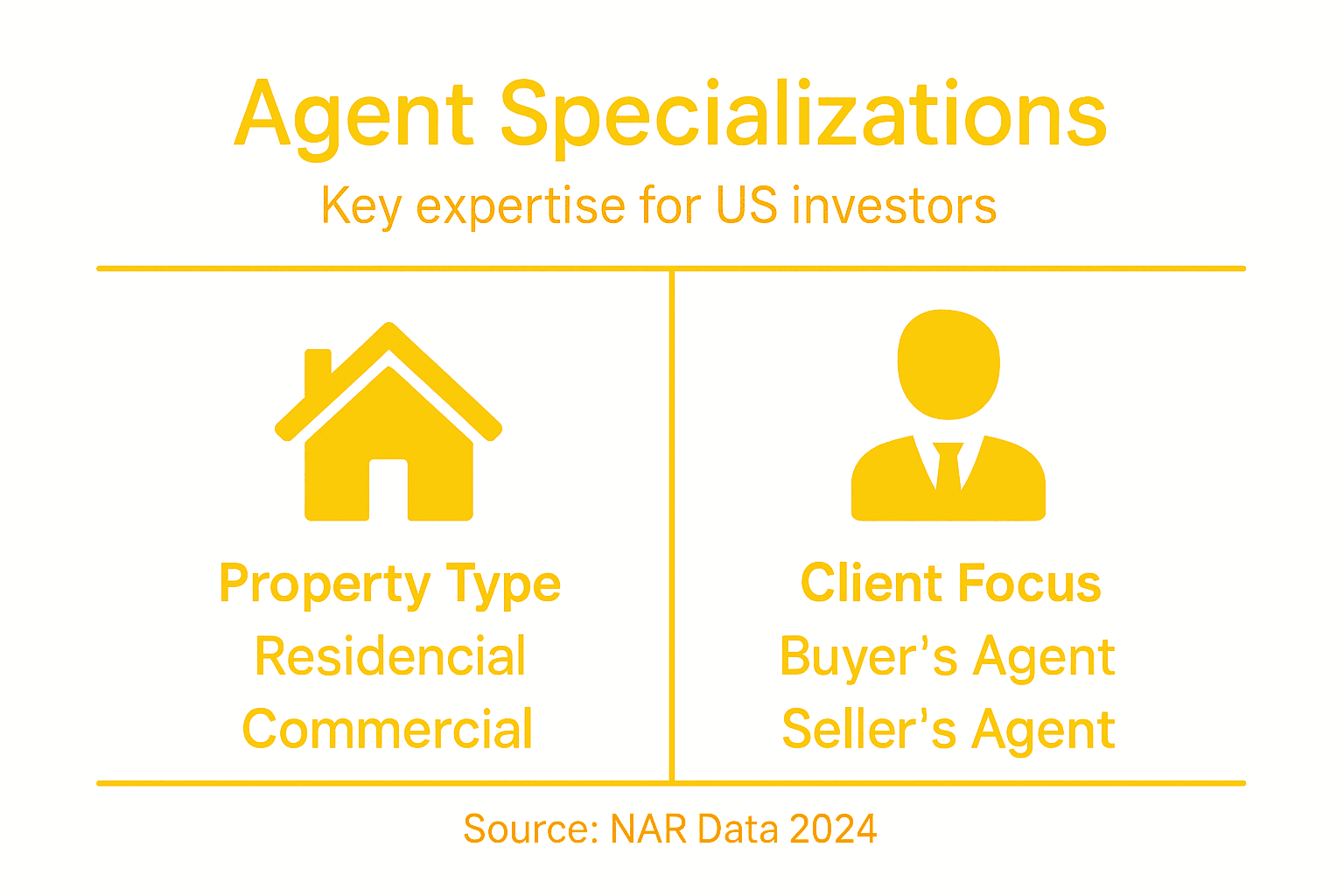
Property type specializations represent a fundamental way agents differentiate their services. Some agents focus exclusively on residential properties, working with single-family homes, condominiums, and small multi-unit residential buildings. Others concentrate on commercial real estate, handling office spaces, retail locations, warehouses, and industrial complexes. Agricultural and land investment specialists provide unique expertise for investors interested in undeveloped parcels, farmland, or raw land with potential development opportunities.
Client representation specializations offer another critical dimension of agent expertise. Buyer’s agents dedicate themselves to helping investors identify and acquire properties that align with investment strategies. Listing agents specialize in marketing properties, understanding seller motivations, and maximizing sale values. Dual agents can represent both buyers and sellers, though this approach requires careful navigation of potential conflicts of interest. Some agents further niche down by focusing on specific investor segments like first-time investors, fix-and-flip professionals, or long-term rental property developers.
Pro tip: Interview potential real estate agents about their specific investment experience and request references from clients with similar investment profiles to ensure the best possible match.
Here is a summary of key real estate agent specializations for investors:
| Specialization Type | Focus Area | Typical Investor Benefits |
|---|---|---|
| Residential | Homes, condos, small multi-families | Access to high-demand properties |
| Commercial | Offices, retail, industrial spaces | Income stability, larger deals |
| Land/Agricultural | Raw, developable land or farms | Development and appreciation opportunities |
| Buyer’s Agent | Investor-side acquisition | Guided property search, negotiations |
| Listing Agent | Selling investment properties | Market exposure, value maximization |
| Dual Agent | Both buyer and seller representation | Streamlined, coordinated transactions |
Key Services and Expertise Provided
Real estate agents deliver a comprehensive suite of services designed to protect and empower investors throughout the property acquisition process. Real estate brokers owe fiduciary duties that establish a foundation of trust, transparency, and professional accountability, ensuring investors receive ethical and expert guidance.

Market analysis and property valuation represent core expertise for real estate agents working with investors. These professionals conduct deep research into local market conditions, property history, and potential investment returns. They utilize advanced comparative market analysis techniques to help investors understand property values, rental potential, appreciation rates, and potential renovation costs. Agents leverage sophisticated data tools and local market insights to identify properties that align with specific investment strategies, whether targeting fix-and-flip opportunities, long-term rental income, or potential appreciation.
Transaction management and negotiation services form another critical component of an agent’s expertise. Agents handle complex documentation, coordinate property inspections, manage communication between buyers and sellers, and navigate intricate legal requirements. They understand contract nuances, can identify potential deal risks, and negotiate terms that protect the investor’s financial interests. Their professional networks also provide investors access to critical resources like home inspectors, contractors, property managers, and legal professionals who can support the investment process.
Pro tip: Request a detailed portfolio of an agent’s recent investment property transactions to verify their actual experience and success in your specific market segment.
Legal Protections and Ethics in Practice
Real estate professionals operate within a robust legal framework designed to protect investors and ensure transparent, ethical transactions. Comprehensive Code of Ethics establishes clear standards of professional conduct that safeguard investor interests and create accountability throughout the investment process.
Fiduciary responsibilities form the cornerstone of legal protections for investors. Real estate agents are legally obligated to prioritize their client’s interests above their own, maintaining strict standards of loyalty, confidentiality, and disclosure. This means agents must provide complete transparency about property conditions, potential risks, market insights, and any factors that could impact investment decisions. They are required to disclose material facts, avoid conflicts of interest, and provide honest, unbiased guidance that supports the investor’s financial objectives.
Professional oversight and disciplinary mechanisms provide additional layers of investor protection. Licensed real estate agents are subject to regulation by state real estate commissions, which can investigate complaints, suspend licenses, and impose penalties for unethical behavior. Professional organizations like the National Association of REALTORS® maintain stringent ethical standards that go beyond legal minimums, offering investors recourse if an agent fails to meet professional expectations. These mechanisms create a system of checks and balances that helps maintain integrity in real estate transactions and provides investors with confidence in their professional representation.
Pro tip: Always verify an agent’s current licensing status and check for any disciplinary history through your state’s real estate commission before engaging their services.
Cost, Fees, and Common Pitfalls
Investors navigating real estate transactions must develop a comprehensive understanding of the financial landscape, including transaction fees and commissions. Real estate agent compensation structures can significantly impact overall investment costs and require careful consideration before engaging professional services.
Traditional real estate commission models typically involve a 5-6% fee paid by the property seller, which is split between buyer’s and seller’s agents. While buyers often do not directly pay agent fees, they should anticipate potential administrative costs, closing expenses, and additional transaction-related charges. Investors must factor these expenses into their financial calculations to prevent unexpected budget overruns. Some agents offer alternative fee structures like flat rates or reduced percentages for investment properties, providing more flexibility for investors seeking cost-effective representation.
Common pitfalls in real estate investment often stem from inadequate financial planning and misunderstanding fee structures. Investors should be wary of hidden costs such as marketing expenses, transaction fees, and potential additional service charges. Transparency is critical when discussing compensation with potential agents. Investors should request detailed fee breakdowns, understand exactly what services are included, and compare multiple professional options to ensure they receive comprehensive support at a reasonable price point. Red flags include agents unwilling to provide clear, upfront information about their fee structures or those pushing aggressive sales tactics.
Pro tip: Request a comprehensive written fee agreement that itemizes all potential costs and services before signing any contracts with a real estate agent.
DIY Investing vs. Using Agents Compared
Real estate investing presents a critical decision point for investors: navigating the complex market independently or leveraging professional expertise in real estate transactions. Each approach carries distinct advantages and challenges that investors must carefully evaluate based on their experience, resources, and investment objectives.
DIY investing offers potential cost savings and complete control, appealing to investors with deep market knowledge and extensive time availability. Self-directed investors manage every aspect of property acquisition, from market research to negotiation and closing. However, this approach demands significant expertise in legal compliance, market analysis, property valuation, and transaction management. Inexperienced investors risk costly mistakes, overlooking critical details that could substantially impact investment returns. The learning curve can be steep, with potential errors potentially outweighing initial cost savings.
Professional real estate agents provide comprehensive support that can mitigate investment risks and streamline complex processes. They bring specialized market insights, professional networks, and negotiation skills that can identify opportunities DIY investors might miss. Agents help investors navigate intricate legal requirements, conduct thorough due diligence, and access off-market properties. Their expertise can be particularly valuable for investors with limited time, those entering new markets, or those handling more complex investment strategies like multi-unit properties or fix-and-flip projects.
This table highlights how DIY investing compares to using a real estate agent:
| Aspect | DIY Investing | With Real Estate Agent |
|---|---|---|
| Cost Structure | Lower direct costs | Pays commissions/fees |
| Risk Level | Higher without expertise | Reduced through professional guidance |
| Time Required | Very time-intensive | Agent handles many tasks |
| Market Access | Limited, self-researched | Access to off-market deals, broader network |
| Legal Complexity | Must self-navigate | Documents handled by the agent |
Pro tip: Consider a hybrid approach by consulting with a real estate agent for critical stages of investment while maintaining personal oversight and control of key decision-making processes.
Unlock Smarter Real Estate Investing With Expert Support
Navigating the complexities of real estate investing can feel overwhelming, especially when understanding market dynamics, negotiating deals, and managing legal details are on the line. This article highlights the critical role of specialized real estate agents in reducing risk and maximizing your investment potential. Bold Street AI takes this a step further by connecting you directly with investor-friendly real estate professionals, offering curated opportunities, and providing educational resources tailored specifically for residential property investors.
Experience the confidence that comes from partnering with experts who understand your unique goals. Visit Bold Street AI to explore how our platform streamlines access to trusted agents, lenders, and property managers while guiding you through every step with actionable insights. Start building your real estate portfolio on a solid foundation today and gain the edge you need in the competitive US market by learning more about matching with local real estate professionals and accessing beginner-focused education through Bold Academy.
Take control of your investing journey now by leveraging expert partnerships that reduce uncertainty and open doors to exclusive deals. Your next investment opportunity awaits at Bold Street AI.
Frequently Asked Questions
What are the main benefits of using a real estate agent for investment properties?
Using a real estate agent provides extensive market knowledge, detailed due diligence, and negotiation expertise. Agents help investors identify properties with high potential returns, manage transactions, and navigate legal complexities, ultimately minimizing risks and maximizing profitability.
How do real estate agents assist with property valuation and market analysis?
Real estate agents conduct in-depth market research and comparative analyses to assess property values and potential investment returns. They provide insights on rental potential, appreciation rates, and associated renovation costs, enabling investors to make informed decisions.
What types of specializations should I look for in a real estate agent as an investor?
Look for agents specializing in the type of property you’re interested in, such as residential, commercial, or land investments. It’s also beneficial to find agents experienced in buyer representation, listing properties, or specific niches like fix-and-flip or long-term rental strategies.
Are there any potential drawbacks to using a real estate agent for investments?
Potential drawbacks include commission fees that may impact overall costs and the need to communicate closely with agents to ensure your investment goals are understood. Additionally, relying on an agent may reduce direct control over the investment process, which some investors might prefer.
Recommended
- Navigating the Terrain: Common Challenges for Real Estate Agents Working with Residential Real Estate Investors – Bold Street AI
- 2024 is the Perfect Time to Become a Real Estate Investor – Bold Street AI
- How to Connect With Investors for Real Estate Success | Bold Street AI
- Residential Real Estate Explained: Key Types and Risks | Bold Street AI
- Warianty inwestycji w self storage – Inwestycje w self storage