
Finding the right support for managing properties can make the difference between steady growth and constant stress. New investors in the United States quickly discover that handling tenants, rent, and repairs is more complex than it seems. By understanding the broad scope of responsibilities that property managers tackle—including tenant screening, financial management, maintenance coordination, and legal compliance—investors gain practical strategies for protecting their assets and increasing profits.
Table of Contents
- What Property Managers Do in Residential Investing
- Types of Property Management Services Explained
- Daily Operations and Investor Value Creation
- Legal Responsibilities and Compliance Standards
- Financial Costs and Common Mistakes to Avoid
Key Takeaways
| Point | Details |
|---|---|
| Importance of Property Managers | Property managers help maximize returns on real estate investments by handling tenant relations, financial management, and property maintenance, allowing investors to focus on growth. |
| Types of Management Services | Understanding the different types of property management services—residential, commercial, industrial, and vacation rentals—can guide investors in selecting the best fit for their needs. |
| Legal Compliance | Property managers must navigate complex legal obligations, including adherence to landlord-tenant laws and maintaining professional licenses, to protect the interests of both owners and tenants. |
| Financial Vigilance | Investors should be mindful of operational and tenant-related expenses while avoiding common financial pitfalls to ensure profitable property management and investment success. |
What Property Managers Do in Residential Investing
Property managers play a critical role in maximizing returns and minimizing headaches for residential real estate investors. Their comprehensive responsibilities go far beyond simply collecting rent and fixing occasional maintenance issues. Property management encompasses a strategic approach to protecting and growing an investor’s real estate portfolio.
The core responsibilities of property managers include:
- Tenant Screening and Selection
- Conducting thorough background checks
- Verifying income and employment
- Checking rental history and references
- Rent Collection and Financial Management
- Setting competitive rental rates
- Collecting monthly rent payments
- Managing security deposits
- Property Maintenance and Repairs
- Coordinating routine maintenance
- Handling emergency repairs
- Managing vendor relationships
- Legal Compliance
- Understanding local rental regulations
- Preparing legally sound lease agreements
- Managing eviction processes if necessary
Property managers essentially serve as a critical buffer between property owners and the complex operational demands of residential real estate investing. They perform daily administrative duties and strategic planning that most individual investors cannot efficiently manage on their own.
By outsourcing these responsibilities, investors can focus on portfolio expansion and strategic decision-making while ensuring their existing properties remain profitable and well-maintained. An experienced property manager transforms real estate investments from potential stress points into streamlined, income-generating assets.
Pro tip: Always interview multiple property management candidates and request detailed fee structures and service offerings to ensure alignment with your specific investment goals.
Types of Property Management Services Explained
Property management services are diverse and specialized, catering to different real estate investment needs. Property management encompasses multiple property types, ranging from residential to commercial and industrial properties. Understanding these variations helps investors select the most appropriate management approach for their specific investment portfolio.
The primary types of property management services include:
- Residential Property Management
- Single-family home management
- Apartment complex oversight
- Tenant screening and placement
- Rent collection and financial tracking
- Commercial Property Management
- Office building administration
- Retail space management
- Lease negotiation and tenant relations
- Specialized maintenance coordination
- Industrial Property Management
- Warehouse and manufacturing facility oversight
- Equipment and infrastructure maintenance
- Operational efficiency monitoring
- Vacation and Short-Term Rental Management
- Platform listing and marketing
- Guest communication
- Cleaning and turnover services
- Dynamic pricing strategies
Each property management service type requires unique skills and expertise. Specialized training programs help property managers develop targeted skills for managing different real estate asset classes effectively.
Here’s a comparison of property management service types and the skills most critical for each:
| Service Type | Primary Focus | Critical Skill Required | Typical Management Tools |
|---|---|---|---|
| Residential Management | Tenant relations | Conflict resolution skills | Tenant portals, rent tracking |
| Commercial Management | Lease negotiation | Financial analysis expertise | Lease management software |
| Industrial Management | Facility upkeep | Operations and logistics experience | Inventory and asset tracking |
| Vacation Rental Management | Turnover efficiency | Customer service excellence | Listing platforms, pricing tools |
Successful property management goes beyond basic maintenance and rent collection. It involves strategic planning, risk mitigation, and creating value for property owners through professional, comprehensive service delivery.

Pro tip: Select a property management service that specializes in your specific property type and investment goals to maximize potential returns and minimize operational challenges.
Daily Operations and Investor Value Creation
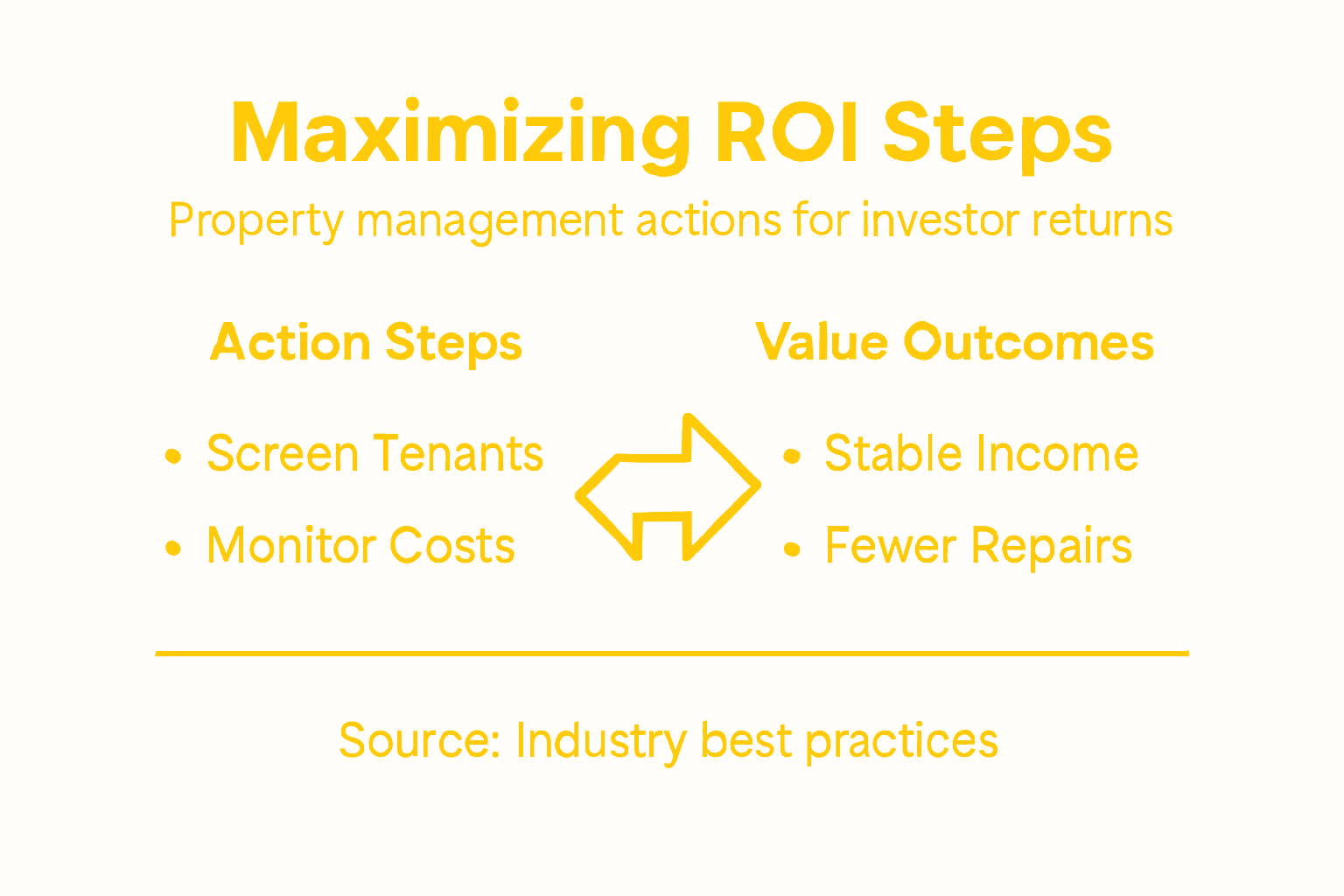
Property managers play a critical role in transforming real estate investments from potential liabilities into profitable assets. Daily operations involve strategic financial oversight that directly impacts an investor’s return on investment and long-term portfolio performance.
Key daily operational responsibilities that create investor value include:
- Tenant Management
- Comprehensive tenant screening
- Efficient lease negotiation
- Prompt communication and conflict resolution
- Maintaining high tenant satisfaction rates
- Financial Optimization
- Accurate rent collection tracking
- Dynamic market rate assessments
- Expense management and reduction
- Detailed financial reporting
- Maintenance and Property Preservation
- Proactive maintenance scheduling
- Quick repair response times
- Preventative infrastructure assessments
- Cost-effective vendor management
- Risk Mitigation
- Legal compliance monitoring
- Insurance coverage evaluation
- Regular property inspections
- Documentation and record keeping
Technology and data analysis help optimize property management strategies, enabling managers to reduce operational expenses and increase overall investment performance. By leveraging advanced tools and systematic approaches, property managers transform routine tasks into strategic value creation opportunities.
Successful property management transcends basic administrative functions. It requires a holistic approach that balances immediate operational needs with long-term investment growth strategies, ultimately protecting and enhancing the investor’s financial interests.
Below is a summary of top ways property managers enhance investor returns through daily operations:
| Value-Adding Action | Investor Benefit | Strategic Outcome |
|---|---|---|
| Dynamic rent adjustments | Maximized rental income | Increased cash flow |
| Proactive maintenance | Reduced costly repairs | Preserved asset value |
| Detailed financial reporting | Informed decision-making | Better portfolio management |
| Risk assessment practices | Lower legal exposure | Enhanced long-term stability |
Pro tip: Request comprehensive monthly reports from your property manager that detail not just expenses and income, but also strategic recommendations for improving property value and investment performance.
Legal Responsibilities and Compliance Standards
Property management involves a complex web of legal obligations that protect both property owners and tenants. Property managers must navigate intricate contractual agreements that define their operational boundaries and professional responsibilities.
Key legal compliance areas for property managers include:
- Landlord-Tenant Law Compliance
- Understanding state-specific rental regulations
- Ensuring fair housing practices
- Proper lease agreement drafting
- Protecting tenant privacy rights
- Licensing and Professional Standards
- Maintaining current professional certifications
- Adhering to state regulatory requirements
- Continuing professional education
- Maintaining professional liability insurance
- Financial and Reporting Obligations
- Accurate financial record keeping
- Transparent rent and expense reporting
- Proper security deposit management
- Tax compliance and documentation
- Safety and Property Standards
- Meeting building and safety code requirements
- Ensuring habitable living conditions
- Conducting regular property inspections
- Addressing maintenance and repair responsibilities
National professional associations provide critical guidance in maintaining high ethical and legal standards across property management practices. These organizations help professionals stay updated on evolving regulations and best practices.
Successful property managers recognize that legal compliance is not just about avoiding penalties, but about creating a transparent, fair, and professional environment that protects the interests of both property investors and tenants.
Pro tip: Regularly consult with a real estate attorney specializing in property management to ensure your management practices remain fully compliant with current local and federal regulations.
Financial Costs and Common Mistakes to Avoid
Real estate investing requires careful financial management and strategic planning to maximize returns. Rising costs in property management directly impact investment profitability and demand meticulous expense tracking and budgeting.
Key financial costs and potential pitfalls include:
- Operational Expenses
- Maintenance and repair costs
- Property tax assessments
- Utility management
- Insurance premiums
- Administrative overhead
- Tenant-Related Expenses
- Vacancy loss
- Screening and marketing costs
- Turnover expenses
- Potential legal fees
- Common Financial Mistakes
- Underestimating maintenance costs
- Poor cash flow management
- Inadequate reserve funds
- Inconsistent rent collection
- Neglecting preventative maintenance
- Hidden Cost Factors
- Unexpected infrastructure repairs
- Market fluctuation impacts
- Regulatory compliance expenses
- Technology and management tool investments
Property management training helps investors avoid critical operational errors that can erode investment performance. Understanding these potential financial challenges allows for more proactive and strategic investment management.
Successful real estate investors develop comprehensive financial strategies that anticipate potential expenses, maintain robust contingency funds, and continuously monitor their property’s financial performance to minimize unexpected financial burdens.
Pro tip: Create a detailed annual budget with a 10-15% buffer for unexpected expenses, and regularly review your property’s financial statements to identify potential cost-saving opportunities.
Unlock Maximum ROI with Expert Property Management Support
Managing residential properties involves complex challenges like tenant screening, rent collection, maintenance, and legal compliance. These critical tasks directly affect your investment’s profitability and long-term growth. If you are seeking to eliminate operational headaches while boosting rental income and preserving asset value, partnering with experienced property managers is essential. Bold Street AI simplifies this process by connecting you with trusted professionals who understand the unique demands of residential real estate investing.
Take control of your real estate portfolio today by exploring curated investment opportunities and expert property management resources at Bold Street AI. Benefit from our platform’s comprehensive tools and educational guidance designed to empower investors like you to confidently maximize returns. Visit Bold Street AI now and start building a stress-free and highly profitable property investment strategy.
Frequently Asked Questions
What are the core responsibilities of property managers in residential investing?
Property managers handle tenant screening and selection, rent collection and financial management, property maintenance and repairs, and legal compliance to ensure a profitable and well-maintained investment.
How do property managers optimize financial returns for property owners?
They optimize financial returns by setting competitive rental rates, effectively managing expenses, collecting rents on time, and providing detailed financial reporting to inform strategic decision-making.
What types of property management services are available?
Property management services include residential, commercial, industrial, and vacation rental management, each requiring specific skills and expertise to cater to diverse real estate investment needs.
Why is legal compliance important in property management?
Legal compliance protects both owners and tenants by ensuring fair housing practices, proper lease agreements, and adherence to local regulations, reducing legal risks and fostering a transparent rental environment.
Recommended
- Find a Property Manager – 1 | Bold Street AI
- 7 Examples of Investment Strategies for New Property Investors | Bold Street AI
- Why Invest in Residential Property: Building Wealth and Security | Bold Street AI
- Step-by-Step Guide to Analyzing Investment Properties | Bold Street AI
- New Buildings for Rent: What to Look For and What to Avoid – Luxury Apartments for Rent in Boca Raton | Premium Boca Raton Apartments | Aapartments Boca Raton