
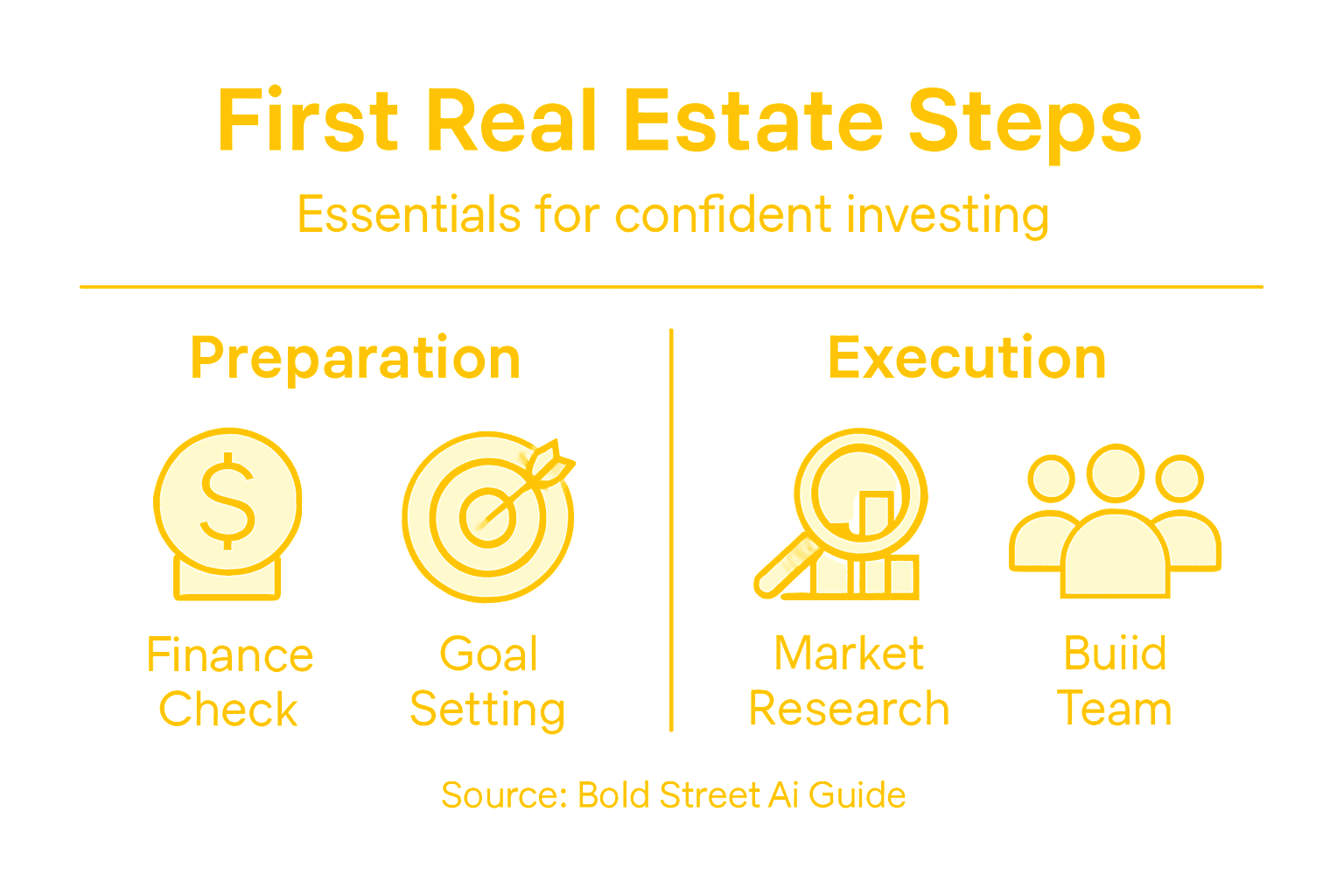
Jumping into real estate investment for the first time can feel overwhelming when you are staring at a mix of financial questions, local market trends, and professional choices. For new American investors, understanding your own financial readiness and crafting clear investment goals sets the foundation for success. This guide provides practical steps for building your portfolio, including developing financial literacy, using the SMART goals framework, and evaluating local opportunities, so you can move forward with confidence from day one.
Table of Contents
- Step 1: Assess Your Financial Readiness
- Step 2: Define Your Investment Goals
- Step 3: Research Local Markets And Opportunities
- Step 4: Secure Financing And Build Your Team
- Step 5: Verify Property Potential Before Purchase
- Step 6: Manage Your Investment For Ongoing Success
Quick Summary
| Key Insight | Explanation |
|---|---|
| 1. Assess Financial Readiness | Evaluate income stability, credit score, and savings to ensure you are financially prepared for investment. |
| 2. Define Clear Investment Goals | Use the SMART framework to create actionable real estate objectives that align with your financial vision. |
| 3. Conduct Thorough Market Research | Investigate local economic conditions and property trends to make informed investments and minimize risks. |
| 4. Assemble a Professional Team | Build a network of mortgage brokers, attorneys, and agents who can guide and support your investment journey. |
| 5. Implement Active Investment Management | Track performance, manage tenants, and stay updated on market trends to maximize your investment’s success. |
Step 1: Assess Your Financial Readiness
Assessing your financial readiness is the crucial first step in launching a successful real estate investment journey. This process involves understanding your current financial landscape and determining whether you’re positioned to make strategic property investments that align with your long-term wealth goals.
To comprehensively evaluate your financial readiness, you’ll need to examine several key financial dimensions. Analyzing investment properties requires a systematic approach that goes beyond simple net worth calculations. Consider these critical assessment elements:
- Current income stability: Ensure consistent monthly earnings
- Credit score: Aim for 680+ for favorable investment financing
- Liquid savings: Maintain 3-6 months of investment property expenses
- Debt-to-income ratio: Keep below 43% for mortgage qualification
- Investment capital: Have minimum 20-25% down payment reserved
Successful real estate investors understand that financial preparation extends beyond mere numbers. Your readiness involves developing financial literacy about investment costs, potential tax advantages, and realistic risk management. Professional investors recognize that patience is key – real estate returns often materialize over years, not months.

Pro Tip: Before making your first investment, create a dedicated savings account specifically for real estate opportunities to demonstrate financial discipline and commitment.
Step 2: Define Your Investment Goals
Defining clear and strategic investment goals is the roadmap that transforms real estate from a vague aspiration into a concrete wealth-building plan. Your objectives will serve as a critical navigation system, guiding every investment decision you make.
Using the SMART investment goals framework, you can craft precise, actionable targets that align with your financial vision. Consider these key dimensions when establishing your real estate investment objectives:
- Short-term income generation: Rental cash flow
- Long-term appreciation: Property value increase
- Retirement planning: Passive income streams
- Tax optimization: Strategic investment structures
- Portfolio diversification: Balanced real estate assets
Your investment goals should reflect a holistic understanding of your personal financial landscape. Some investors prioritize steady monthly income, while others focus on long-term equity growth. The key is matching your real estate strategy to your unique financial circumstances and risk tolerance.
This table highlights the differences between short-term and long-term real estate investment strategies:
| Strategy Type | Typical Focus | Expected Outcome | Time Horizon |
|---|---|---|---|
| Short-Term | Rental income, flips | Quick cash flow | Months to 2 years |
| Long-Term | Appreciation, equity build | Wealth accumulation | 5+ years |
Your investment goals are not static. Regularly review and adjust them as your financial situation and market conditions evolve.
Pro Tip: Create a one-page investment vision document that clearly outlines your specific real estate goals, which will help maintain focus and motivation throughout your investment journey.
Step 3: Research Local Markets and Opportunities
Researching local real estate markets is a critical step in building a successful investment strategy. This process transforms your investment approach from guesswork to a data-driven, strategic decision-making framework that minimizes risk and maximizes potential returns.
Comprehensive market research involves understanding local economic indicators and trends that directly impact real estate values. Your research should encompass several key investigative dimensions:
- Employment trends: Job market stability and growth
- Population demographics: Age, income, and migration patterns
- Local infrastructure developments: New roads, schools, transit projects
- Economic diversity: Multiple industry sectors
- Rental market conditions: Vacancy rates and average rental prices
Successful investors dive deep beyond surface-level data, examining nuanced market dynamics. This means looking at neighborhood-specific trends, understanding local zoning regulations, and identifying emerging communities with strong growth potential.
Not all markets are created equal. Your research will reveal unique opportunities that align with your specific investment goals.
Pro Tip: Attend local real estate investor meetups and connect with professionals who have deep insights into specific market microtrends that might not be immediately apparent in standard research reports.
Step 4: Secure Financing and Build Your Team
Securing the right financing and assembling a strong professional team are foundational steps that can make or break your real estate investment success. This critical phase transforms your investment strategy from a personal aspiration into a structured, professionally supported venture.
Successful real estate investing requires understanding complex financing strategies that go beyond traditional mortgage approaches. Your financial and professional team should include key specialists who bring targeted expertise:
- Mortgage broker: Navigates lending options
- Real estate attorney: Handles legal documentation
- Certified public accountant: Manages tax implications
- Property inspector: Evaluates potential investments
- Real estate agent: Identifies market opportunities
Each team member plays a crucial role in mitigating risks and maximizing investment potential. A well-selected team provides comprehensive support, from initial property identification through long-term portfolio management.
Here’s a summary comparing key roles on a real estate investment team and the unique value each provides:
| Professional Role | Main Responsibility | Unique Value for Investor |
|---|---|---|
| Mortgage Broker | Secures financing options | Access to diverse lenders |
| Real Estate Attorney | Handles legal documentation | Ensures contract compliance |
| Certified Public Accountant | Oversees tax strategies | Optimizes tax benefits and reporting |
| Property Inspector | Evaluates property condition | Identifies issues before purchase |
| Real Estate Agent | Finds and negotiates property deals | Market insight and negotiation skill |
Your professional network is your most valuable asset. Invest time in building relationships that will support your investment journey.
Pro Tip: Schedule initial consultation meetings with potential team members to assess their experience, communication style, and alignment with your specific investment goals.
Step 5: Verify Property Potential Before Purchase
Verifying a property’s potential is your critical defense against making costly investment mistakes. This step transforms property evaluation from a superficial inspection to a comprehensive analysis that reveals true investment value.
Thorough property analysis requires systematic investment property evaluation that goes far beyond surface-level impressions. Your verification process should include multiple strategic assessment dimensions:
- Location assessment: Neighborhood trends and growth potential
- Physical condition: Structural integrity and repair requirements
- Market comparables: Recent sale prices of similar properties
- Income potential: Rental market rates and occupancy trends
- Regulatory compliance: Zoning restrictions and legal considerations
Successful real estate investors understand that detailed due diligence separates profitable investments from financial traps. This means digging deep into each property’s unique characteristics, hidden opportunities, and potential risk factors.
Not every attractive property is a good investment. Your thorough verification process is your most powerful risk management tool.
Pro Tip: Always budget for a professional home inspection and consider hiring a specialized real estate investment analyst to provide an independent, comprehensive property evaluation.
Step 6: Manage Your Investment for Ongoing Success
Managing your real estate investment is an active, dynamic process that demands consistent attention and strategic adaptability. This step transforms your property from a passive asset into a continuously optimized wealth-building instrument.
Effective investment management requires a multifaceted approach that goes beyond basic maintenance. Your ongoing management strategy should focus on several critical dimensions:
- Financial performance tracking: Monitor monthly income and expenses
- Property maintenance: Schedule regular inspections and repairs
- Tenant relationship management: Communicate professionally and promptly
- Market trend analysis: Stay informed about local real estate dynamics
- Tax and legal compliance: Maintain accurate records and documentation
Successful real estate investors understand that consistent, proactive management is the difference between marginal returns and exceptional performance. This means developing a systematic approach to monitoring your investment, anticipating potential challenges, and making data-driven decisions.
Your investment’s success is determined not just by the property you purchase, but by how skillfully you manage it over time.
Pro Tip: Create a digital dashboard or spreadsheet to track key performance indicators, allowing you to quickly assess your investment’s health and make informed strategic adjustments.
Take Confident First Steps with Expert Support from Bold Street AI
Starting your real estate investment journey can feel overwhelming as you assess your financial readiness, define clear goals, and research local markets. The Beginner Real Estate Investment Guide for Confident First Steps highlights these important challenges. Whether it is securing financing, building a trusted team, or verifying property potential, every step requires careful strategy and guidance.
Bold Street AI simplifies this entire process by connecting you with vetted investor-friendly agents, lenders, and property managers who understand exactly what beginners need. Our platform also offers tailored educational resources through Bold Academy that will empower you to manage your investments with confidence and clarity. Start exploring curated investment opportunities and build your supportive community today at Bold Street AI. Don’t wait to transform confusion into actionable real estate success.
Frequently Asked Questions
How do I assess my financial readiness for real estate investment?
To assess your financial readiness, review key elements like income stability, credit score, and liquid savings. Ensure you maintain at least three to six months of property expenses in savings and have a debt-to-income ratio below 43% before making any investment decisions.
What are the key components of setting investment goals in real estate?
Key components of setting investment goals include defining whether you want short-term rental income or long-term appreciation. Use the SMART framework to create specific, measurable, achievable, relevant, and time-bound goals that align with your financial vision.
How can I research local real estate markets effectively?
To research local real estate markets effectively, analyze employment trends, population demographics, and local infrastructure developments. Focus on identifying areas with strong job growth and low vacancy rates to uncover investment potential.
What professionals should I include on my real estate investment team?
Your real estate investment team should include a mortgage broker, real estate attorney, certified public accountant, property inspector, and real estate agent. Collaborate with these specialists to navigate financing options, legal documentation, and market opportunities effectively.
What steps should I take to verify a property’s investment potential before purchase?
To verify a property’s investment potential, conduct a thorough analysis of its location, physical condition, market comparables, income potential, and regulatory compliance. Perform due diligence by employing professionals to ensure you understand the property’s true value and risks.
How can I effectively manage my investment for ongoing success?
Effectively manage your investment by tracking financial performance, scheduling regular maintenance, and maintaining good tenant relationships. Create a digital dashboard to monitor key performance indicators, helping you make informed decisions about your investment’s health.