
Starting your first investment in the U.S. real estate market can feel both exciting and uncertain. Clear goals and a realistic budget are the foundation for every successful property portfolio, setting the stage for growth and financial stability. You will learn how to set meaningful investment objectives, plan your spending, and follow proven steps that make real estate investing practical and rewarding for beginners. Building on careful planning and research, you can turn your ambition into lasting financial progress.
Table of Contents
- Step 1: Define Your Investment Goals And Budget
- Step 2: Research Target Markets And Property Types
- Step 3: Connect With Real Estate Professionals And Lenders
- Step 4: Evaluate And Select Your First Property
- Step 5: Build And Track Your Growing Portfolio
Quick Summary
| Key Insight | Explanation |
|---|---|
| 1. Define clear investment goals | Establish measurable objectives to guide your financial decisions and investment strategies. |
| 2. Conduct thorough market research | Analyze demographics, job markets, and local indicators to identify lucrative investment opportunities. |
| 3. Build a professional network | Connect with real estate agents, lenders, and other professionals to enhance your investment strategies. |
| 4. Evaluate properties carefully | Apply a systematic approach to assess properties based on clear metrics aligning with your investment goals. |
| 5. Regularly track portfolio performance | Monitor key financial metrics and adjust strategies to ensure sustainable growth and mitigate risks. |
Step 1: Define your investment goals and budget
Successful real estate investing starts with clarity. Your goals are the compass that will guide every financial decision and strategy moving forward, helping transform your vision into a structured investment plan.
Defining your investment goals requires honest self-reflection about what you want to achieve financially. Real estate investment objectives can range from generating monthly rental income to building long-term wealth through property appreciation. Some investors prioritize steady cash flow, while others focus on aggressive portfolio growth.
Start by outlining specific, measurable goals that align with your financial situation:
- Generate monthly rental income of $X
- Acquire X number of properties within Y years
- Build a portfolio worth $X by a specific target date
- Achieve X% annual return on real estate investments
Budget planning is equally critical. Your investment budget should account for:
- Down payment funds
- Closing costs
- Renovation expenses
- Ongoing maintenance
- Property management fees
- Emergency repair reserves
Your budget must balance ambitious goals with financial practicality – dream big, but plan realistically.
Calculate your total available investment capital by reviewing savings, potential financing options, and determining how much you can comfortably allocate without compromising personal financial stability. Financial planning strategies recommend keeping 3-6 months of expenses in liquid reserves.
Pro tip: Always build a 10-15% buffer into your investment budget to account for unexpected expenses and market fluctuations.
Step 2: Research target markets and property types
Successful real estate investing hinges on thorough market research. In this crucial step, you’ll dive deep into understanding which property types and geographic markets offer the most promising investment opportunities.

U.S. real estate market trends reveal significant variations across different property sectors and regions. Investors must carefully analyze multiple factors to identify the most lucrative investment potential.
Start by examining key market characteristics:
- Population growth trends
- Job market stability
- Local economic indicators
- Rental demand
- Infrastructure development
- Future urban and suburban expansion plans
Focus on property types that align with current market dynamics:
- Multifamily residential units
- Single-family rental homes
- Condominiums in high-growth areas
- Townhouses with strong rental potential
Market research is not just about numbers – it’s about understanding the story behind the statistics.
Consider geographic investment variations that impact property performance. Different metro areas and submarkets can show dramatically different investment potential based on local economic conditions, job markets, and development trajectories.
When evaluating potential markets, look beyond surface-level metrics. Investigate neighborhood-specific trends, planned infrastructure projects, and emerging economic corridors that could drive future property values.
Pro tip: Create a comprehensive spreadsheet comparing multiple markets, tracking at least 10 key performance indicators to make a data-driven investment decision.
Step 3: Connect with real estate professionals and lenders
Building a powerful network is your secret weapon in real estate investing. The right connections can unlock opportunities, provide critical insights, and accelerate your investment journey.
Social networks for real estate investors offer multiple avenues for connecting with key professionals who can transform your investment strategy. Strategic networking goes beyond casual conversations – it’s about building meaningful relationships that create real value.
Start developing your professional network through these channels:
- Local real estate investment groups
- Professional networking events
- Online investor forums
- Industry conferences
- Social media real estate communities
Focus on connecting with these critical professionals:
- Real estate agents specializing in investment properties
- Mortgage lenders with investor-friendly programs
- Property managers
- Local real estate attorneys
- Experienced investors in your target market
Your network is your net worth in real estate investing.
Carefully vet potential professional connections by asking targeted questions about their experience, investment philosophy, and track record. Look for professionals who understand your specific investment goals and can provide genuine value.
Develop a systematic approach to networking. Attend meetings consistently, follow up after initial conversations, and always seek to provide value before asking for help. Remember that relationships are built on trust and mutual respect.
Pro tip: Create a standardized contact tracking system to manage and nurture your professional relationships, recording key details and follow-up dates for each connection.
Step 4: Evaluate and select your first property
Choosing your first investment property is a pivotal moment that can set the trajectory for your entire real estate investment journey. This step requires careful analysis, strategic thinking, and a disciplined approach to identifying the right opportunity.
Investment property selection strategies demand comprehensive evaluation across multiple dimensions. Your goal is to find a property that not only meets your financial objectives but also aligns with your risk tolerance and long-term investment vision.
Consider these critical property types for your first investment:
Here is a summary of how various property types differ for first-time investors:
| Property Type | Main Advantages | Typical Challenges |
|---|---|---|
| Single-family Home | Easier to manage, high demand | Limited income diversification |
| Multi-family Unit | Multiple rental incomes | Higher management complexity |
| Condominium | Low maintenance | Condo fees and regulations |
| Townhouse | Potential for appreciation | Shared walls, HOA oversight |
- Single-family homes for predictable maintenance
- Multi-family units for multiple income streams
- Condominiums for lower upkeep requirements
- Townhouses with potential appreciation
Key evaluation criteria include:
- Neighborhood quality and growth potential
- Local rental market dynamics
- Property condition and repair needs
- Potential cash flow and return on investment
- Future development plans in the area
Not all properties are created equal – your success depends on thorough, objective analysis.
Evaluate potential properties using these essential metrics. Rental demand analysis is crucial – look at vacancy rates, average rental prices, and long-term population trends. Comprehensive property assessment requires examining cap rates, cash-on-cash return, and potential appreciation.
Work closely with experienced real estate professionals who can provide localized insights and help you navigate potential pitfalls. Their expertise can be invaluable in identifying hidden opportunities and avoiding costly mistakes.
Pro tip: Create a standardized property evaluation spreadsheet with weighted scoring across 10-15 key metrics to objectively compare potential investment properties.
Step 5: Build and track your growing portfolio
Transitioning from a single property to a robust real estate portfolio requires strategic planning, consistent monitoring, and a willingness to adapt your investment approach. Your goal is to create a dynamic investment ecosystem that generates sustainable wealth.
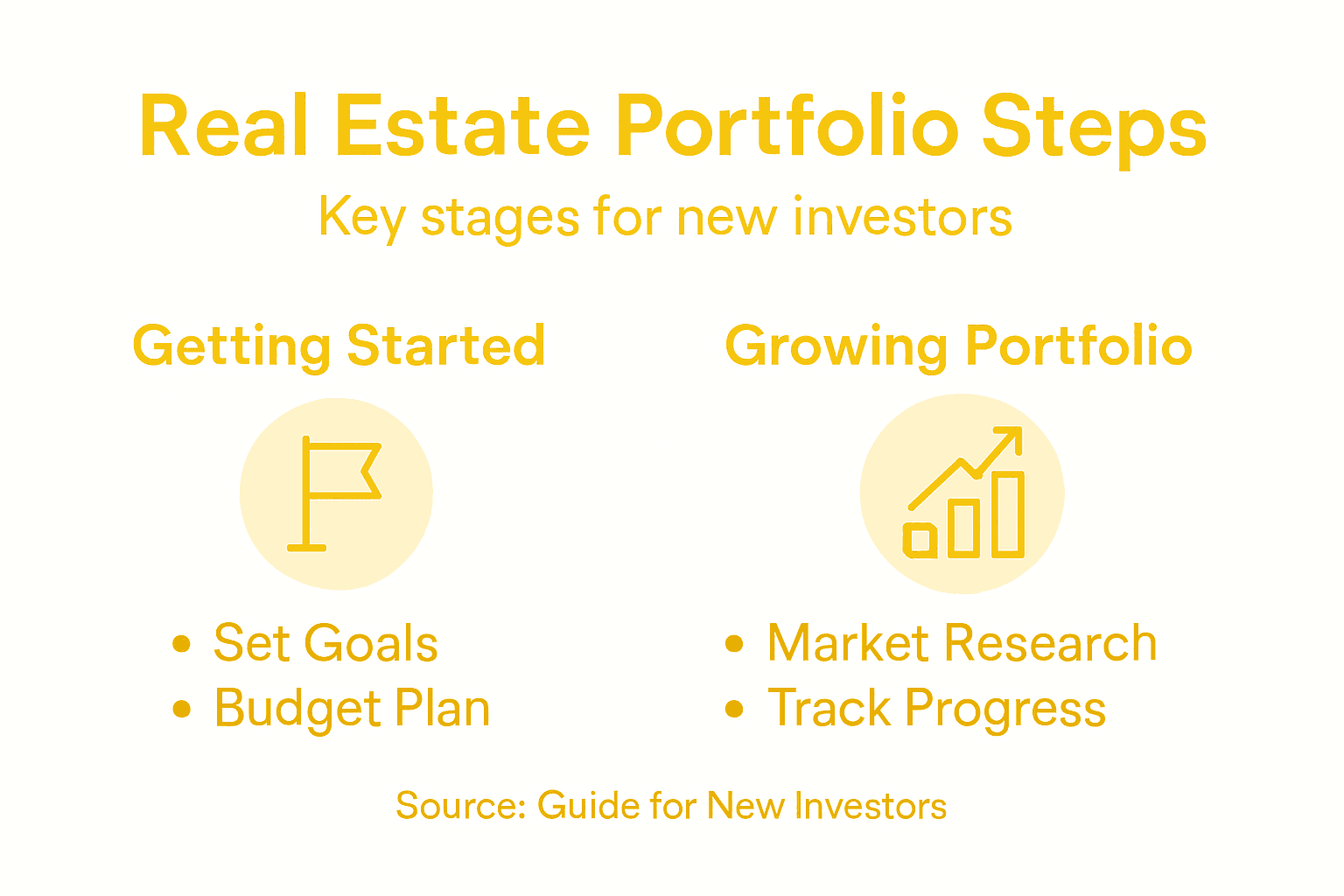
Real estate portfolio strategies involve more than just acquiring properties – they demand intentional management and continuous performance evaluation. Each new property should contribute to your broader financial objectives.
Establish a systematic approach to portfolio management:
- Track individual property performance
- Monitor market value fluctuations
- Analyze rental income consistency
- Review expense-to-income ratios
- Assess potential refinancing opportunities
Key portfolio tracking metrics include:
This table highlights portfolio metrics and what they reveal about your investments:
| Metric | What It Measures | Strategic Implication |
|---|---|---|
| Net Operating Income | Income minus expenses | Indicates profitability |
| Cash Flow | Free cash after costs | Reveals financial health |
| Appreciation Rate | Value growth over time | Assesses long-term potential |
| Equity Accumulation | Ownership increase | Tracks personal wealth build-up |
| Tax Implications | Tax burden or advantages | Helps optimize financial strategy |
- Net operating income
- Cash flow
- Appreciation rates
- Equity accumulation
- Tax implications
Your real estate portfolio is a living financial instrument – treat it with strategic attention.
Implement robust tracking mechanisms using digital tools and spreadsheets. Regularly compare your portfolio’s performance against initial investment goals, making calculated adjustments as market conditions evolve.
Develop relationships with financial advisors who specialize in real estate investments. Their expertise can help you optimize portfolio growth, identify emerging opportunities, and mitigate potential risks.
Pro tip: Schedule quarterly portfolio reviews and maintain a detailed digital dashboard that aggregates performance metrics across all your investment properties.
Take Control of Your Real Estate Journey with Bold Street AI
Navigating through the challenges of defining investment goals and building a strong portfolio can feel overwhelming for new real estate investors. This guide highlights important steps like setting clear objectives, evaluating market trends, and systematically tracking your properties. If you are looking to simplify these complex tasks and connect with trusted experts who understand your ambitions Bold Street AI offers a powerful solution. Our platform helps you match with local real estate professionals including agents and lenders who specialize in investor needs while providing access to educational resources tailored for beginners.
Ready to turn your real estate aspirations into a thriving portfolio? Explore curated investment opportunities and gain expert guidance at Bold Street AI. Discover how to build your network connect with investor-friendly professionals, and stay informed with our comprehensive educational portal and community. Start your journey today with confidence by visiting Bold Street AI and take the next step toward your financial goals.
Frequently Asked Questions
What are the first steps to defining my real estate investment goals?
To define your real estate investment goals, start with honest self-reflection about what you want to achieve, such as generating monthly rental income or building long-term wealth. Outline specific, measurable goals related to properties or returns, and ensure they align with your financial situation.
How do I create a realistic investment budget for real estate?
Creating a realistic investment budget involves accounting for all associated costs, including down payments, closing costs, and ongoing expenses. Review your total available investment capital and set aside 10-15% as a buffer for unexpected expenses.
What factors should I research when selecting a target market for investing?
When selecting a target market, research factors like population growth trends, economic indicators, and rental demand. Focus on specific neighborhoods to uncover local insights that can reveal the best investment opportunities.
How can I build a network of real estate professionals?
You can build a network of real estate professionals by attending local investment groups, professional events, and engaging in online forums. Focus on making meaningful connections with real estate agents, lenders, and property managers who can provide valuable insights.
What metrics should I use to evaluate potential investment properties?
When evaluating potential investment properties, use key metrics such as net operating income, cash flow, and appreciation rates. Create a standardized evaluation spreadsheet to score properties against these metrics for objective comparison.
How often should I track and review my real estate portfolio?
You should track and review your real estate portfolio quarterly to assess individual property performance and overall financial health. Implement tracking mechanisms to compare your portfolio against your initial investment goals and adjust your strategy as needed.
Recommended
- Why Build a Real Estate Portfolio: Key Benefits for Urban Investors | Bold Street AI
- Beginner Real Estate Investment Guide for Confident First Steps | Bold Street AI
- Passive Real Estate Investing: Simplifying Wealth Building | Bold Street AI
- Step by Step Real Estate Investing for Beginners | Bold Street AI