
Finding the right financing can be the deciding factor for American investors stepping into residential property investing. Without a clear plan, borrowing money for your first home or rental property can feel overwhelming and risky. This guide clarifies essential financing options and common mistakes, highlighting the steps you need to secure funding and start building your real estate portfolio with confidence.
Table of Contents
- Defining Financing In Residential Investing
- Types Of Residential Investment Financing Options
- Qualifying For And Securing Investment Loans
- Leveraging Financing To Scale Your Portfolio
- Common Financing Mistakes And How To Avoid Them
Key Takeaways
| Point | Details |
|---|---|
| Understanding Financing Options | Familiarize yourself with various residential financing options, such as conventional mortgages and government-backed loans, to find the best fit for your investment strategy. |
| Importance of Creditworthiness | Maintain a strong credit score and adequate cash reserves, as these factors are crucial for qualifying for favorable investment loans. |
| Strategic Portfolio Scaling | Utilize techniques such as cash-out refinancing and seller financing to effectively scale your real estate portfolio and enhance growth opportunities. |
| Avoiding Common Mistakes | Be vigilant against common financing pitfalls, like overleveraging and inadequate market research, to protect your investment strategy and ensure long-term success. |
Defining Financing in Residential Investing
Financing is the critical foundation that transforms real estate aspirations into tangible investment opportunities. At its core, real estate finance bridges property and capital, enabling investors to acquire, develop, and strategically expand their residential property portfolios.
Residential investing financing encompasses several key financial instruments designed to help investors purchase, renovate, and generate income from residential properties. These typically include conventional mortgages, government-backed loans, private money lending, hard money loans, and home equity lines of credit. Each financing method carries unique qualification requirements, interest rates, and terms that directly impact an investor’s potential return on investment.
Understanding the nuanced landscape of real estate financing requires deep comprehension of factors like credit scores, debt-to-income ratios, property valuations, and market conditions. Investors must carefully assess their financial standing and investment goals to select financing options that align with their strategic objectives. Property improvement loans can provide additional capital for renovations that increase property value and rental potential.
Pro tip: Always get pre-approved for financing before searching for investment properties to understand your exact purchasing power and demonstrate credibility to sellers.
Types of Residential Investment Financing Options
Residential investment financing offers diverse strategies for investors to acquire and develop property assets. Real estate financing methods range from traditional bank loans to more innovative funding approaches, each designed to meet different investment scenarios and investor risk profiles.
The primary financing options for residential real estate investors include:
- Conventional Mortgages: Standard bank loans with fixed or adjustable rates, typically requiring good credit scores and substantial down payments
- Government-Backed Loans: FHA and VA loans offering lower down payment requirements and more flexible qualifying standards
- Private Money Lending: Direct loans from individual investors or private lending companies, often with faster approval processes
- Hard Money Loans: Short-term, asset-based financing primarily used for fix-and-flip investment strategies
- Home Equity Lines of Credit (HELOC): Leveraging existing property equity to fund new investment purchases
Government loan programs provide unique opportunities for investors, especially those targeting specific markets like rural or low-income areas. These programs often feature more flexible terms, lower down payment requirements, and specialized financing structures that can significantly reduce initial investment barriers.
Here is a comparison of common residential investment financing options, highlighting key differences to aid investor decision-making:
| Financing Option | Typical Approval Speed | Best For | Notable Requirements |
|---|---|---|---|
| Conventional Mortgage | Slow (weeks) | Stable, long-term investors | High credit, large down payment |
| Government-Backed Loan | Moderate (weeks) | First-time or low-cash investors | Specific eligibility criteria |
| Private Money Lending | Fast (days) | Competitive, time-sensitive deals | Trust-based, higher rates |
| Hard Money Loan | Very fast (days) | Flip or rehab properties | High equity, short term |
| HELOC | Slow to moderate | Investors with existing equity | Strong existing property value |
Pro tip: Always compare multiple financing options and calculate total borrowing costs, including interest rates, closing fees, and potential prepayment penalties before selecting an investment loan.
Qualifying for and Securing Investment Loans
Qualifying for residential investment loans demands a comprehensive understanding of financial prerequisites and strategic positioning. Real estate investment requires advanced analytical skills to demonstrate creditworthiness and investment potential to potential lenders.
Key qualification criteria for investment loans typically include:
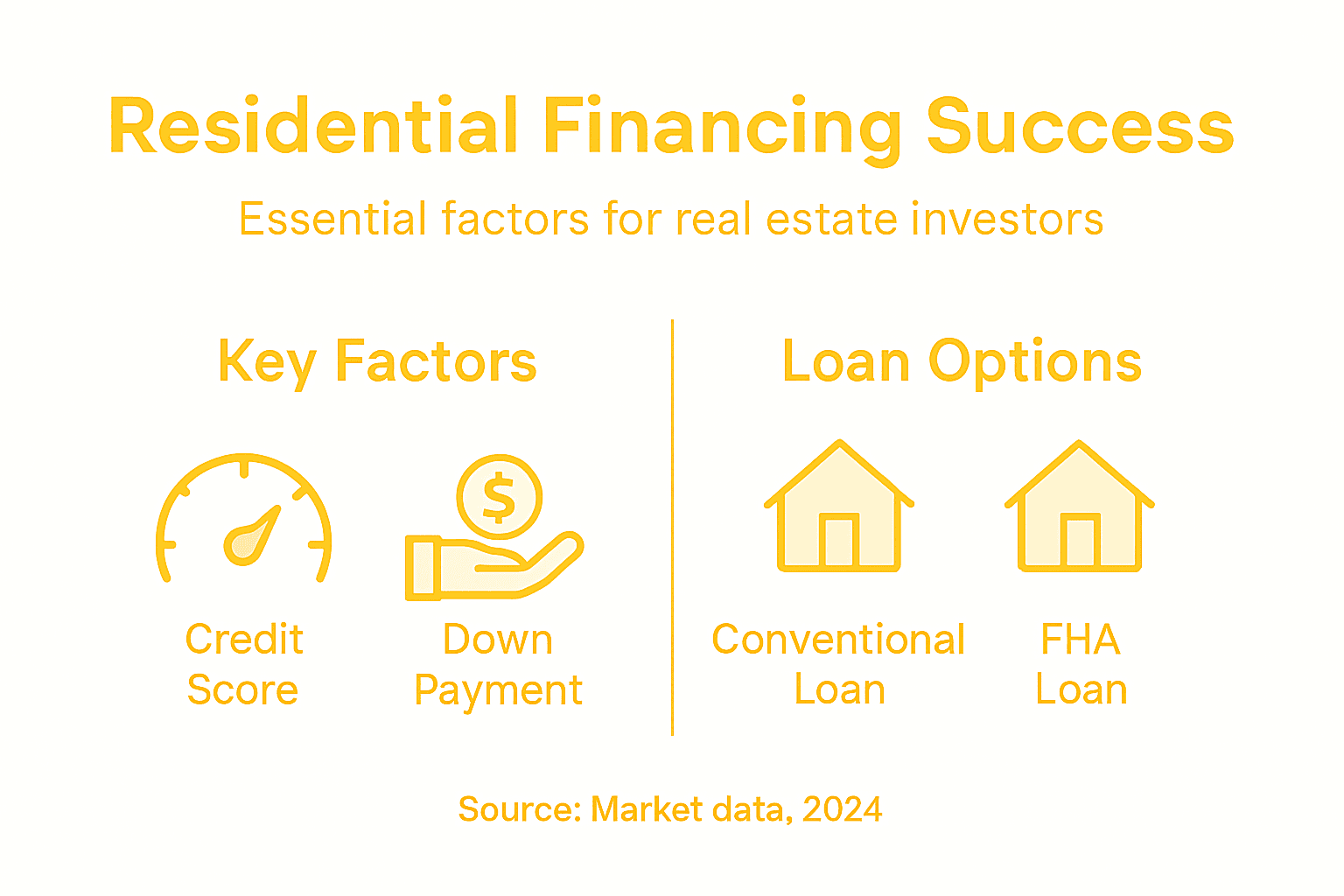
- Credit Score: Minimum 620-680 for most conventional loans
- Debt-to-Income Ratio: Generally under 43% for optimal approval
- Down Payment: 20-25% for investment properties
- Cash Reserves: Typically 6-12 months of mortgage payments
- Property Income Potential: Documented rental income projections
Financing strategies involve understanding complex lending requirements that assess not just personal financial health, but the potential cash flow and appreciation of the specific investment property. Lenders evaluate multiple factors including personal credit history, existing debt, income stability, and the specific investment property’s projected performance.

Pro tip: Create a comprehensive investment portfolio packet including property analysis, income projections, and personal financial statements before approaching lenders to increase your credibility and loan approval chances.
Leveraging Financing to Scale Your Portfolio
Portfolio scaling represents a strategic approach to expanding real estate investments through intelligent financing mechanisms. Investors leverage debt to fund property acquisitions and create opportunities for exponential growth beyond initial capital constraints.
Effective portfolio scaling strategies include:
- Cross-Collateralization: Using existing property equity to secure additional investments
- Cash-Out Refinancing: Extracting equity from appreciated properties to fund new purchases
- Blanket Mortgages: Financing multiple properties under a single loan structure
- Portfolio Loans: Specialized lending products designed for multi-property investors
- Seller Financing: Negotiating direct financing terms with property owners
Advanced financial modeling enables strategic portfolio expansion by helping investors optimize their debt-to-equity ratios, identify high-potential markets, and create sustainable growth trajectories. Successful scaling requires understanding how different financing approaches can minimize risk while maximizing potential returns across your investment portfolio.
The table below summarizes strategies for successful portfolio scaling using financing:
| Scaling Strategy | How It Supports Growth | Considerations |
|---|---|---|
| Cross-Collateralization | Unlocks equity for new purchases | Risk of multiple asset loss |
| Cash-Out Refinancing | Accesses funds from appreciation | May increase monthly payment |
| Blanket Mortgage | Simplifies managing several loans | All properties as collateral |
| Portfolio Loan | Flexibility for multi-unit owners | Lender criteria may vary |
| Seller Financing | Bypasses traditional lenders | Often higher rates/negotiated |
Pro tip: Develop relationships with portfolio lenders who specialize in real estate investing and can provide more flexible financing options as your investment strategy evolves.
Common Financing Mistakes and How to Avoid Them
Real estate investors frequently encounter financing pitfalls that can derail their investment strategies. Investors often make critical errors by failing to thoroughly understand loan terms and assess their long-term financial implications.
Top financing mistakes to avoid include:
- Overleveraging: Taking on more debt than rental income can support
- Inadequate Cash Reserves: Lacking emergency funds for unexpected expenses
- Ignoring Total Financing Costs: Overlooking closing costs, origination fees, and ongoing expenses
- Poor Credit Management: Failing to maintain credit scores that qualify for favorable rates
- Neglecting Market Research: Borrowing without understanding local market conditions
Risk mitigation requires comprehensive financial analysis that goes beyond surface-level numbers. Successful investors develop a detailed understanding of their financing structures, carefully evaluating cash flow projections, market trends, and potential economic shifts that could impact their investment performance.
Pro tip: Create a comprehensive financial stress test for each potential investment, modeling scenarios with increased interest rates and decreased rental income to ensure your financing strategy can withstand market fluctuations.
Unlock Your Residential Investing Potential with Smart Financing Solutions
Navigating the complexities of financing in residential investing can feel overwhelming. The challenges of securing the right loan, understanding qualification criteria, and scaling your portfolio without risking overleveraging are real obstacles that many investors face. This article highlights the critical role financing plays in investment success and the importance of strategic choices like conventional mortgages, government-backed loans, and private lending options. If you are striving to confidently select financing that aligns with your goals while avoiding common pitfalls Bold Street AI is here to help.
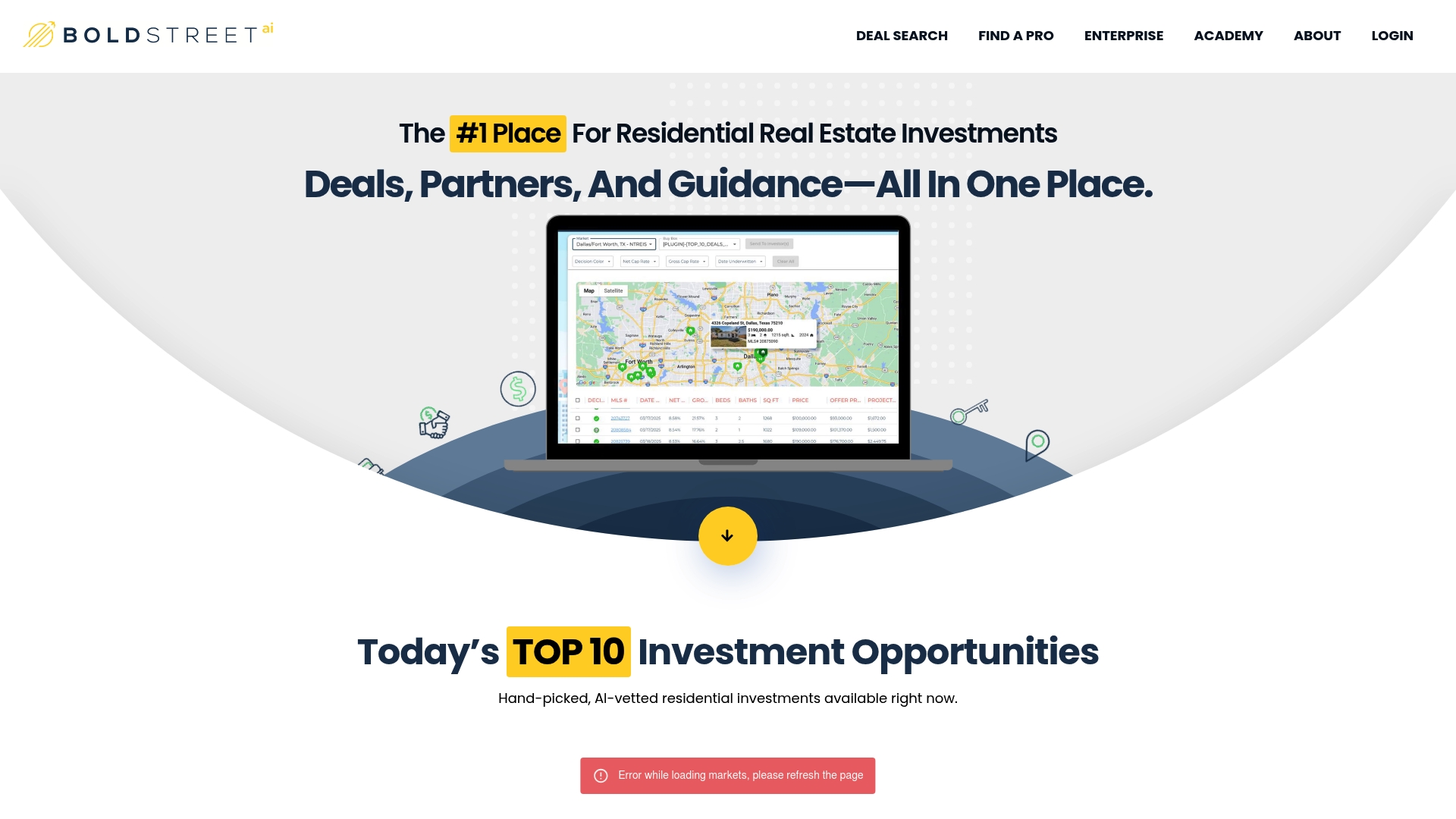
Discover how Bold Street AI simplifies your real estate investment journey by connecting you with trusted lenders, knowledgeable agents, and comprehensive educational resources through our digital platform. Empower your investment decisions with expert guidance on financing options and explore curated opportunities for portfolio growth. Start today at Bold Street AI and transform financing challenges into strategic advantages that accelerate your residential investing success.
Frequently Asked Questions
What types of financing are available for residential investments?
Residential investment financing options include conventional mortgages, government-backed loans, private money lending, hard money loans, and home equity lines of credit (HELOC). Each option has unique requirements and benefits tailored to different investment strategies.
How can I qualify for a residential investment loan?
To qualify for a residential investment loan, you’ll typically need a credit score of 620-680, a debt-to-income ratio under 43%, a down payment of 20-25%, and cash reserves that cover 6-12 months of mortgage payments.
What are common mistakes to avoid when financing real estate investments?
Common mistakes include overleveraging by taking on too much debt, lacking adequate cash reserves, ignoring total financing costs, poor credit management, and neglecting market research before securing a loan.
How can I effectively scale my residential investment portfolio using financing?
Effective scaling can be achieved through strategies like cross-collateralization, cash-out refinancing, blanket mortgages, portfolio loans, and seller financing. These methods allow leveraging existing assets or obtaining funding for new purchases to grow your portfolio strategically.