
Most american real estate investors who start with strong networks see faster portfolio growth and greater access to funding and mentorship. Building the right connections is crucial for novice investors aiming to compete with seasoned Canadian or European peers. This step-by-step guide reveals how to define clear investment goals, leverage digital platforms, engage in impactful events, and nurture relationships, all to help you expand your network and secure meaningful opportunities in real estate.
Table of Contents
- Step 1: Define Your Investment Goals And Ideal Connections
- Step 2: Leverage Platforms And Online Communities Effectively
- Step 3: Engage At Local And Virtual Real Estate Events
- Step 4: Cultivate Credibility Through Shared Value And Insights
- Step 5: Nurture Ongoing Relationships And Track Network Growth
Quick Summary
| Key Point | Explanation |
|---|---|
| 1. Define SMART Investment Goals | Use the SMART framework to create clear investment objectives that guide your actions and strategies. |
| 2. Build Strategic Professional Connections | Network with professionals like agents and brokers who can bring valuable insights and opportunities to your investment journey. |
| 3. Leverage Online Platforms for Networking | Engage on platforms like LinkedIn and Facebook to expand your reach and connect with relevant peers in real estate. |
| 4. Participate in Local and Virtual Events | Attend real estate events to build relationships, learn market insights, and enhance your networking opportunities. |
| 5. Maintain and Nurture Relationships | Regularly engage with contacts to strengthen connections, track network growth, and ensure meaningful professional partnerships. |
Step 1: Define your investment goals and ideal connections
Successful real estate investing starts with crystal clear goals that transform abstract dreams into actionable strategies. Your investment roadmap requires precision and strategic thinking to connect with the right network of professionals who can help you achieve your objectives.
Begin by crafting investment goals using the SMART framework, which ensures your objectives are Specific, Measurable, Achievable, Relevant, and Time-bound. For residential real estate investors, this might mean defining exact targets like purchasing three rental properties within 18 months, generating $5,000 monthly passive income, or building a portfolio valued at $1 million by the end of five years. These concrete goals will help you identify the specific types of connections you need.
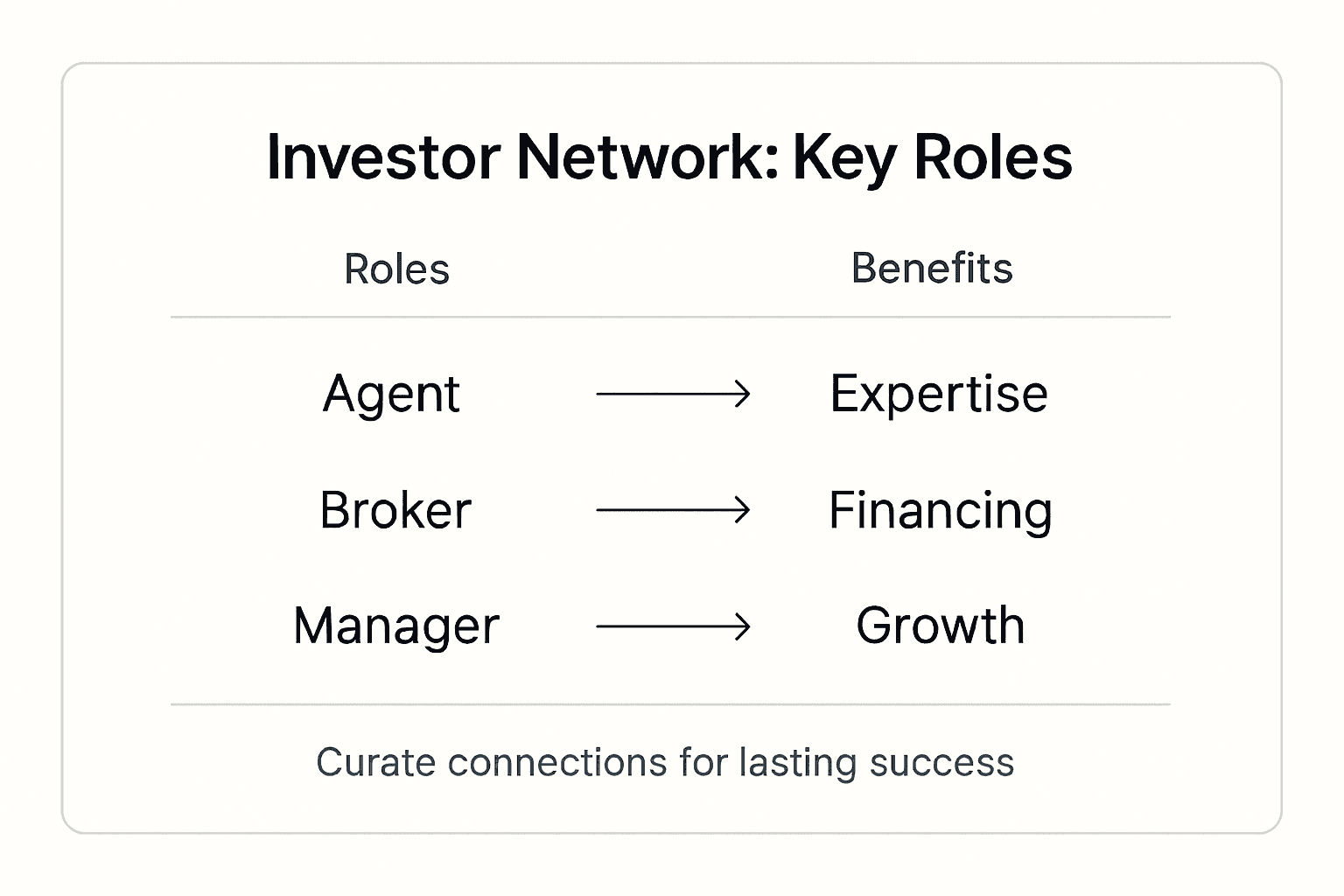
When mapping your ideal network, consider the professional relationships that align directly with your investment goals. This could include real estate agents specializing in investment properties, mortgage brokers who understand investor financing, property managers experienced in rental management, and fellow investors with complementary skills or market knowledge. Each connection should bring strategic value to your investment journey, helping you navigate market complexities and accelerate your growth.
Here is a summary of strategic professional connections and the value they add to your investment network:
| Professional Role | Key Benefit Provided | How They Accelerate Growth |
|---|---|---|
| Investment-Savvy Agent | Finds high-potential properties | Streamlines deal sourcing and vetting |
| Investor-Friendly Broker | Secures optimal financing | Increases leverage and purchasing power |
| Experienced Property Manager | Manages tenant relations | Reduces vacancy and operational hassles |
| Seasoned Co-Investor | Shares market knowledge | Offers partnerships and new perspectives |
Pro tip: Create a one-page document outlining your investment goals and desired network profile to provide clarity and focus during your networking efforts.
Step 2: Leverage platforms and online communities effectively
Building a robust investor network requires strategic engagement with digital platforms that connect real estate professionals and potential collaborators. Your online presence can dramatically expand your reach and opportunities beyond traditional networking methods.

Social networking has transformed real estate connections by providing dynamic platforms for professionals to interact, share insights, and build trusted relationships. Focus on key platforms like LinkedIn for professional networking, Facebook for community engagement, and industry-specific forums that cater to real estate investors. Create a compelling profile that highlights your investment goals, expertise, and unique value proposition. Actively participate in relevant groups, share valuable market insights, and engage in meaningful conversations that demonstrate your knowledge and commitment.
When leveraging online communities, prioritize quality over quantity. Select platforms and groups that align closely with your investment strategy and target market. Participate consistently by commenting on discussions, sharing market research, and offering constructive insights. Build relationships by being genuinely helpful rather than overtly promotional. Follow industry thought leaders, connect with professionals who have complementary skills, and create a network that provides mutual value and potential collaboration opportunities.
Compare common online platforms for building a real estate investment network:
| Platform | Unique Strength | Ideal Usage Scenario |
|---|---|---|
| Professional credibility | Showcasing expertise, sourcing deals | |
| Group interaction | Community advice, local insights | |
| Specialty Forum | Niche market knowledge | Deep dives on strategies, Q&A |
Pro tip: Develop a content calendar to maintain consistent and strategic engagement across your chosen online platforms, ensuring you share valuable insights regularly without overwhelming your network.
Step 3: Engage at local and virtual real estate events
Expanding your investor network requires strategic participation in both local and virtual real estate events that offer unique opportunities to connect with professionals, learn market insights, and establish meaningful relationships. Your networking approach should blend traditional in-person interactions with innovative digital engagement strategies.
Success in real estate hinges on building strong connections through networking at industry conferences, seminars, trade shows, and digital platforms. Attend local meetups, regional association gatherings, and national conferences to gain deeper market understanding and expand your professional circle. Prioritize events that align with your investment goals, such as multifamily property symposiums, rental market workshops, or investment strategy seminars. Prepare in advance by researching speakers, potential contacts, and session topics to maximize your networking potential.
Virtual events have revolutionized networking by removing geographical barriers and providing flexible engagement options. Actively participate in webinars, online property tours, and digital roundtables. Approach these events with the same intentionality as in-person gatherings by preparing thoughtful questions, maintaining a professional online presence, and following up with meaningful connections. Leverage digital tools like video conferencing, professional networking platforms, and digital business cards to streamline your interaction and make lasting impressions on potential partners and mentors.
Pro tip: Set a specific networking goal for each event you attend, such as making three quality connections or learning one actionable investment strategy, to ensure purposeful and productive engagement.
Step 4: Cultivate credibility through shared value and insights
Building a powerful investor network transcends simple connections it requires establishing yourself as a trusted and knowledgeable professional in the real estate investment landscape. Your reputation will become your most valuable networking asset, opening doors to opportunities that traditional networking methods cannot.
Building a strong real estate network relies on small, consistent actions that demonstrate your expertise and commitment to the industry. Start by consistently sharing high-quality market insights, research, and thoughtful analysis across your professional platforms. This might include creating detailed market trend reports, sharing data driven investment strategies, or offering nuanced commentary on local real estate developments. Focus on providing genuine value rather than self promotion. Engage authentically in discussions, offer constructive feedback, and showcase your analytical skills through well researched perspectives that highlight your deep understanding of real estate investment dynamics.
Credibility emerges from a combination of knowledge, ethical behavior, and genuine desire to contribute to the professional community. Develop a reputation for reliability by following through on commitments, maintaining transparency in your interactions, and demonstrating consistent professionalism. Seek opportunities to mentor emerging investors, contribute to industry discussions, and share lessons learned from your personal investment experiences. Remember that building credibility is a long term strategy that requires patience, authenticity, and a genuine commitment to adding value to your professional network.
Pro tip: Create a monthly content calendar focusing on sharing one substantive market insight or investment strategy that showcases your expertise and provides real value to your professional network.
Step 5: Nurture ongoing relationships and track network growth
Successful investor networking extends far beyond initial connections and requires consistent, strategic relationship management. Your network is a living ecosystem that demands ongoing attention, intentional cultivation, and thoughtful tracking to transform casual contacts into powerful professional partnerships.
Effective networking is an ongoing activity requiring consistent effort to build and nurture meaningful relationships. Implement a systematic approach to maintaining connections by establishing regular communication rhythms. This might include quarterly check-ins, sharing relevant market insights, sending personalized congratulatory messages for professional milestones, or offering genuine assistance without expecting immediate returns. Use customer relationship management tools to track interactions, set reminders for follow ups, and document the context of each professional relationship.
Measuring network growth requires a strategic approach that goes beyond simple contact count. Develop key performance indicators that reflect the quality and potential of your connections, such as referral rates, collaborative project opportunities, knowledge exchange frequency, and the strategic value each relationship brings to your investment goals. Periodically review your network composition, identify gaps in expertise or market coverage, and proactively seek connections that complement your existing professional ecosystem. Remember that network growth is not about quantity but about cultivating high impact relationships that provide mutual professional advancement.
Pro tip: Create a quarterly relationship audit spreadsheet that tracks the origin, interaction frequency, and potential value of each key professional connection in your network.
Build Your Real Estate Investor Network with Bold Street AI
Building a strong investor network requires clear goals, strategic connections, and consistent credibility as emphasized in the article “How to Build Investor Network for Real Estate Success.” If you find it challenging to connect with the right agents, lenders, or property managers or need a smoother way to vet deals using data-driven insights, Bold Street AI offers exactly the support you need. By combining AI-powered deal vetting with expert guidance and a vibrant community, Bold Street AI removes common barriers and helps you accelerate portfolio growth with confidence.
Start transforming your investment journey today by accessing curated opportunities, connecting with top professionals, and gaining valuable education through the Bold Street AI platform. Discover how our tools and community can help you define your goals, build credibility, and nurture essential relationships efficiently. Visit https://boldstreet.ai now and take the first step toward real estate success.
Frequently Asked Questions
How can I define my investment goals for networking in real estate?
Successful networking starts with clear investment goals. Use the SMART framework to ensure your objectives are Specific, Measurable, Achievable, Relevant, and Time-bound. For example, aim to buy three rental properties within 18 months.
What types of professionals should I connect with for real estate investing?
Focus on connecting with real estate agents, mortgage brokers, property managers, and other investors. Each should add strategic value to your networking efforts; for instance, an experienced property manager can help reduce operational hassles.
How can I effectively engage with online communities for real estate networking?
Choose the right platforms like LinkedIn and Facebook to engage with real estate communities. Regularly share valuable market insights and participate in discussions to establish your presence, aiming for consistent engagement at least once a week.
What should I do to prepare for local or virtual real estate events?
Research the event, including speakers and topics, to maximize your networking potential. Set a specific goal for each event, such as making three quality connections or learning one actionable strategy.
How can I build credibility in my real estate investor network?
Establish yourself as a knowledgeable professional by consistently sharing high-quality insights and offering genuine value to conversations. Aim to contribute at least one substantive market insight each month, building trust within your network.
How should I nurture relationships in my real estate network?
Maintain relationships through regular communication, such as quarterly check-ins or personalized messages. Set reminders for follow-ups and aim to reach out to key connections at least every few months to keep relationships strong.
Recommended
- Navigating the Terrain: Common Challenges for Real Estate Agents Working with Residential Real Estate Investors – Bold Street AI
- 2024 is the Perfect Time to Become a Real Estate Investor – Bold Street AI
- Webinar with Mastermind Investor Agent Team Lead – Keena Bass – Bold Street AI
- Discover The Secret Investment Playbook of Residential Real Estate – Bold Street AI