
Most new residential investors discover that over 80 percent of successful American property deals involve strong partnerships and clear investment strategies. For those just starting out, finding trusted mentorship and reliable funding can feel daunting but is critical to turning your first property dreams into reality. This practical guide offers targeted steps for global investors who want to learn how seasoned American professionals define investment goals, connect with the right networks, and build lasting partnerships.
Table of Contents
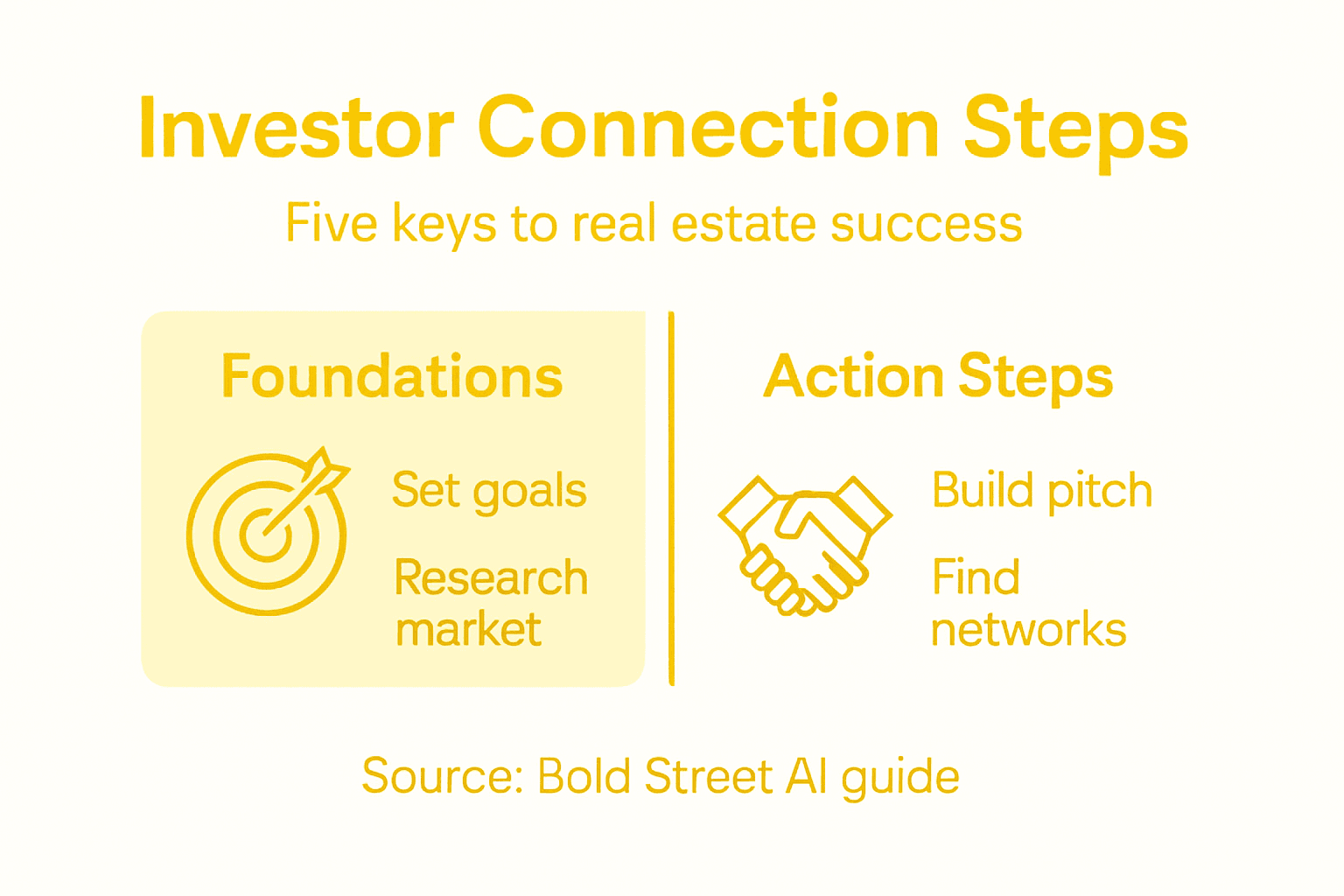
- Step 1: Define Your Investment Goals And Target Market
- Step 2: Build A Compelling Investor Pitch And Profile
- Step 3: Research And Identify Qualified Investor Networks
- Step 4: Initiate Engagement Through Trusted Real Estate Channels
- Step 5: Verify Investor Credentials And Secure Commitments
Quick Summary
| Key Point | Explanation |
|---|---|
| 1. Define Clear Investment Goals | Start with establishing your financial objectives, whether focusing on cash flow or long-term appreciation, to guide your strategy. |
| 2. Craft a Compelling Investor Pitch | Develop a strategic narrative about your investment, clearly presenting the problem, solution, and potential returns to attract investors. |
| 3. Build a Strong Investor Network | Research and connect with accredited investors through professional associations and online platforms to enhance your funding opportunities. |
| 4. Verify Investor Credentials | Conduct thorough background checks to confirm potential investors’ legitimacy, ensuring a trustworthy partnership and protecting your interests. |
| 5. Engage Through Reputable Channels | Leverage established real estate platforms and professional events to build trust and showcase your expertise while networking with potential investors. |
Step 1: Define your investment goals and target market
Successful real estate investing starts with crystal clear goals and a strategic understanding of your target market. This crucial first step will help you build a focused approach that maximizes your potential returns and minimizes unnecessary risks.
Begin by conducting a comprehensive self assessment that examines your financial capacity, risk tolerance, and investment timeline. Are you seeking short term cash flow through rental properties or long term appreciation in property value? Real estate investing involves analyzing property types strategically, so understanding your personal financial objectives is key. Consider factors like your available capital, potential financing options, and how much time you can dedicate to property management.
Next, research potential market segments thoroughly. The most successful investors segment their markets carefully. Investors segment their target customer base and project market size through careful analysis. This might mean focusing on residential rental properties in growing metropolitan areas, commercial real estate in emerging business districts, or fix and flip opportunities in neighborhoods experiencing revitalization. Create detailed profiles of your ideal property and target tenant or buyer demographic, including income levels, lifestyle preferences, and local economic indicators.
Pro tip: Create a one page investment strategy document that clearly outlines your goals, target market, and investment criteria to keep yourself focused and accountable.
Here’s a summary of common real estate investment goals and their typical strategies:
| Investment Goal | Typical Property Type | Timeline Focus |
|---|---|---|
| Cash Flow | Rental properties | Short/Medium Term |
| Long-Term Appreciation | Single-family or condos | Long Term |
| Quick Profit | Fix and flip projects | Short Term |
| Portfolio Diversification | Mixed asset real estate | Variable |
Step 2: Build a compelling investor pitch and profile
Crafting an exceptional investor pitch is your gateway to attracting serious funding and establishing credibility in the real estate investment world. Your pitch is essentially a strategic narrative that transforms your investment vision into an irresistible opportunity for potential backers.
Effective pitching requires clarity and persuasive storytelling that goes beyond basic financial numbers. Start by developing a concise narrative that articulates your unique value proposition. Break down your pitch into four key components: the investment problem you are solving, your proposed solution, the market opportunity, and your competitive advantage. Be prepared to demonstrate your deep understanding of local real estate dynamics and provide concrete evidence of potential returns.
When constructing your investor profile, focus on transparency and professionalism. A compelling investor pitch should clearly present the investment opportunity by outlining your background, investment philosophy, and track record. Include relevant credentials, past successes, and a clear understanding of your investment strategy. Use visual aids like charts and graphs to make complex information digestible, and practice delivering your pitch with confidence and passion.
Pro tip: Record yourself practicing the pitch and review it critically, paying attention to your tone, clarity, and ability to communicate complex ideas succinctly.
Step 3: Research and identify qualified investor networks
Building a robust network of potential real estate investors requires strategic research and targeted outreach. Your goal is to connect with qualified investors who understand and appreciate the unique value of your investment opportunities.

Accredited investors form a key qualified network for private capital raising, defined by specific financial and professional criteria. Start by understanding the legal definitions of accredited investors, which typically include individuals with annual income over $200,000 or net worth exceeding $1 million. Explore professional networks like local real estate investment associations, chambers of commerce, and industry conferences where these sophisticated investors gather. Leverage online platforms such as LinkedIn, specialized real estate investment forums, and professional networking events to expand your potential investor connections.
Dive deeper into specialized investor communities that align with your investment philosophy. The Ceres Investor Network represents a global community of institutional investors focused on responsible and strategic investing. Consider joining or researching similar networks that match your investment approach, whether you are targeting sustainable real estate development, residential rental properties, or commercial real estate opportunities. Create a comprehensive database of potential investors, including their investment preferences, past portfolio performance, and potential alignment with your specific real estate strategy.
Pro tip: Develop a targeted investor tracking spreadsheet that categorizes potential investors by their investment criteria, contact information, and past interactions to streamline your networking efforts.
Step 4: Initiate engagement through trusted real estate channels
Successfully connecting with investors requires strategic communication through established and credible real estate networks. Your approach should focus on building trust and demonstrating your professional expertise across multiple reliable platforms.
Digital platforms now drive agent selection and investor connections, emphasizing the critical importance of a strong online presence. Start by establishing profiles on reputable real estate platforms, professional networking sites, and industry-specific forums. Prioritize creating detailed, professional profiles that highlight your investment experience, track record, and unique value proposition. Engage actively by sharing insightful content, commenting on industry discussions, and demonstrating your deep understanding of real estate investment trends.
Real estate engagement involves coordinating with multiple professional networks including local Multiple Listing Services, brokers, and industry associations. Attend real estate investment conferences, join professional organizations, and participate in local investor meetups to expand your network. Develop a systematic approach to relationship building that includes personalized outreach, follow up communications, and maintaining a database of potential investor contacts. Focus on creating genuine connections by offering value through market insights, investment opportunities, and professional expertise.
Pro tip: Create a monthly newsletter or digital portfolio that showcases your recent successful investments and market analysis to keep potential investors consistently engaged and informed.
This table outlines key platforms and events for engaging with potential real estate investors:
| Channel Type | Example Platform/Event | Primary Benefit |
|---|---|---|
| Professional Associations | Real estate investment clubs | Access to accredited investors |
| Online Networking | LinkedIn groups | Broader outreach and introductions |
| Industry Conferences | National REI events | Face-to-face relationship building |
| Local Meetups | City investor meetups | Community connections and updates |
Step 5: Verify investor credentials and secure commitments
Successful real estate investment partnerships require rigorous credential verification and strategic commitment processes. Your ability to thoroughly validate potential investors will protect your investment opportunities and establish professional credibility.
Investors can verify professional credentials through regulatory databases, which provide critical insights into an investor’s background and legitimacy. Begin by requesting comprehensive documentation including financial statements, proof of accredited investor status, and references from previous investment partners. Conduct thorough background checks using official channels such as financial regulatory websites, credit verification services, and professional networks. Pay special attention to income verification, net worth documentation, and any potential red flags in their investment history.
Validating licenses helps ensure trustworthy investment dealings and compliance with legal standards. Develop a standardized due diligence checklist that covers all essential verification steps, including reviewing tax returns, bank statements, and investment experience. Schedule face-to-face or video meetings to assess the investor’s genuine interest, alignment with your investment philosophy, and potential long term partnership potential. Create clear written agreements that outline expectations, investment terms, and mutual responsibilities to establish a transparent and professional relationship.
Pro tip: Maintain a confidential verification tracking system that documents all credential checks and investor interactions to streamline future partnerships and demonstrate your professional approach.
Connect With Investors Confidently Using Expert Tools and Support
Navigating the challenges of connecting with real estate investors requires clear strategies, trustworthiness, and access to the right professional networks. This article highlights essential steps like defining your investment goals, crafting compelling investor pitches, and verifying credentials. Many investors struggle with building these connections and staying organized during outreach. Bold Street AI simplifies this process by providing a centralized platform designed to empower investors in residential real estate. With curated investment opportunities, access to trusted local agents and lenders, and educational resources from Bold Academy, it helps you overcome common hurdles such as identifying qualified investors and maintaining transparent communications.
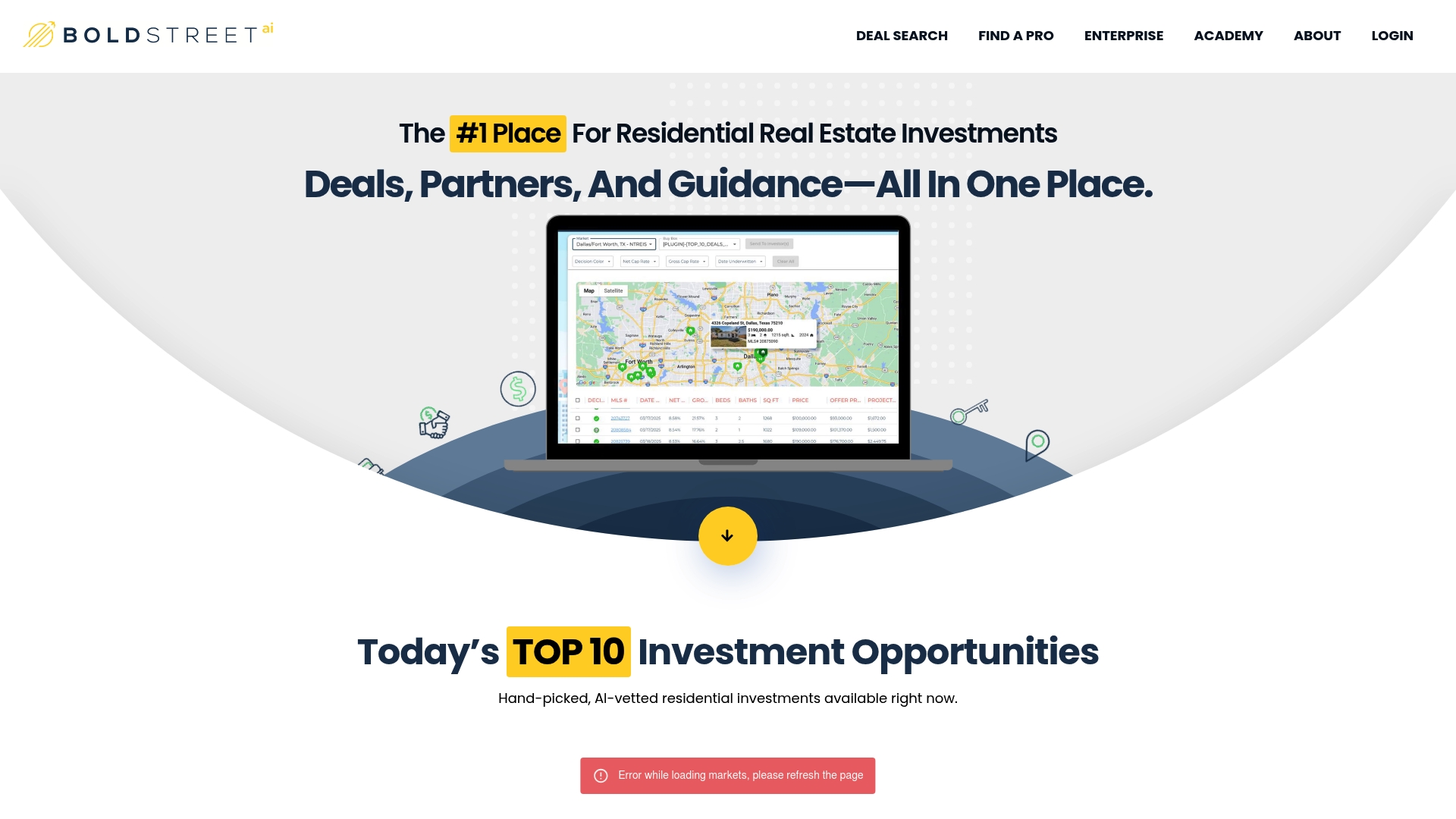
Ready to take your real estate investing to the next level? Explore how Bold Street AI can help you find investor-friendly professionals, streamline your networking efforts, and build a strong portfolio. Don’t wait to secure the partnerships that will drive your success. Visit https://www.boldstreet.ai/ today and start connecting with confidence. Learn more about navigating real estate investing through our educational resources at Bold Academy and discover how to match with local real estate professionals that align with your goals.
Frequently Asked Questions
How do I define my investment goals for real estate?
To define your investment goals, start by assessing your financial capacity, risk tolerance, and timeline. Document whether you seek short-term cash flow or long-term property appreciation to provide clarity for your investment strategy.
What should I include in an investor pitch for real estate?
Your investor pitch should include a clear problem you’re solving, your proposed solution, market opportunities, and your competitive advantage. Structure your pitch to highlight your unique value proposition while demonstrating your understanding of local real estate dynamics.
How can I find accredited investors for my real estate projects?
To find accredited investors, explore local real estate investment associations, industry conferences, and professional networks. Create a comprehensive database of potential investors, noting their preferences and past investment performance, to facilitate targeted outreach.
What are effective ways to engage with real estate investors?
Engage with real estate investors by establishing profiles on reputable online platforms and participating in local investor meetups. Actively share insights about market trends to build credibility and establish relationships with potential backers.
How do I verify the credentials of potential investors?
Verify investor credentials by requesting financial statements and conducting thorough background checks using regulatory databases. Develop a checklist to standardize verification steps and ensure you assess all necessary documentation for a trustworthy partnership.
What should I include in a written agreement with investors?
In your written agreements with investors, outline the expectations, investment terms, and mutual responsibilities clearly. Ensure that both parties have a shared understanding of the partnership and establish transparent conditions to foster a professional relationship.
Recommended
- Navigating the Terrain: Common Challenges for Real Estate Agents Working with Residential Real Estate Investors – Bold Street AI
- 2024 is the Perfect Time to Become a Real Estate Investor – Bold Street AI
- Webinar with Mastermind Investor Agent Team Lead – Keena Bass – Bold Street AI
- Discover The Secret Investment Playbook of Residential Real Estate – Bold Street AI