
Finding ways to earn income from real estate without handling the stress of property management is a common goal for new American investors. Passive real estate investing matters because it offers a pathway to benefit from property markets while keeping your time commitment low. This guide breaks down the essentials of passive real estate investing so you can understand how to build wealth, reduce risk, and start making smart choices backed by a supportive digital community.
Table of Contents
- Passive Real Estate Investing Defined Clearly
- Major Types of Passive Real Estate Investments
- How Passive Investments Actually Work
- Benefits and Drawbacks for Beginners
- Risks, Costs, and Common Pitfalls to Avoid
Key Takeaways
| Point | Details |
|---|---|
| Passive Real Estate Investing | This approach allows investors to generate income with minimal involvement, focusing on long-term wealth building through strategic investment vehicles. |
| Types of Investments | Key options include REITs, real estate mutual funds, syndication groups, and crowdfunding platforms, each offering varying levels of liquidity and risk. |
| Benefits for Beginners | Passive investing simplifies management, reduces financial barriers, and provides diversification, making it accessible for new investors. |
| Risks and Costs | Investors should carefully evaluate market risks, expense ratios, and common pitfalls to enhance decision-making and protect their investments. |
Passive Real Estate Investing Defined Clearly
Passive real estate investing represents a strategic approach where investors generate income with minimal day-to-day involvement. Unlike active investing that requires constant management, passive real estate investing allows individuals to earn returns without directly operating properties or handling tenant interactions. This investment method provides an opportunity to build wealth through real estate market performance while minimizing personal time commitment.
The core principle of passive real estate investing involves selecting investment vehicles that generate consistent income streams with reduced personal effort. These strategies typically include purchasing shares in Real Estate Investment Trusts (REITs), participating in crowdfunding platforms, investing in rental properties managed by professional property managers, or buying into syndication groups that collectively purchase income-generating real estate assets. Each approach offers unique benefits, allowing investors to diversify their portfolios and potentially earn steady passive income without the complexities of direct property management.
Successful passive real estate investing requires careful research and strategic selection of investment opportunities. Investors must evaluate factors like market trends, potential returns, property locations, and management quality. While this investment strategy minimizes hands-on involvement, it still demands initial due diligence and periodic portfolio review to ensure continued performance. Understanding risk tolerance, conducting thorough market research, and selecting reputable investment platforms are critical steps in building a robust passive real estate investment strategy.
Pro Tip: Before committing funds, always request detailed historical performance data and understand the specific fee structures associated with your chosen passive real estate investment vehicle.
Major Types of Passive Real Estate Investments
Passive real estate investments offer diverse opportunities for investors seeking to build wealth without direct property management responsibilities. Passive investment vehicles range from publicly traded securities to more specialized investment structures, each providing unique advantages for generating real estate income. These investment types allow individuals to participate in real estate markets with varying levels of capital commitment and risk exposure.
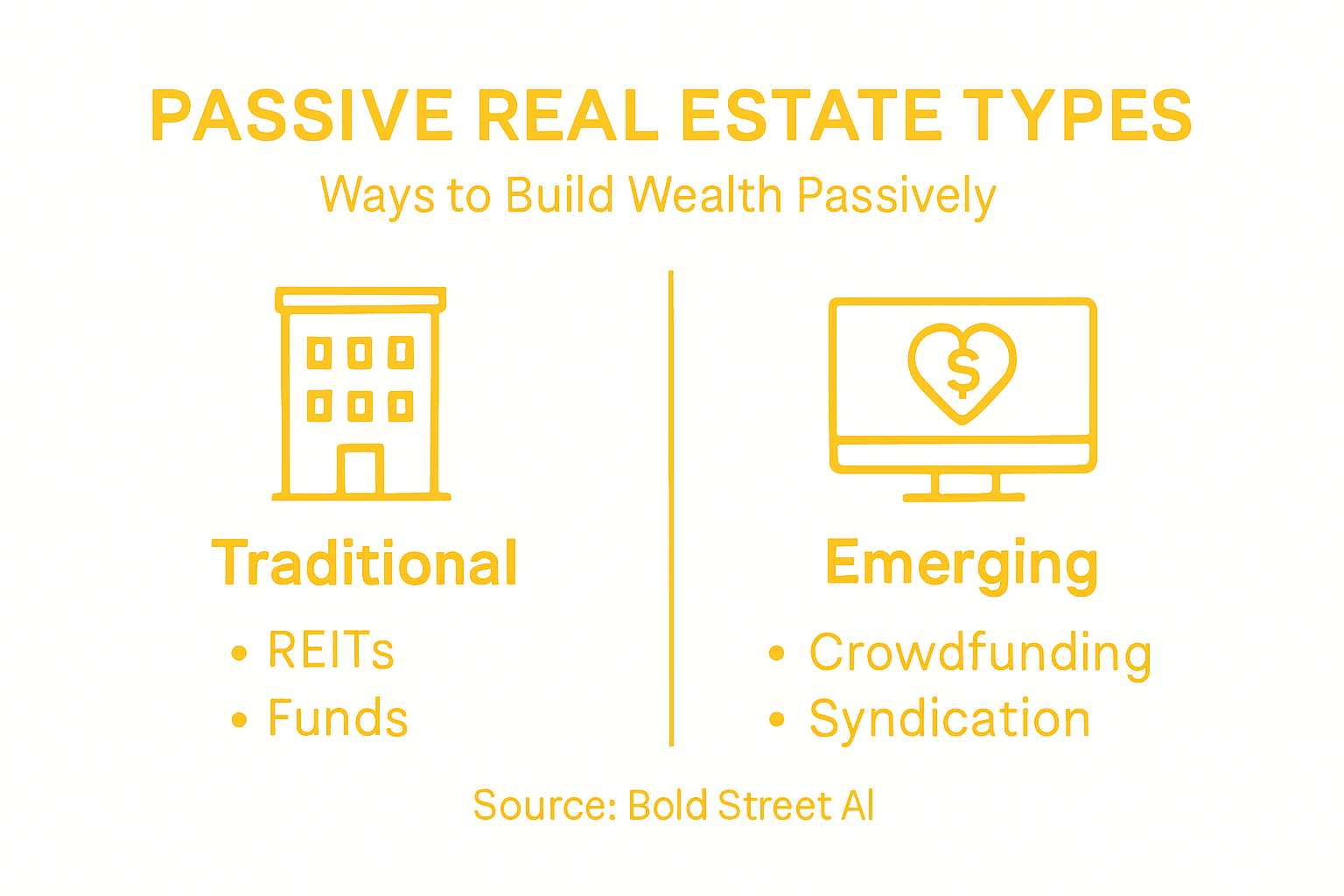
The primary categories of passive real estate investments include Real Estate Investment Trusts (REITs), which are publicly traded companies that own, operate, or finance income-generating real estate. These securities provide investors with liquid, dividend-paying opportunities across different property sectors like residential, commercial, and industrial properties. Other prominent passive investment options include real estate mutual funds, which pool investor capital to purchase diversified property portfolios, and real estate limited partnerships that enable smaller investors to participate in larger property acquisitions with professional management.
Beyond traditional investment vehicles, emerging passive real estate investment strategies include crowdfunding platforms and digital real estate investment networks. These modern approaches leverage technology to connect investors with curated real estate opportunities, allowing individuals to invest in specific properties or development projects with lower minimum investment requirements. By providing access to previously exclusive investment channels, these platforms democratize real estate investing and enable broader participation in property market wealth generation.
Pro Tip: Always conduct thorough due diligence by reviewing the historical performance, management team expertise, and fee structures before committing to any passive real estate investment vehicle.
Here’s a quick comparison of major passive real estate investment types and their key characteristics:
| Investment Type | Minimum Investment | Liquidity | Risk Level |
|---|---|---|---|
| REITs | Low (few hundred $) | Highly liquid (stock-style) | Moderate (diversified) |
| Real Estate Mutual Funds | Moderate | Liquid (at NAV) | Moderate |
| Syndication Groups | High (thousands $) | Illiquid (multi-year lockup) | Higher (project-specific) |
| Crowdfunding Platforms | Low (hundred $) | Varies (some lockup) | Moderate to High |
How Passive Investments Actually Work
Passive real estate investments operate through a systematic approach designed to generate consistent returns with minimal direct intervention. Passive investment strategies fundamentally rely on tracking predefined market indexes or specific asset classes, allowing investors to benefit from broad market performance without constant portfolio management. This approach eliminates the need for frequent trading and complex security selection, making it an attractive option for investors seeking a more hands-off investment experience.

The mechanics of passive real estate investing involve carefully constructed investment vehicles that replicate specific market segments or indexes. Investment managers create portfolios that mirror the composition of established real estate indexes, maintaining proportional holdings that reflect the broader market’s structure. This approach means investors gain exposure to a diversified range of properties and real estate sectors without personally selecting individual assets. Typical passive investment structures include Real Estate Investment Trusts (REITs), index-based mutual funds, and exchange-traded funds (ETFs) that provide systematic exposure to real estate market segments.
Unlike active investing, which attempts to outperform the market through frequent trading and strategic selections, passive investments follow a rules-based methodology that prioritizes consistent, predictable returns. This strategy involves minimal portfolio adjustments, typically occurring only when underlying index compositions change. The result is a more cost-effective approach with reduced transaction expenses and improved tax efficiency. Passive real estate investments allow individuals to participate in property market growth without requiring extensive real estate knowledge or direct property management skills.
Pro Tip: Compare the expense ratios of different passive real estate investment vehicles, as lower fees can significantly impact your long-term investment returns.
Benefits and Drawbacks for Beginners
Passive real estate investing presents a compelling opportunity for beginners seeking a straightforward wealth-building strategy. Passive investing benefits include simplified investment management, lower financial barriers to entry, and reduced complexity compared to traditional active investment approaches. New investors can gain exposure to real estate markets without requiring extensive market knowledge or continuous portfolio monitoring, making it an attractive entry point for those with limited time or investment experience.
The primary advantages of passive real estate investments include predictable returns, minimal transaction costs, and broad market exposure. These investment vehicles typically offer lower fees compared to actively managed funds, which can significantly impact long-term investment performance. Diversification is another key benefit, as passive investments spread risk across multiple properties and real estate sectors. However, beginners should also understand the potential limitations, such as the inability to rapidly adjust investments during market fluctuations and the lack of opportunity to outperform broader market trends.
For new investors, understanding the trade-offs is crucial. While passive real estate investments provide a low-stress entry into property markets, they also inherently limit individual control and strategic flexibility. The systematic approach means investors cannot make rapid, targeted decisions about specific properties or quickly pivot during changing market conditions. This approach works best for individuals seeking steady, predictable growth rather than those hoping to capitalize on short-term market inefficiencies or unique investment opportunities.
Pro Tip: Start with a small investment in a well-established passive real estate fund to gain practical experience and understand market dynamics before committing significant capital.
Risks, Costs, and Common Pitfalls to Avoid
Passive real estate investments, while attractive, come with inherent risks that require careful consideration. Investment strategy risks can dramatically impact portfolio performance, particularly for novice investors who may not fully understand market dynamics. These risks encompass market volatility, liquidity challenges, and potential systemic economic shifts that can unexpectedly influence real estate investment returns.
Financial costs represent a critical aspect of passive real estate investing that demands thorough evaluation. Investors must account for multiple expense categories, including management fees, transaction costs, tax implications, and potential regulatory compliance expenses. Some passive investment vehicles charge higher expense ratios that can significantly erode long-term returns, making it essential to compare different funds and understand their complete fee structures. Hidden costs like annual maintenance fees, performance-based charges, and administrative expenses can create unexpected financial burdens if not carefully analyzed before investment.
Common pitfalls in passive real estate investing often stem from insufficient research and unrealistic expectations. Investors frequently make mistakes such as overconcentrating investments in a single market segment, failing to diversify across different property types, or neglecting to understand the underlying economic factors driving real estate performance. Blind indexing without comprehensive market research can lead to suboptimal investment decisions. Successful passive investors maintain a balanced approach, continuously educating themselves about market trends, monitoring economic indicators, and remaining flexible in their investment strategies.
Pro Tip: Always conduct a comprehensive fee analysis and compare expense ratios across multiple passive real estate investment options before committing your capital.
Below is a summary of key risks, costs, and pitfalls to watch out for in passive real estate investing:
| Category | Example Issue | Possible Impact | How to Mitigate |
|---|---|---|---|
| Risk | Market downturn | Lower returns, possible losses | Diversify portfolio |
| Cost | High expense ratio | Reduces net gains over time | Compare fee structures |
| Pitfall | Poor due diligence | Investing in weak platforms | Research thoroughly |
| Liquidity | Long lockup periods | Funds inaccessible short-term | Confirm terms upfront |
Simplify Your Journey Into Passive Real Estate Investing Today
Passive real estate investing offers a powerful path to build wealth without the daily hassle of property management. Yet, navigating investment options, understanding fee structures, and finding trustworthy professionals can feel overwhelming. If you are aiming for steadier returns and want to avoid common pitfalls like high expenses or poor due diligence, Bold Street AI is designed to meet your goals. We connect you with curated residential investment opportunities, reliable real estate agents, lenders, and property managers who understand the challenges passive investors face.

Take control of your passive real estate portfolio with confidence. Visit Bold Street AI to explore investment options, learn through our Bold Academy educational resources, and join a community that supports your journey every step of the way. Don’t wait to turn your real estate ambitions into reality. Start now and experience how easy and transparent passive investing can be when backed by expert guidance and a trusted platform.
Frequently Asked Questions
What is passive real estate investing?
Passive real estate investing involves generating income through real estate investments with minimal direct management or involvement, allowing investors to build wealth without handling day-to-day property operations.
What are the main types of passive real estate investments?
The primary types include Real Estate Investment Trusts (REITs), real estate mutual funds, syndication groups, and crowdfunding platforms, each offering varying levels of exposure, liquidity, and risk.
What are the benefits of passive real estate investing for beginners?
Benefits for beginners include simplified investment management, lower barriers to entry, predictable returns, and the ability to gain broad market exposure without extensive real estate knowledge.
What risks should I be aware of when investing passively in real estate?
Risks include market volatility, liquidity challenges, high management fees, and potential pitfalls from insufficient research, which can all negatively impact investment performance.
Recommended
- 7 Types of Real Estate Investments for New Investors | Bold Street AI
- 7 Examples of Investment Strategies for New Property Investors | Bold Street AI
- Why Build a Real Estate Portfolio: Key Benefits for Urban Investors | Bold Street AI
- Step by Step Real Estate Investing for Beginners | Bold Street AI