
Buying your first property can feel both exciting and overwhelming for new American investors. Residential real estate investing focuses on acquiring homes and apartments specifically zoned for people to live in, offering an accessible path to building wealth. Understanding the differences between single-family and multi-family properties, as well as the unique rules that define residential real estate, empowers you to make smarter choices from day one. This guide highlights key concepts and practical steps, giving you the confidence to start building your property portfolio.
Table of Contents
- Defining Residential Real Estate Investing
- Essential Property Types and Variations
- Popular Investment Strategies Explained
- Legal Requirements and Compliance in 2026
- Financial Risks, Costs, and Common Mistakes
Key Takeaways
| Point | Details |
|---|---|
| Understanding Residential Real Estate | Focus on properties designed for living, such as single-family homes and multi-family units, as they offer simpler financing and a larger tenant pool. |
| Investment Strategies | Familiarize yourself with various strategies like buy and hold, fix and flip, and rental income focus to align with your financial goals and risk tolerance. |
| Legal Compliance | Stay informed about the new regulatory requirements in 2026, particularly concerning federal reporting for non-financed transfers of residential real estate. |
| Risk Management | Implement financial safety margins and conduct thorough market research to mitigate risks associated with property investments. |
Defining Residential Real Estate Investing
Residential real estate investing means buying, owning, and managing properties designed for people to live in, then generating profit or long-term wealth from them. Unlike commercial properties that serve businesses, residential investments focus on single-family homes and multi-family properties that are zoned specifically for residential living. When you purchase a duplex to rent out, buy a single-family home to flip, or own a four-unit apartment building, you’re engaging in residential real estate investing. The goal is straightforward: acquire properties at the right price, manage them effectively, and either collect rental income over time or sell them for appreciation.
What separates residential real estate from other investment types is the focus on properties zoned for living. This includes single-family homes, small multi-family buildings (typically 2-4 units), and apartment complexes. The residential designation matters legally and financially because zoning restrictions, financing options, and tenant protections differ significantly from commercial or industrial properties. You’ll find that residential properties are generally easier to finance than commercial buildings, and the pool of potential tenants is much larger. When most beginners start their real estate journey, they begin here because residential properties have lower entry barriers, more straightforward management, and clearer pathways to profitability. The different property types and risk factors you’ll encounter shape your entire investment strategy, from how much capital you need to deploy upfront through how you structure your exit.
As a residential investor, your income streams come primarily from two sources: rental income (passive monthly cash flow from tenants) and property appreciation (the increase in your property’s value over time). Beyond these direct returns, residential real estate investing offers tax advantages that other investments simply don’t provide. You can deduct mortgage interest, property taxes, maintenance costs, and depreciation from your taxable income, significantly reducing your overall tax burden. This tax efficiency, combined with the ability to leverage borrowed capital (using a mortgage to control a property worth far more than your down payment), creates wealth-building acceleration that few other investments match. Success in residential real estate requires more than money, though. You need patience, market understanding, and property management skills to navigate everything from tenant screening to maintenance emergencies to market cycles.
Pro tip: Before defining your specific investment strategy, clearly identify whether you’re seeking monthly cash flow from rentals or long-term appreciation from property value growth, as this decision shapes your entire approach to property selection, financing, and management.
Essential Property Types and Variations
Not all residential properties are created equal. The type of property you choose dramatically affects your cash flow potential, management requirements, and overall investment returns. Single-family homes represent the most common entry point for beginning investors. You own a standalone house with its own land, and typically one tenant family occupies it. The advantage is simplicity: straightforward financing, easier tenant screening, and minimal shared infrastructure to maintain. The downside is that when your single tenant moves out, you have zero income until you find a replacement. Multi-family properties (duplexes, triplexes, and four-unit buildings) split the risk across multiple units. If one tenant leaves, you still collect rent from the others. These properties require more sophisticated management but offer better income stability. Apartment buildings with five or more units operate on an entirely different scale. They demand professional property management, more complex financing, and higher capital requirements, but they can generate substantial passive income once stabilized.

Each property type falls under residential real estate classifications that determine zoning, financing options, and legal protections. This matters more than most beginners realize. A property zoned single-family residential cannot legally be converted into apartments without going through expensive rezoning processes. Financing terms differ too: banks typically offer better rates on single-family homes because the risk is lower, while multi-family properties may require commercial lending or portfolio loans. Understanding specific zoning regulations and investment considerations for each property type prevents costly mistakes down the road. Some investors specialize in one type exclusively, while others build portfolios with a mix to spread risk and maximize cash flow from different sources.
Single-Family Homes
These properties offer the easiest financing and appeal to the broadest tenant pool. You’re renting to families who want stability and often stay long-term. The trade-off is complete income loss when vacant. Most single-family rentals generate modest monthly cash flow (typically 5-15% of the property value annually), but the combination of rental income, tax deductions, and long-term appreciation builds wealth steadily.
Multi-Family Properties (2-4 Units)
Duplexes through four-unit buildings occupy the sweet spot for many investors. They offer better income stability than single-family homes while remaining easier to manage than larger apartment complexes. Some investors even live in one unit while renting the others, using owner-occupied financing to build equity faster. This hybrid approach accelerates wealth building by combining a primary residence with investment income.
Apartment Buildings (5+ Units)
Larger multifamily properties require professional management but generate substantial income. Banks view these differently, often using income-based lending rather than the standard residential loan criteria. The barrier to entry is higher, but so are the rewards for investors with sufficient capital.
Here’s a comparison of major residential property types and their investment considerations:
| Property Type | Entry Barrier | Income Stability | Management Complexity |
|---|---|---|---|
| Single-Family Home | Lowest, easy financing | Low, full vacancy risk | Simplest, one tenant |
| Multi-Family (2-4) | Moderate, more capital | Medium, partial rents continue | Moderate, 2-4 tenants |
| Apartment (5+ Units) | Highest, complex loans | High, multiple income sources | Most complex, often professional management |
Pro tip: Start by identifying your available capital and time commitment, then match it to the property type that fits: single-family homes for simplicity and ease of entry, multi-family buildings for better cash flow stability, or a combination strategy if you have the resources to manage multiple property types.
Popular Investment Strategies Explained
There’s no single way to make money in residential real estate. Your strategy depends on your goals, available capital, risk tolerance, and time commitment. The most successful investors often start with one core strategy, master it, then expand into others. Understanding the main approaches helps you choose the path that aligns with your circumstances and financial objectives.
Buy and Hold
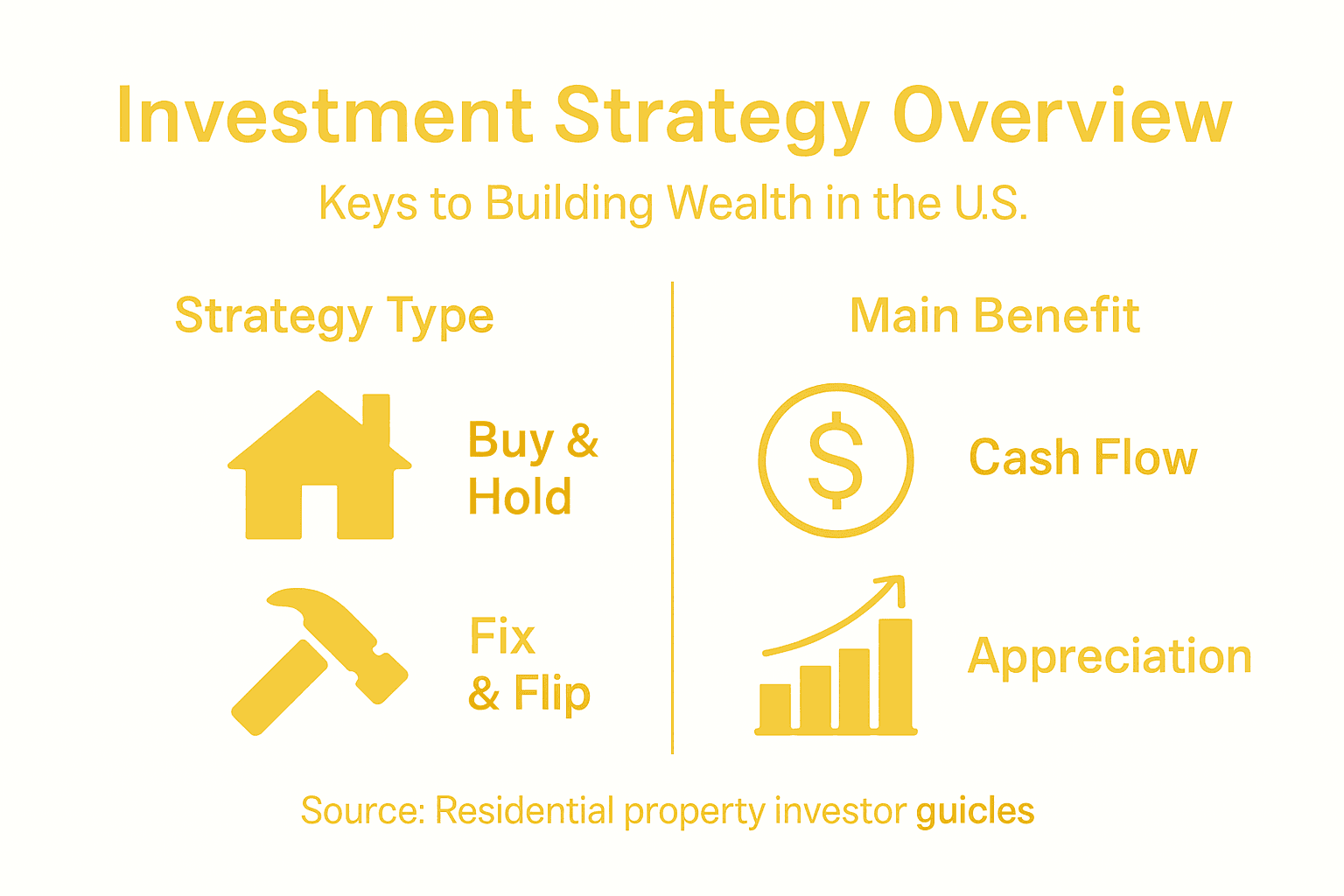
This is the wealth-building workhorse strategy. You purchase a property, rent it to tenants, and keep it for years while collecting monthly cash flow and benefiting from long-term appreciation. The math is simple: a property purchased for $300,000 that appreciates 3% annually grows to $328,000 in three years. Meanwhile, your tenants pay down your mortgage while you pocket the difference between rental income and expenses. This strategy requires patience but generates substantial passive income over time. Most of the wealthiest real estate investors built their portfolios through buy and hold, reinvesting their cash flow into additional properties. The downside is that you need sufficient capital for a down payment and must handle tenant management or pay a property manager. This approach works best in markets with steady rental demand and consistent appreciation.
Fix and Flip
If buy and hold is slow and steady, fix and flip is the sprint. You purchase an undervalued property, typically one in poor condition, invest in repairs and renovations, then sell it quickly for profit. A $250,000 distressed property requiring $40,000 in repairs might sell for $340,000 after renovation, generating a $50,000 profit before accounting for holding costs and taxes. This strategy demands significant capital upfront, construction knowledge or reliable contractors, and an understanding of local real estate values. The timeline is typically 3-12 months from purchase to sale. The risk is higher because if the market shifts during your renovation, you could be stuck with a property that won’t sell at your target price. Successful house flippers usually operate in markets with strong buyer demand and clear after repair value projections.
Rental Income Focus
Some investors prioritize monthly cash flow over appreciation. They acquire properties in high-yield rental markets where rent is strong relative to purchase price. A property costing $180,000 that rents for $1,800 monthly generates strong cash flow even if the market doesn’t appreciate. This strategy appeals to investors seeking current income rather than future wealth. It requires finding rental markets with favorable supply and demand dynamics. Cities with limited housing supply and strong job growth typically offer better rental yields.
Leverage and Financing Strategy
Every successful strategy relies on understanding how to structure debt and equity financing to maximize returns. Rather than paying cash, investors use mortgages to control larger properties with smaller down payments. A 20% down payment on a $400,000 property means you control $400,000 in assets with only $80,000 in capital. If the property appreciates 5%, you’ve gained $20,000 on an $80,000 investment, generating a 25% return on your actual capital. Leverage amplifies both gains and losses, so understanding your risk tolerance matters.
Market Analysis and Timing
Successful investors employ financial modeling and valuation analysis to forecast profitability and mitigate risk. Before purchasing any property, you should know your target cash flow, projected appreciation based on historical trends, and what happens if the market dips. Professional investors create spreadsheets analyzing different scenarios: best case, worst case, and realistic case outcomes. This prevents emotional decision-making and helps you walk away from deals that don’t meet your criteria.
Pro tip: Choose one primary strategy that matches your personality and resources, master it thoroughly before moving to your second strategy, and avoid jumping between approaches because each requires different skills, capital structures, and market timing.
Below is a summary of top residential real estate investment strategies with key pros and cons:
| Strategy | Primary Benefit | Major Drawback |
|---|---|---|
| Buy and Hold | Steady long-term wealth growth | Requires patience and cash reserves |
| Fix and Flip | Fast capital gains potential | High risk and intensive oversight |
| Rental Income | Strong, recurring cash flow | Dependent on rental market health |
| Leverage/Finance | Amplifies returns on capital | Magnifies potential losses |
Legal Requirements and Compliance in 2026
Real estate investing isn’t just about finding deals and managing properties. Operating legally protects your assets, keeps you out of federal trouble, and ensures your investments remain legitimate. The regulatory landscape shifted significantly in 2026, and ignoring these new requirements can result in substantial fines, transaction delays, or worse. Understanding what changed and why matters whether you’re buying your first rental property or expanding an existing portfolio.
The most significant compliance change for residential investors involves new federal reporting requirements. Starting March 1, 2026, the Residential Real Estate Rule requires specific professionals to report non-financed transfers of residential real estate to legal entities or trusts. This means if you purchase property through an LLC, corporation, or trust without traditional financing, your title company, real estate attorney, or other closing professional must file a report with the Financial Crimes Enforcement Network (FinCEN). The rule applies to transactions where the property is residential and ownership transfers to a legal entity rather than an individual. The intention is to increase transparency and combat money laundering by creating a paper trail on property transfers that previously had less oversight. For most legitimate investors, this simply means additional paperwork at closing, but the process is mandatory and noncompliance carries federal penalties.
Understanding the Residential Real Estate Rule
The rule applies to most residential property transfers to legal entities. Here’s what triggers the reporting requirement:
- Purchase price of $5,000 or more
- Property zoned for residential use
- Transfer to a corporation, LLC, trust, or other legal entity
- No traditional mortgage financing involved (cash purchases or seller financing)
If you’re buying through an LLC with a mortgage, the lender typically handles certain compliance requirements, but your closing professional still participates in reporting. The reporting itself includes beneficial ownership information, which identifies the actual individuals behind the legal entity. This transparency requirement means you cannot hide behind multiple shell companies or use obscure structures to avoid disclosure.
Property Rights and Zoning Compliance
Beyond federal reporting, your investments must comply with local zoning laws and property rights regulations. Legal compliance involves understanding zoning laws and regulatory requirements that vary significantly by jurisdiction. A property zoned single-family residential cannot legally operate as a short-term rental in many municipalities. Some cities require landlord licenses, tenant habitability certifications, or specific lease disclosures. Violating local ordinances can result in fines, forced property modifications, or tenant lawsuits. Before purchasing any property, verify its current zoning, check local rental regulations, and confirm that your intended use is permitted.
Disclosure and Record Keeping
Investors must maintain detailed records of all property transactions, financing, and beneficial ownership changes. When selling properties, various state and local disclosure requirements apply regarding the property’s condition, known defects, and transfer taxes. Failure to disclose material facts can expose you to buyer lawsuits. Some states require specific lead paint disclosures for pre-1978 homes, mold disclosures in certain situations, and flood zone documentation. Working with an experienced real estate attorney ensures you meet these disclosure requirements and avoid costly litigation later.
Tax Reporting Obligations
The IRS requires detailed reporting of rental income and property depreciation. Residential investors must file Schedule E on their tax returns, report all rental income regardless of amount, and deduct only legitimate expenses. Starting in 2026, increased scrutiny on real estate transactions means keeping meticulous expense records. The ability to prove your deductions through receipts, bank statements, and contractor documentation directly impacts your tax liability.
Pro tip: Consult with a real estate attorney and a tax professional before your first property purchase to understand your specific compliance obligations based on your entity structure, local jurisdiction, and investment strategy, saving thousands in potential penalties later.
Financial Risks, Costs, and Common Mistakes
Real estate investing can build substantial wealth, but it also carries real financial dangers that destroy investor portfolios when ignored. The difference between successful investors and those who lose money often comes down to understanding and respecting the risks involved. Many beginners enter real estate expecting consistent profits, then encounter market downturns, unexpected repairs, or vacancy periods that expose them to losses. Learning what goes wrong before it happens to you is invaluable.
Understanding the Financial Risks
Market volatility affects property values unpredictably. A property worth $300,000 today might be worth $260,000 in two years if your local market experiences a downturn. If you leveraged heavily with a mortgage, your equity shrinks or disappears entirely. Interest rate fluctuations compound this risk. When mortgage rates rise, property values typically fall because buyers can afford less debt at higher rates. Investors who bought at peak prices during low-rate environments often find themselves underwater when rates spike. Overleveraging represents the biggest financial trap. Using 95% financing (putting down only 5%) magnifies both your gains and losses. A 10% property appreciation gives you a 200% return on your down payment, but a 10% decline wipes out your entire investment. Many new investors fail because they overextend themselves financially, unable to cover mortgage payments when tenants leave or unexpected repairs arise.
Operating Costs and Hidden Expenses
Investors routinely underestimate the true cost of property ownership. Financial risks include operating expenses that reduce profitability more than beginners anticipate. Here’s what catches most people off guard:
- Vacancy costs: A tenant leaves, and you earn zero income for 2-3 months while finding a replacement
- Maintenance surprises: A $15,000 roof replacement or $8,000 foundation repair appears unexpectedly
- Property management fees: Hiring professional management costs 8-12% of rental income
- Taxes and insurance: These rise annually and can increase 20-30% over five years
- Capital expenditures: Appliances fail, HVAC systems break, water heaters need replacement
A property generating $2,000 monthly rent sounds great until you subtract $400 mortgage interest, $300 property tax and insurance, $200 maintenance reserve, and $240 management fees. You’re left with $860 in actual cash flow. Many investors forget to budget for these items, then panic when bills arrive.
Common Mistakes New Investors Make
Rushing the purchase decision causes costly errors. Successful investors spend weeks analyzing deals, running financial models, and checking neighborhoods. Beginners often skip due diligence, make emotional offers based on property appearance, and discover structural problems after closing. Poor property management and neglected due diligence plague new investors who fail to inspect properties thoroughly or understand local market conditions.
Inadequate market research leads to buying in declining areas. You must understand employment trends, population growth, and rental demand in your target market. A cheap property in a neighborhood losing jobs annually will struggle to attract quality tenants and appreciate.
Misjudging property value happens when investors rely on outdated comparables or ignore neighborhood deterioration. A property listing for $200,000 might be overpriced if similar homes sold for $170,000 six months ago. Always verify values independently rather than trusting seller claims.
Ignoring zoning and legal compliance creates expensive problems. Zoning violations, unpermitted renovations, or lease violations can result in fines, forced compliance costs, or loss of rental income when authorities shut down operations.
Managing Risk Effectively
Successful investors build safety margins into every deal. Before purchasing, ask yourself: What if the property sits vacant for six months? What if major repairs cost twice my estimate? What if the market declines 15%? If you can’t cover these scenarios, the deal isn’t right. Keep at least three months of mortgage payments and operating expenses in reserves. This prevents forced sales during emergencies.
Pro tip: Run three financial projections for every property you consider: best case (strong appreciation and full occupancy), worst case (vacancy and major repairs), and realistic case (modest growth with expected vacancies), then only proceed if the worst case scenario doesn’t destroy your financial position.
Take Control of Your Residential Real Estate Journey Today
Navigating the complexities of residential real estate investing can feel overwhelming without the right guidance. Whether you are aiming for steady rental income, property appreciation, or mastering financing strategies, understanding zoning laws, legal compliance, and risk management are critical. At Bold Street AI, we recognize these challenges and offer tailored solutions designed to simplify your investment path. From connecting you with trusted local agents and lenders to providing expert resources that build your confidence, we equip you to make informed decisions and avoid common pitfalls.
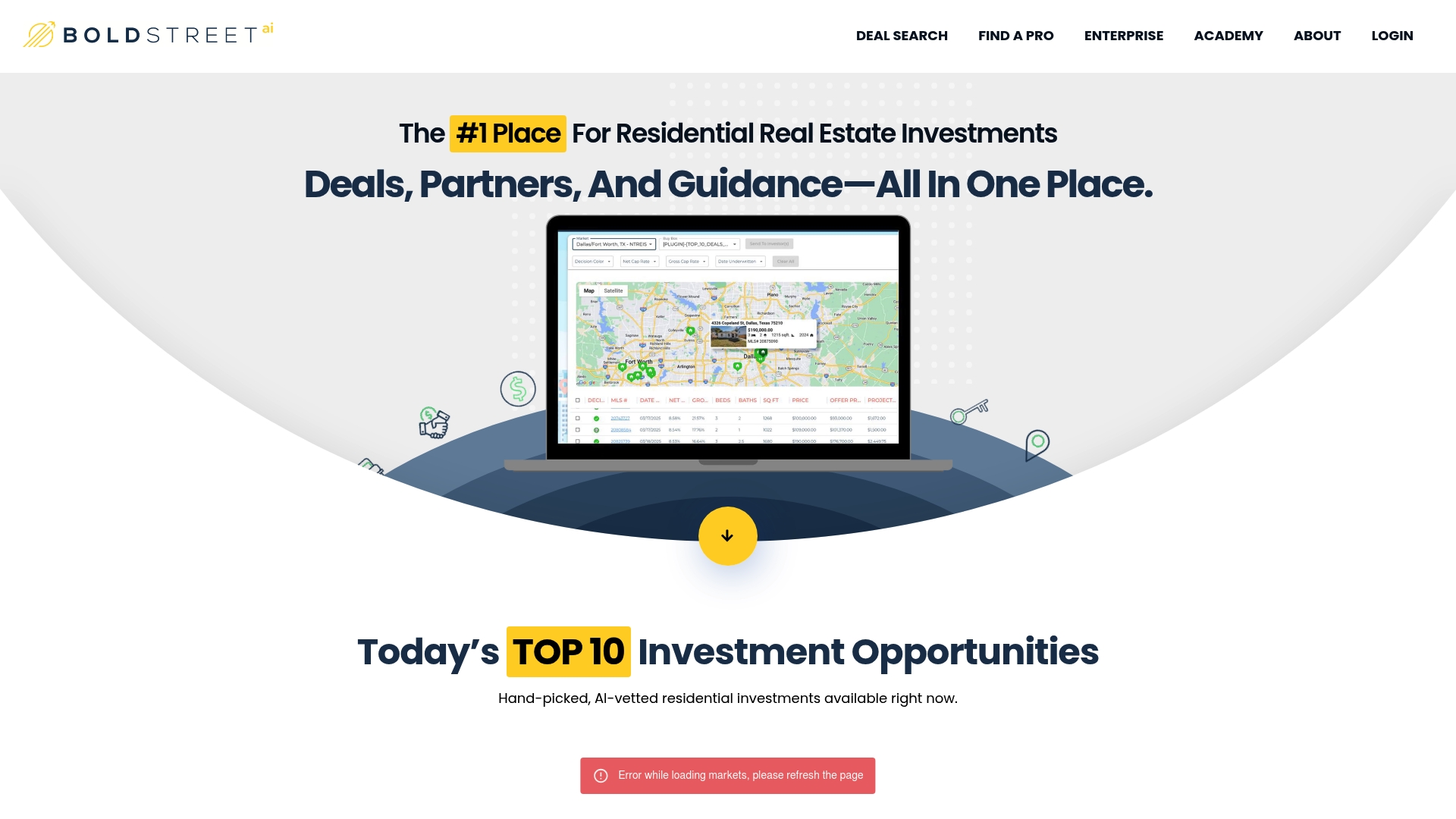
Discover how you can accelerate your wealth-building journey by visiting Bold Street AI. Start by exploring opportunities that fit your investment goals and tap into our educational hub to sharpen your skills. The time to conquer market complexities and build a diversified portfolio with expert support is now. Let us help you transform your residential real estate ambitions into lasting success.
Frequently Asked Questions
What is residential real estate investing?
Residential real estate investing involves buying, owning, and managing properties designed for people to live in, such as single-family homes and multi-family properties, to generate profit or long-term wealth.
What are the main income sources in residential real estate investing?
The primary income sources are rental income from tenants and property appreciation, which is the increase in the property’s value over time.
What are the different types of residential properties to invest in?
The main types of residential properties include single-family homes, multi-family properties (duplexes, triplexes, and four-unit buildings), and apartment buildings (five or more units), each with unique characteristics and investment considerations.
What are the key strategies for investing in residential real estate?
Common strategies include buy and hold for long-term wealth, fix and flip for quick profits, focusing on rental income in high-yield markets, and leveraging financing to maximize returns.
Recommended
- Residential Real Estate Explained: Key Types and Risks | Bold Street AI
- Residential Real Estate: Shaping Modern Portfolios | Bold Street AI
- 7 Types of Real Estate Investments for New Investors | Bold Street AI
- Why Build a Real Estate Portfolio: Key Benefits for Urban Investors | Bold Street AI
- Claves para invertir en propiedades en 2023 – Inmobiliaria Costa Cambrils