
More than 64% of American households own the homes they live in according to national statistics. For beginner investors, understanding residential real estate offers a practical pathway into wealth building and long-term security. This quick overview sheds light on what counts as residential property, why legal definitions matter in the United States, and how different investment choices can support your goals as you grow your portfolio.
Table of Contents
- Defining Residential Real Estate in the U.S.
- Types of Residential Properties and Uses
- Key Features and How Residential Real Estate Works
- Legal Structures and Ownership Requirements
- Risks, Costs, and Common Investor Pitfalls
Key Takeaways
| Point | Details |
|---|---|
| Understanding Residential Real Estate | Residential real estate includes properties for human habitation and varies in types such as single-family homes, apartments, and townhouses. Knowing the legal definitions and classifications is crucial for investment decisions. |
| Investment Considerations | Different residential property types come with unique financial implications and characteristics. Investors should research local market trends and regulations to maximize opportunities. |
| Legal and Ownership Structures | Various ownership structures exist, each impacting liability and taxation. Consulting a real estate attorney can help in selecting the most suitable structure for investment goals. |
| Risk Management | Investors face numerous risks, including market volatility and climate-related issues. Developing a thorough risk assessment strategy and conducting due diligence is essential for success. |
Defining Residential Real Estate in the U.S.
Residential real estate represents a fundamental investment category encompassing properties designed for human habitation. Under U.S. federal law, residential properties are legally defined as structures or land parcels intended for housing individuals or families. This broad definition includes single-family homes, multi-unit dwellings, apartments, townhouses, and vacant land designated for residential construction.
The legal framework distinguishes residential real estate from commercial properties by its primary purpose of providing living spaces. Real property ownership extends beyond physical structures to include attached land, natural resources, and associated rights. These properties can be owner-occupied or utilized as rental investments, representing a critical component of the American housing market and personal wealth-building strategies.
Key characteristics of residential real estate include zoning restrictions, occupancy regulations, and specific financing mechanisms tailored to housing. Investors and homeowners must navigate complex legal requirements that govern property use, transfer, and development. These regulations ensure community standards, protect individual property rights, and maintain the integrity of residential neighborhoods across different urban and rural landscapes.
Pro Tip: Always verify local zoning laws and residential property classifications before making any real estate investment to understand potential usage restrictions and development opportunities.
Types of Residential Properties and Uses
Residential property types in the United States encompass a diverse range of housing options designed to meet various lifestyle and economic needs. Single-family homes dominate the market, representing approximately 70% of residential properties. These standalone structures offer individual homeownership and typically provide the most privacy and personal space for residents.
Multifamily residential properties include apartments, condominiums, townhouses, and other shared living arrangements. Affordable housing models have expanded to include innovative options like micro-units, co-living spaces, manufactured homes, and accessory dwelling units. These alternatives address different demographic requirements, offering more flexible and cost-effective housing solutions for urban and rural populations.

Each residential property type comes with unique characteristics, investment potential, and regulatory considerations. Factors such as location, local zoning laws, building codes, and community infrastructure significantly impact property values and usage potential. Investors and homeowners must carefully evaluate these elements when selecting or developing residential real estate to maximize long-term financial and lifestyle benefits.
Here’s a comparison of major residential property types and their typical features:
| Property Type | Privacy Level | Common Financing Method | Demographic Suitability |
|---|---|---|---|
| Single-family Home | High | Conventional mortgage | Families, individuals |
| Apartment | Low-Medium | Lease, multifamily loans | Urban professionals |
| Townhouse | Medium | Mortgage, HOA financing | Small families, downsizers |
| Condominium | Medium | Condo loan, HOA required | First-time buyers |
| Co-living Space | Low | Lease or co-op model | Young adults, students |
Pro Tip: Research local market trends and zoning regulations specific to different residential property types before making an investment to understand potential appreciation and rental income opportunities.
Key Features and How Residential Real Estate Works
Residential real estate transactions involve complex processes that encompass legal, financial, and regulatory frameworks. These transactions typically include contract negotiations, property transfers, financing arrangements like mortgages, and comprehensive due diligence to ensure legal compliance and protect both buyers and sellers. Brokers and real estate agents play crucial roles in facilitating these interactions, operating under strict licensing requirements and professional standards.
Key features of residential properties extend beyond physical structures to include energy consumption patterns, sustainability considerations, and demographic adaptability. Modern residential real estate increasingly focuses on energy efficiency, with homeowners and investors prioritizing properties that minimize environmental impact and reduce long-term operational costs. This trend reflects growing awareness of sustainability and the potential for reducing utility expenses through strategic property improvements.
The operational mechanics of residential real estate involve multiple stakeholders, including homeowners, investors, financial institutions, and regulatory bodies. Each transaction requires careful navigation of legal protections, such as fair housing regulations, title insurance, and comprehensive written agreements. These mechanisms ensure transparency, protect property rights, and create structured pathways for residential property ownership and investment.
Pro Tip: Conduct thorough due diligence and obtain professional inspections before finalizing any residential real estate transaction to uncover potential hidden issues and protect your investment.
Legal Structures and Ownership Requirements
Residential real estate ownership encompasses multiple legal structures that define how individuals and entities can hold property rights. These structures include sole ownership, joint tenancy, tenancy in common, community property, and cooperative ownership. Each structure provides unique legal protections, tax implications, and inheritance considerations that investors must carefully evaluate when purchasing residential real estate.
Under federal regulations, particularly the Residential Real Estate Rule, professionals involved in property transactions must adhere to strict reporting requirements designed to increase transparency and prevent illicit activities. Legal ownership can be held through individual names, trusts, legal entities, or joint ownership arrangements, each with specific legal and financial implications. Investors must understand how different ownership structures impact liability, taxation, and property transfer rights.
The complexity of residential real estate ownership extends beyond simple property acquisition. Title documents, deeds, and legal frameworks govern critical rights including property use, exclusion, transfer, and encumbrance. Potential property owners must conduct thorough due diligence to understand the legal nuances of their chosen ownership structure, ensuring compliance with federal, state, and local regulations that can significantly impact property rights and investment potential.
Pro Tip: Consult a real estate attorney to carefully analyze the most appropriate ownership structure for your specific investment goals and personal financial situation.
Risks, Costs, and Common Investor Pitfalls
Real estate sector risks encompass a complex landscape of financial, environmental, and regulatory challenges that can significantly impact residential property investments. Climate-related physical risks, including extreme weather events and potential property damage, pose substantial threats to long-term asset value. Investors must carefully assess potential environmental vulnerabilities and develop comprehensive risk mitigation strategies to protect their investment portfolios.
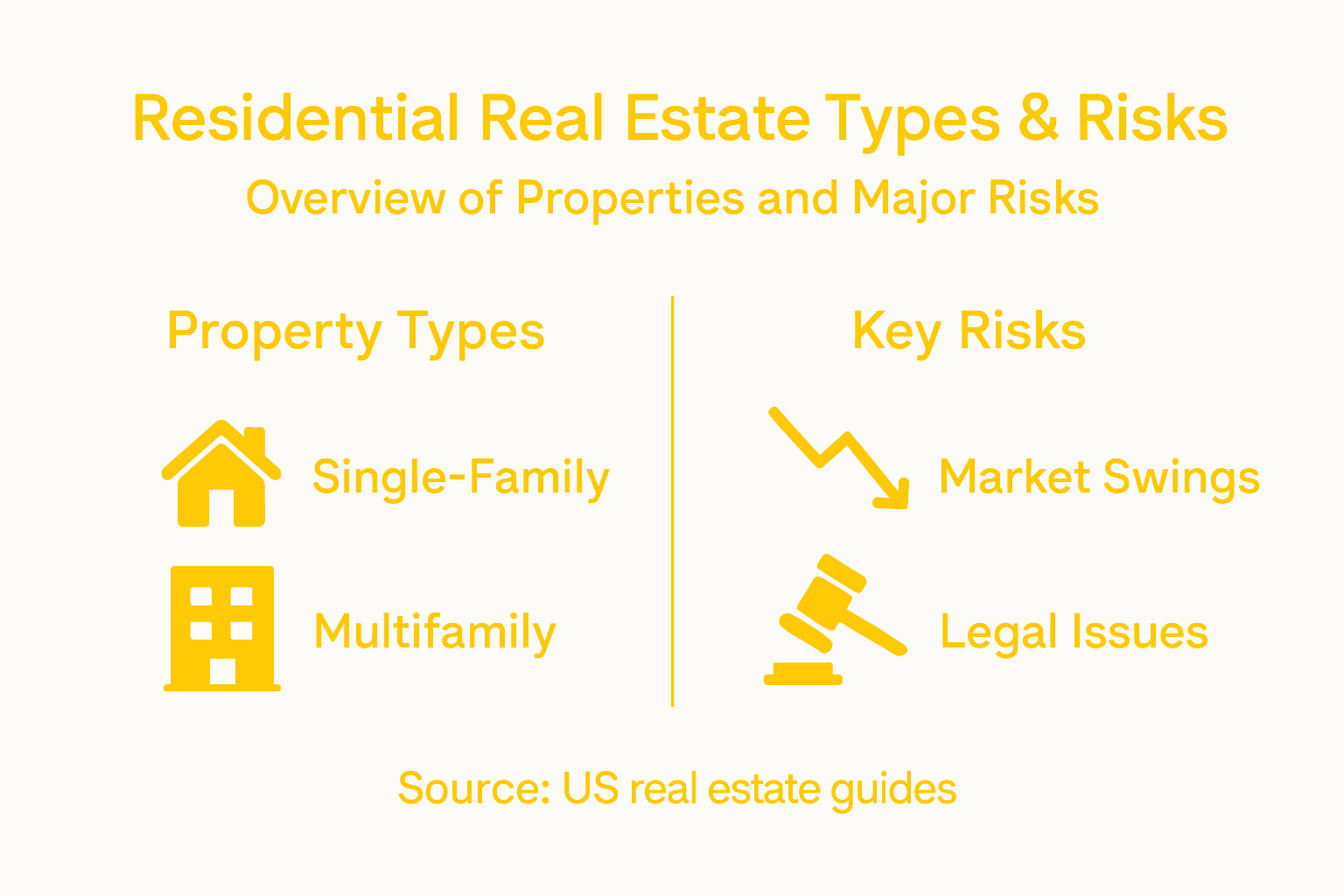
Beyond environmental considerations, residential real estate investments face critical risks related to market volatility, regulatory changes, and potential illicit activities. Money laundering vulnerabilities can distort market prices and create significant reputational and financial risks for investors. Common pitfalls include inadequate due diligence, poor market research, overestimating potential returns, and failing to account for unexpected maintenance and operational costs.
Successful real estate investors must develop a holistic approach to risk management that includes thorough market analysis, comprehensive property inspections, understanding local regulatory environments, and maintaining financial flexibility. This involves building robust financial reserves, diversifying investment portfolios, and staying informed about emerging market trends and potential regulatory changes that could impact property values and investment potential.
The table below summarizes key risks and costs investors should carefully consider:
| Risk Type | Example Impact | Mitigation Strategy |
|---|---|---|
| Market Volatility | Property value decline | Diversify investments |
| Climate Risk | Storm/flood damage | Buy insurance, inspect |
| Regulatory Change | New zoning restrictions | Track local policy shifts |
| Hidden Costs | Unexpected repairs | Schedule inspections |
Pro Tip: Develop a comprehensive risk assessment strategy that includes professional property inspections, thorough market research, and maintaining a financial buffer to address unexpected challenges in residential real estate investments.
Take Control of Residential Real Estate Risks With Expert Guidance
Navigating the complexities of residential real estate investing can feel overwhelming especially when considering market volatility, zoning laws, and the variety of property types highlighted in this article. You need clear solutions to avoid common pitfalls such as unexpected repair costs and regulatory challenges while maximizing your investment potential. Bold Street AI offers a streamlined platform designed to simplify these challenges by connecting you with trusted local agents, lenders, and property managers who understand the nuances of residential real estate ownership.

Discover tailored investment opportunities and gain valuable insights through our educational portal Bold Academy to build confidence in your decisions today. Whether you are a first-time investor or looking to expand your portfolio, Bold Street AI empowers you to make informed choices with transparency and expert support. Start your journey to residential real estate success now by visiting Bold Street AI. Explore how our platform matches you with industry professionals and financing options to take the risk out of investing. Don’t let uncertainty hold you back—unlock your real estate potential here.
Frequently Asked Questions
What are the main types of residential real estate?
Residential real estate primarily consists of single-family homes, multifamily properties (like apartments and condos), townhouses, and various affordable housing options. Each type offers distinct characteristics and investment potential.
What risks should I consider when investing in residential real estate?
Investors should be aware of risks such as market volatility, environmental hazards (like climate-related events), regulatory changes, and hidden costs associated with property maintenance and repairs.
How does ownership structure affect residential real estate investments?
Ownership structure, including sole ownership, joint tenancy, or cooperative ownership, influences liability, taxation, and property transfer rights. Understanding the nuances of each structure is essential for optimizing investment benefits.
What steps can I take to mitigate risks in residential real estate investments?
To mitigate risks, develop a comprehensive risk management strategy that includes thorough market research, professional property inspections, diversification of investments, and maintaining a financial buffer for unexpected expenses.
Recommended
- Navigating the Terrain: Common Challenges for Real Estate Agents Working with Residential Real Estate Investors – Bold Street AI
- Blog – Bold Street AI
- How to Underwrite a Real Estate Property – Bold Street AI
- Predicted Fed Rate Cuts in 2024: Implications for the Real Estate Market and Investor Strategies – Bold Street AI