
Starting out as a new real estate investor in the United States often means facing confusing choices about who can truly guide your property journey. The right real estate agent is more than just a listing source—agents in the U.S. must complete specialized education and stick to strict ethical standards, setting them apart from unlicensed peers. For those serious about building wealth, understanding an agent’s role, legal obligations, and unique access to deals can shape whether your first investments succeed or stall.
Table of Contents
- Defining Agents In Real Estate Investment
- Types Of Real Estate Agents And Their Focus
- How Agents Help Source And Evaluate Deals
- Legal Duties, Licensing, And Compliance Rules
- Risks, Pitfalls, And Cost Considerations
- Choosing The Right Agent For Your Goals
Key Takeaways
| Point | Details |
|---|---|
| Understanding Agent Roles | Real estate agents play crucial roles such as deal sourcing, market analysis, and negotiation, which are essential for successful investments. |
| Fiduciary Duty and Ethics | Agents are legally obligated to prioritize their clients’ interests, ensuring protection during transactions. |
| Agent Specialization | Choosing an investor-focused agent can lead to better investment outcomes due to their expertise in metrics and local market knowledge. |
| Evaluating Agent Competence | Conduct thorough interviews and check references to ensure the agent’s experience aligns with your investment goals. |
Defining Agents in Real Estate Investment
When you’re starting out as a residential real estate investor, understanding what a real estate agent actually is—and what they’re qualified to do—makes a significant difference. A real estate agent is a licensed professional who facilitates the buying, selling, or leasing of residential properties on behalf of clients. Unlike some professions, becoming a real estate agent doesn’t require a college degree, but it does demand a serious commitment to expertise and professional standards. Agents must complete specialized knowledge requirements and maintain strict ethical codes to operate in the U.S. housing market. This makes them fundamentally different from casual property investors or wholesalers who may not hold licenses.
The distinction matters because licensed agents have specific legal obligations, professional training, and accountability that unregistered individuals simply don’t have. They’re regulated by state real estate commissions, required to disclose conflicts of interest, and bound by fiduciary duties in many situations. For new investors, this means when you work with an agent, you’re partnering with someone who operates within a defined legal framework. That framework exists to protect both sides of a transaction and ensures a baseline level of market knowledge and ethical conduct.
In the context of residential real estate investing, agents serve several distinct roles:
- Deal sourcing and acquisition: Agents identify off-market deals, new listings, and properties matching your investment criteria before they hit the open market
- Market analysis and pricing: They provide comparable sales data (comps) and help you understand neighborhood trends, cap rates, and investment potential
- Network connectors: Agents link you with lenders, contractors, property managers, and other investors within their professional network
- Negotiation and closing: They handle contract negotiations, coordinate inspections, and guide you through closing logistics
- Ongoing advisory role: Experienced investor-focused agents become trusted consultants for your portfolio strategy over time
The real power of an agent relationship for investors isn’t just access to listings—it’s access to market intelligence, deal flow, and professional networks that would take years to build independently.
What sets investor-focused agents apart from typical residential agents is their understanding of investment metrics. They speak your language around cash-on-cash returns, cash flow projections, and renovation budgets. A standard agent might sell a single-family home as a primary residence; an investor-focused agent helps you evaluate that same property for its rental income potential, appreciation trajectory, and capital gains strategy. This distinction explains why connecting with investor-friendly agents becomes a critical advantage early in your investment journey.
Agent licensing varies by state, but the general structure is consistent across the country. Most agents work under a broker, who holds the primary license and oversees compliance. You’ll encounter independent agents (who work solo under a broker), team leaders (who manage groups of agents), and agents within larger brokerage firms. Understanding this hierarchy helps you identify which agents have resources, deal flow, and time to focus on your investment strategy—versus those stretched thin managing dozens of residential transactions annually.
Pro tip: When evaluating an agent, ask specifically how many residential investment deals they’ve sourced in the past 12 months and request references from investor clients—this tells you if they actually specialize in investor deals or just claim to.
Types of Real Estate Agents and Their Focus
Not all real estate agents are created equal, and as an investor, understanding the different types matters significantly. The agent you choose will shape your entire investment experience—from deal flow to negotiation outcomes. Real estate agents fall into several distinct categories based on their focus, licensing level, and fiduciary responsibilities. The main distinction separates buyer’s agents, seller’s agents, and dual agents, each with different loyalties and legal obligations in a transaction. For investors specifically, knowing these categories helps you identify who truly represents your interests versus who’s just trying to close a deal.
Buyer’s agents represent the person purchasing the property. Their fiduciary duty runs to you as the buyer, meaning they’re legally obligated to act in your best interest—not the seller’s. This matters enormously for investors because a good buyer’s agent protects your position during negotiations, identifies inspection issues that could impact returns, and helps you avoid overpaying. A seller’s agent (also called a listing agent) represents the person selling the property and works to get the highest price possible. If you’re the buyer, a seller’s agent isn’t looking out for you. A dual agent represents both buyer and seller in the same transaction, which creates a conflict of interest regardless of what they claim. Most investor-focused agents are buyer’s agents—they protect your capital by keeping your interests front and center.
Beyond these three main types, you’ll encounter real estate brokers and Realtors. A broker holds the highest license level and oversees other agents. Some brokers work directly with clients, while others focus entirely on managing their brokerage. A Realtor is simply an agent who’s a member of the National Association of Realtors (NAR) and agrees to follow their Code of Ethics. The Realtor designation doesn’t mean they’re better—it means they’ve joined a professional organization with additional standards. Many excellent agents aren’t Realtors, and some Realtors focus on markets or client types that don’t match your needs.
Here’s a comparison of the primary types of real estate agents and who they best serve:
| Agent Type | Main Client Focus | Key Benefit for Investors | Typical Risk/Drawback |
|---|---|---|---|
| Buyer’s Agent | Property Buyers | Advocates for your interests | May lack investment insight |
| Seller’s Agent | Property Sellers | Maximizes sales price for sellers | Seller-aligned, not buyer-focused |
| Dual Agent | Buyer & Seller (Both) | Single point of contact | High conflict of interest |
| Investor-Focused Agent | Property Investors | Specialized in investment returns | May be less available for primary buyers |
| Broker | Various (Supervises Agents) | Ensures compliance, advanced expertise | May not work directly with clients |
For residential real estate investing specifically, agent focus breaks down into three critical categories:
- Primary residence agents: Skilled at marketing homes for owner-occupants, but they often lack investment metrics knowledge and may not understand cash flow analysis
- Investor-focused agents: Specialize in evaluating properties for rental income, appreciation, and investment returns; they speak fluent cap rates and know local rental markets
- Off-market and wholesaler network agents: Connected to pocket listings, pre-foreclosures, and other deal sources that never hit MLS; these agents have deal flow advantages
The investor-focused agent is your sweet spot. These agents understand the distinct responsibilities and fiduciary duties that come with representing investors. They know what cap rate you’re targeting, they understand renovation budgets and their impact on returns, and they can quickly assess whether a property fits your portfolio strategy. They also recognize that your definition of a “good deal” looks completely different from a homebuyer’s.
An agent who excels with primary residence buyers often struggles with investors because the evaluation criteria, timeline, and success metrics are fundamentally different.
Within investor-focused agents, you’ll find specialists by market segment. Some focus exclusively on single-family rental properties. Others specialize in small multifamily units (2-4 units). A few work with land investors. The best agents in each segment understand local zoning rules, neighborhood rental demand, and what property management companies need from investors. This specialization matters because an agent who knows single-family markets inside out may be completely out of depth with a small multifamily building.
The geographic focus also shapes an agent’s value. A local agent with 10 years in your target market outperforms a national agent with 20 years of experience across five states. Local agents know which neighborhoods are appreciating, which rental markets are saturated, which contractors overcharge, and which lenders move fastest. They have relationships with property managers, contractors, and other investors in your area. Those relationships translate directly into deal flow and execution speed.
Pro tip: Ask potential agents to show you their last five deals with investor clients—look at the neighborhoods, purchase prices, and how quickly properties closed; agents with strong investor track records show different patterns than those primarily selling primary residences.
How Agents Help Source and Evaluate Deals
One of the biggest advantages of working with an investor-focused agent is their ability to find deals you’d never discover on your own. Most new investors assume all available properties are listed on the Multiple Listing Service (MLS), but that’s far from reality. Experienced agents leverage extensive market knowledge and established networks to source properties that match your investment criteria before they hit public listings. They know about off-market deals from their relationships with other agents, wholesalers, probate attorneys, and property owners. This deal sourcing advantage alone can accelerate your investment timeline by months or even years.

The sourcing process works through several channels. Pocket listings come directly from seller relationships—a homeowner contacts their agent friend rather than listing publicly. Pre-foreclosures often surface through agent connections to banks and lenders. Wholesalers, who buy properties below market value and sell them to investors, frequently work through agent networks. Some properties are estate sales where the executor needs a quick transaction. Your agent’s ability to access these off-market opportunities depends on their reputation, years in the market, and strength of their professional relationships. An agent with 15 years in your target market has sourced hundreds of investor deals through trusted relationships. A newer agent, regardless of talent, simply doesn’t have those connections yet.
Once potential deals surface, evaluation becomes critical. This is where agent expertise separates good investments from costly mistakes. Agents provide several evaluation services:
- Comparable sales analysis: Pulling recent sales of similar properties to establish whether asking price makes sense for your investment thesis
- Neighborhood trend analysis: Identifying which areas are appreciating, which are declining, and where rental demand is strongest
- Renovation assessment: Evaluating repair needs and estimating costs based on local contractor relationships and market conditions
- Market timing insight: Advising whether current market conditions favor buyer or seller and how that impacts negotiation strategy
- Investment metrics calculation: Understanding cap rates, cash-on-cash returns, and whether a property meets your portfolio criteria
Agents also connect you with specialists who validate your evaluation. They bring in home inspectors who identify structural issues you’d miss. They coordinate appraisers to confirm property value. They introduce you to lenders who provide financing pre-approval and rate estimates. These ancillary relationships with inspectors, appraisers, and lenders are built over years of successful transactions, which means you get faster, more reliable service than going in cold to these professionals.
An agent’s deal evaluation doesn’t just protect your capital—it saves countless hours of research that would otherwise fall on your shoulders.
Pricing strategy deserves its own emphasis. New investors often make the mistake of offering asking price because they’re uncomfortable negotiating. Good agents know the difference between asking price and market price, and they know how to frame offers strategically. They understand local market dynamics well enough to advise on starting offer price, contingency terms, and timeline pressure points. They know which sellers will negotiate and which have multiple offers. This negotiation advantage directly translates to purchasing properties at lower prices and better terms—sometimes the difference between a cash-flowing property and a break-even property.
Agent access to market data also prevents costly mistakes. When you’re evaluating a neighborhood for single-family rental investments, your agent can show you rental comps, vacancy rates, and property management company feedback. When you’re considering a small multifamily building, they can analyze the rental market depth and identify whether the area supports 2-4 unit properties. Market analysis and pricing strategy require specialized knowledge that most individual investors lack, particularly when entering new markets.
The reality is that agent-sourced deals generally perform better than deals you find yourself. That’s because good agents naturally filter for investor-quality properties. They understand your criteria so deeply that they only bring you deals likely to work. They also negotiate harder because they understand investment timelines and exit strategies. Over time, this relationship compounds—the best agents literally become extensions of your investment team.
Pro tip: When evaluating an agent’s sourcing ability, ask how many off-market deals they sourced in the past year and request specifics on where those deals came from; this reveals whether they have real deal flow or just cherry-pick from MLS listings.
Legal Duties, Licensing, and Compliance Rules
When you work with a real estate agent, you’re partnering with someone bound by specific legal obligations. These aren’t suggestions or best practices—they’re enforceable duties that protect your interests as an investor. Understanding what these duties actually are prevents misunderstandings and helps you recognize when an agent is operating outside their legal boundaries. Real estate professionals in the U.S. are regulated by state real estate commissions that enforce licensing requirements and ensure compliance with state laws. This regulatory framework exists because real estate transactions involve significant capital and complex legal structures where conflicts of interest can easily arise.
The cornerstone legal duty is fiduciary responsibility. When an agent represents you as a buyer, they owe you a fiduciary duty—meaning they must act in your best interest, not their own or the seller’s. This duty includes several specific obligations: loyalty (prioritizing your interests above others), confidentiality (keeping your financial situation and negotiation strategy private), disclosure (revealing all material facts that could affect your decision), and accounting (managing any client funds properly). A buyer’s agent cannot simultaneously represent you and the seller in the same transaction without explicit, written acknowledgment from both parties—and even then, conflicts exist. Dual agency, where one agent represents both sides, creates inherent conflicts that many states restrict or prohibit for this reason.
Beyond fiduciary duties, agents must comply with federal and state laws that protect consumers and ensure fair dealing. The Fair Housing Act prohibits discrimination based on race, color, religion, sex, handicap, familial status, or national origin. This applies to every conversation and recommendation an agent makes. They cannot steer you away from certain neighborhoods, suggest that certain areas are better investments for your demographic, or treat you differently in negotiations based on protected characteristics. Agents must also comply with data privacy regulations and provide proper disclosure of material facts about properties—meaning they can’t hide known defects, flooding history, or neighborhood issues that would affect investment value.
Licensing requirements vary by state, but the general structure applies nationwide. Agents must:
- Pass examinations demonstrating knowledge of real estate law, contracts, and ethics
- Complete continuing education annually (typically 12-24 hours depending on state) to maintain their license
- Maintain sponsorship under a broker who holds responsibility for their conduct
- Avoid unauthorized practice of law (they cannot prepare legal documents despite handling contracts)
- Report disciplinary issues to the state commission when they occur
Violations of these requirements result in consequences ranging from warnings to license suspension or permanent revocation. A suspended or revoked license means the agent cannot legally conduct real estate transactions. This enforcement mechanism exists because the state recognizes that agent misconduct directly harms consumers.
Your agent’s license is only valuable if they maintain compliance—understanding their obligations helps you identify red flags when something feels wrong.
For investors specifically, the compliance landscape includes additional complexity around affiliate relationships. An agent who refers you to a title company, mortgage lender, or property management company must disclose any financial relationship they have with that provider. They cannot hide kickbacks or referral fees. Similarly, if an agent works for a brokerage that owns a title company or property management firm, this must be disclosed. These affiliate disclosures prevent conflicts of interest where an agent recommends services primarily because they profit from the referral rather than because the service is best for you.
Understanding these legal duties protects you in several ways. You can identify when an agent is overstepping (like preparing your LLC formation documents—that requires a lawyer). You can recognize conflicts of interest that aren’t properly disclosed. You can hold agents accountable when they breach their duties. Most importantly, you understand that the regulatory framework behind agent licensing provides meaningful consumer protections. Your state’s real estate commission isn’t just a bureaucracy—it’s an enforcement body that investigates complaints and disciplines agents who violate the rules.
Pro tip: Before signing any buyer representation agreement with an agent, ask specifically what fiduciary duties they owe you and request a written explanation of any affiliate relationships or financial interests they have with service providers they’ll recommend.
Risks, Pitfalls, and Cost Considerations
Working with a real estate agent isn’t free, and the costs are significant. Understanding what you’re paying for—and what could go wrong—helps you make informed decisions about agent relationships. The standard commission structure in most U.S. markets is 5-6% of the sale price, split between the buyer’s agent and seller’s agent. On a $300,000 property purchase, that’s $15,000-$18,000 in total commissions. As the buyer, you typically don’t pay this directly—it comes out of the seller’s proceeds—but it’s built into every offer you make. This cost structure creates an important incentive: agents earn more when properties sell for higher prices, which can sometimes conflict with your goal of purchasing below market value.
The biggest risk in agent relationships is conflict of interest, particularly in dual agency situations. When one agent represents both buyer and seller, they cannot fully advocate for either party. Conflicts of interest in dual agency create scenarios where agents might push you toward higher offers to close deals faster, or they might not negotiate as aggressively on your behalf because they profit either way. Some states restrict or prohibit dual agency, but others allow it with disclosure. The safest approach is working with a buyer’s agent who has no financial interest in the seller’s outcome. This ensures their incentives align completely with yours.
Another significant risk is working with inexperienced agents who lack the expertise to maximize transaction value. An agent fresh out of their real estate exam might be likable and available, but they cannot accurately evaluate properties, negotiate effectively, or identify deal flow. Inexperienced agents may fail to maximize transaction value because they simply don’t have the market knowledge or negotiation skills. In residential real estate investing, this isn’t a minor inconvenience—it’s the difference between a 12% cap rate and a 6% cap rate. An experienced agent catches issues in contracts, identifies better comparable properties, and negotiates terms that protect your investment. A rookie misses these details entirely.
Common pitfalls to watch for include:
- Pressure to overpay: Agents eager to close deals sometimes encourage you to bid aggressively, justifying it with “you’ll regret missing this property”
- Limited market exposure: Agents may only show you MLS listings rather than actively sourcing off-market deals
- Poor contractor relationships: When agents lack established relationships with inspectors, appraisers, and contractors, you’ll wait longer and pay more
- Inadequate market analysis: Agents might not provide thorough comparable sales analysis or neighborhood trend research
- Hidden affiliate relationships: Some agents refer you to preferred service providers without disclosing kickbacks or financial relationships
- Lack of investor knowledge: Agents unfamiliar with investment metrics don’t understand your actual deal criteria
Market inefficiency also plays a role in agent selection. Free market entry into the real estate profession means low barriers to becoming an agent, which creates a wide range of competence levels. Free market entry can lead to decreased quality of service when inexperienced agents flood the market, forcing investors to do more due diligence to find competent professionals. You cannot simply assume that any licensed agent will serve your investment needs well—you must actively evaluate their experience, track record, and investor focus.
Poor agent selection costs you money through overpayment, missed off-market deals, and inefficient transactions—often far exceeding the commission you’d save by going without representation.
Another cost consideration is opportunity cost. If your agent only shows you MLS listings, you’ll see properties after 30-50 other investors. If they source off-market deals, you see them before competition exists. The difference between finding a property below market value versus paying market rate can represent thousands of dollars in immediate equity. This is why agent quality directly impacts your returns.
Financial arrangements beyond standard commission can also create problems. Some agents recommend title companies, lenders, or property management firms that pay them referral fees without your knowledge. While affiliate relationships aren’t inherently illegal if disclosed, undisclosed ones create incentives to recommend expensive or unsuitable providers. Always ask whether your agent receives any financial benefit from their recommendations.
The reality is that working with a poor agent costs significantly more than working with no agent at all. A mediocre agent who doesn’t source off-market deals leaves thousands on the table. An agent with weak negotiation skills costs you additional thousands in overpayment. An agent unfamiliar with investment analysis wastes your time on unsuitable properties. These costs far exceed the commission you’d save by avoiding agent representation altogether.
Review these cost and risk factors when working with agents:
| Expense or Risk | Description | Possible Impact on Investors |
|---|---|---|
| Standard Commission | 5-6% of sale price, split agents | Reduces potential net returns |
| Conflict of Interest | Dual agency or undisclosed affiliations | Less effective negotiation |
| Inexperienced Agent | Lacks track record and deal expertise | Missed opportunities, overpaying |
| Poor Market Coverage | Limited to MLS listings only | Reduced access to strong deals |
| Undisclosed Referral Fees | Agent profits from referrals with partners | Bias toward poor service vendors |
| Opportunity Cost | Slow deal flow or late access to listings | Higher purchase price, lost equity |
Pro tip: Request references from three investor clients of any agent you’re considering, and specifically ask those references about costs—did the agent save money through better deals and negotiation, or did you pay premium prices because they lacked deal sourcing ability?
Choosing the Right Agent for Your Goals
Finding the right agent is one of the most critical decisions you’ll make as a residential real estate investor. The wrong agent costs you time, money, and missed opportunities. The right agent accelerates your investment timeline and connects you to deal flow most investors never access. The challenge is that agent quality varies dramatically, and you cannot evaluate competence through a single conversation. You need a structured approach to interview candidates and assess whether they truly understand investment real estate.
Start by interviewing multiple agents to evaluate their experience and market specialization. Ask at least three agents the same set of questions so you can compare their responses directly. Don’t settle for one interview—this is a partnership that will shape your investment outcomes for years. During interviews, focus on specific experience metrics rather than general claims. Ask how many investor deals they’ve sourced in the past 12 months, not how many years they’ve been licensed. Ask which neighborhoods they specialize in and what their cap rate experience is, not whether they “work with investors.” Specific answers reveal genuine expertise; vague answers reveal agents who claim investor focus without delivering it.
Key evaluation criteria separate investor-focused agents from generalists:
- Deal sourcing track record: How many off-market deals did they source last year? Where did those deals come from? Can they show you examples?
- Market knowledge depth: Can they articulate the rental market dynamics, appreciation trends, and neighborhood trajectory for your target area?
- Investment metrics fluency: Do they discuss properties using cap rates, cash-on-cash returns, and cash flow analysis, or do they only mention price and square footage?
- Professional network: Do they have established relationships with local lenders, contractors, inspectors, and property managers they can introduce you to?
- Investor client references: Can they provide three recent investor clients as references? (Red flag if they can’t or if those “references” never return your calls)
- Technology and systems: Do they use tools to track market data, send you regular market updates, and organize deal flow in a professional system?
- Communication style alignment: Do they match your preferred communication frequency and style? Daily check-ins or weekly summaries? Phone or email?
Beyond experience metrics, assess whether your goals align with the agent’s commission structure and strategy. Some agents are incentivized to close deals quickly at any price. Others focus on negotiating better terms even if it takes longer. If you’re a buy-and-hold investor optimizing for long-term cash flow, you want an agent who understands that overpaying by $10,000 costs you $200+ per month in returns. If you’re a wholesaler needing fast closings, you want an agent prioritizing speed. These aren’t better or worse approaches—they’re just different. The problem arises when your goals and your agent’s incentives don’t match.
The best agent isn’t the most charismatic or most available—it’s the one whose specialization, track record, and incentives align perfectly with your investment strategy.
Risk management also matters. Ask potential agents how they handle transaction problems. Do they have relationships with attorneys who specialize in real estate? How do they manage inspection contingencies? What’s their approach to financing contingencies? An agent comfortable navigating complex transactions—where inspections reveal problems or appraisals come in low—protects your interests in difficult situations. A rookie panics and pushes you to accept bad terms to keep a deal alive.
Trust your instincts about working relationship compatibility. You’ll communicate with this agent regularly, sometimes about sensitive financial information. If an agent makes you uncomfortable, doesn’t listen to your criteria, or pressures you toward their agenda rather than yours, move on. Personalities matter in partnerships that span months or years.
Final consideration: test agents with a single transaction before committing long-term. Work together on your first deal and evaluate their actual performance, not just their promises. Do they really source deals, or do they only show MLS listings? Do they negotiate effectively, or do you leave money on the table? Do they communicate proactively or only when you initiate? This single transaction reveals whether they deserve your ongoing business.
Pro tip: Create a scorecard with 8-10 evaluation criteria and score each agent candidate 1-5 on each metric; this removes emotion from the decision and makes it easy to compare three or more agents objectively.
Unlock Your Real Estate Investment Potential with Trusted Agents and Expert Guidance
Understanding the critical role of investor-focused real estate agents can transform your investment journey. The article highlights common challenges like finding off-market deals, evaluating complex investment metrics such as cap rates and cash flow, and navigating fiduciary duties and legal compliance. Many new investors struggle with limited market access, hidden conflicts of interest, and inexperienced agents who do not specialize in investment properties. Bold Street AI directly addresses these pain points by connecting you with seasoned agents who speak your language and have proven track records of sourcing profitable deals tailored to your goals.
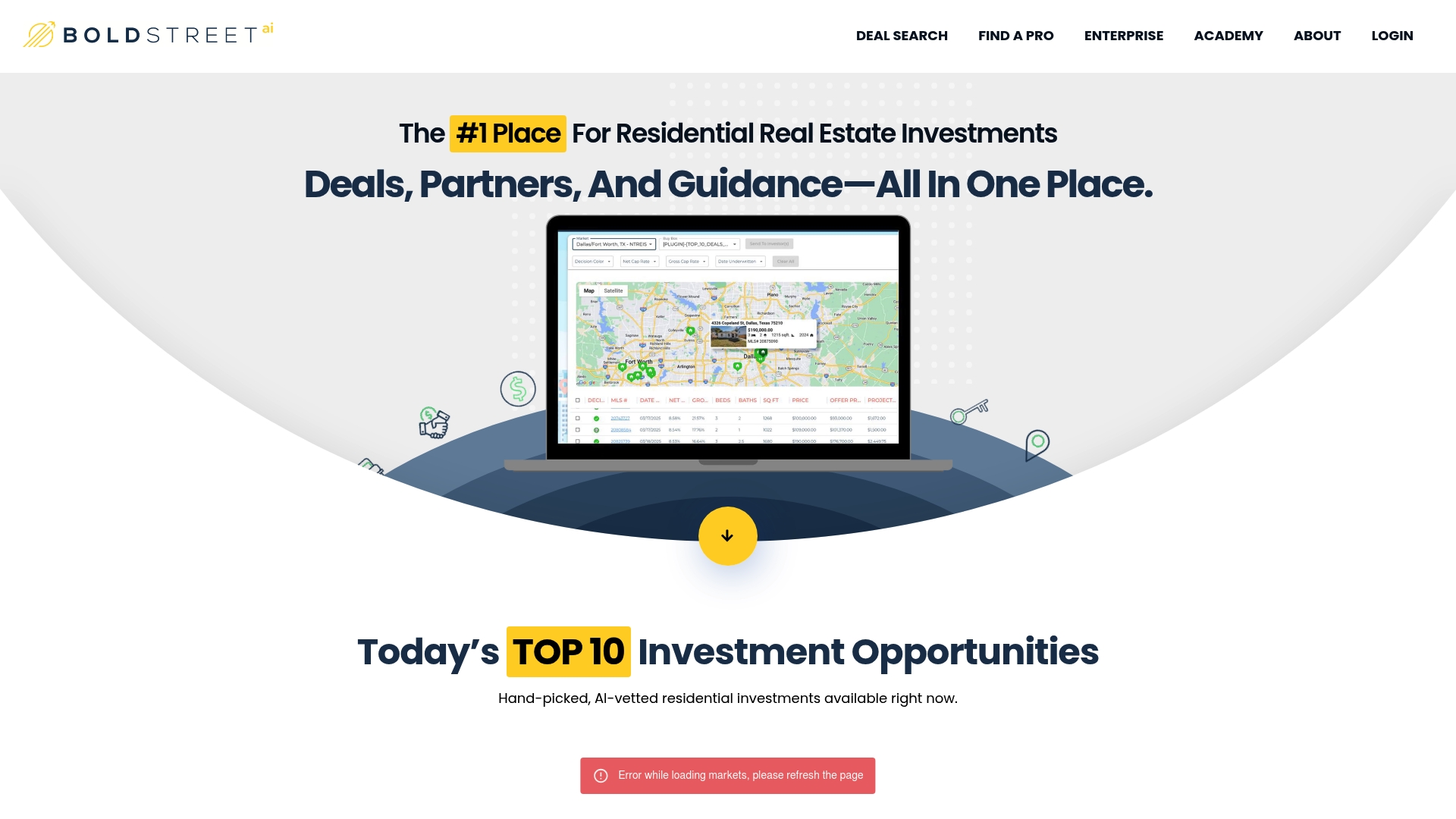
Take control of your investment success today by leveraging our platform to find investor-friendly agents, access curated investment opportunities, and tap into a supportive community. With Bold Street AI, you gain transparency, education through Bold Academy, and essential tools to confidently build and expand your residential real estate portfolio. Don’t let hidden pitfalls or costly mistakes slow you down. Visit Bold Street AI now to discover how the right partnerships and expert insights can accelerate your path to real estate wealth.
Frequently Asked Questions
What is the primary role of a real estate agent in investment?
A real estate agent facilitates the buying, selling, or leasing of properties on behalf of clients, providing expertise in deal sourcing, market analysis, negotiation, and ongoing advisory roles that are crucial for investors.
How do investor-focused agents differ from traditional residential agents?
Investor-focused agents specialize in understanding investment metrics, such as cash flow projections and cap rates, whereas traditional agents primarily cater to homebuyers without a deeper grasp of investment analysis.
What legal obligations do real estate agents have to their clients?
Real estate agents owe fiduciary duties to their clients, meaning they must act in the best interest of their clients by maintaining loyalty, confidentiality, and full disclosure of material facts.
What should I look for when choosing a real estate agent for my investments?
When selecting an agent, prioritize their track record in sourcing investment deals, depth of market knowledge, fluency in investment metrics, and a network of professionals that can support your investing strategy.
Recommended
- Role of Agents in Real Estate Investing Success | Bold Street AI
- Why Use Real Estate Agents for US Investors | Bold Street AI
- Navigating the Terrain: Common Challenges for Real Estate Agents Working with Residential Real Estate Investors – Bold Street AI
- Navigating New Realities: Real Estate Agents’ Guide to Thriving with Investor Clients – Bold Street AI
- Why Investing in Real Estate Is a Winning Strategy – Living on the Côte d’Azur