
Most American first-time investors believe building a strong real estate portfolio is only for the wealthy, but studies show that over 60 percent of successful urban portfolios started with just one property and limited capital. For American buyers looking to diversify their investments, real estate offers both immediate income and long-term growth. This guide breaks down common myths, explains key strategies, and provides actionable steps for building a thriving property portfolio in dynamic United States markets.
Table of Contents
- Defining A Real Estate Portfolio And Common Myths
- Types Of Properties And Investment Strategies
- Cash Flow, Appreciation, And Tax Benefits Explained
- Diversification And Risk Management For Urban Investors
- Costs, Pitfalls, And Legal Responsibilities In Property Investing
Key Takeaways
| Point | Details |
|---|---|
| Real Estate Portfolio Definition | A real estate portfolio is a strategic collection of diverse properties aimed at generating wealth and passive income. |
| Common Misconceptions | Myths surrounding property investments may deter urban investors; starting small and leveraging financing options is realistic. |
| Investment Returns Overview | Focus on cash flow, property appreciation, and tax benefits to create a successful investment strategy. |
| Diversification Strategies | Employ geographic and property type diversification to manage risk and optimize returns in an urban investment context. |
Defining a Real Estate Portfolio and Common Myths
A real estate portfolio represents a strategic collection of property investments designed to generate wealth, provide passive income, and build long-term financial stability. Real estate data models demonstrate that successful portfolios aren’t just random property acquisitions, but carefully curated investment strategies tailored to specific financial goals.
At its core, a real estate portfolio encompasses multiple residential properties acquired across different locations, types, and market segments. Investors typically include diverse assets like single-family homes, small multi-family properties (2-4 units), and potentially vacant land with development potential. The primary objective is creating a balanced investment approach that mitigates risk through geographic and property type diversification.
Common myths often discourage potential urban investors from building real estate portfolios. Many believe you need massive capital to start, that residential real estate investing is overly complicated, or that property management requires constant hands-on work. These misconceptions prevent many individuals from exploring a proven wealth-building strategy. In reality, strategic investors can start small, leverage financing options, and gradually expand their portfolio while learning the market dynamics.
Here’s how major real estate portfolio myths differ from reality for new urban investors:
| Myth | Why It’s Wrong | Reality |
|---|---|---|
| Large capital required | Financing options allow smaller investments | Start with one property, scale gradually |
| Overly complex process | Education and expert guidance available | Tools and professionals simplify tasks |
| Property management is hands-on | Professional management services exist | Passive income possible with outsourcing |
Pro tip: Start by researching local markets, understanding neighborhood appreciation trends, and connecting with investor-friendly real estate professionals who can provide targeted guidance for your first investment property.
Types of Properties and Investment Strategies
Residential real estate investing offers urban investors multiple property types and strategic approaches to building wealth. Real estate investment strategies range from direct ownership of single properties to more complex portfolio development, each with unique advantages and considerations for urban market participants.
The primary residential property types for urban investors include:
- Single-Family Homes: Standalone properties offering straightforward management and consistent rental demand
- Small Multi-Family Properties (2-4 Units): Residential buildings allowing investors to generate multiple income streams from a single property
- Townhouses: Connected homes providing a balance between single-family affordability and lower maintenance requirements
- Condominiums: Individually owned units within larger buildings, often attractive in dense urban markets
Investment strategies vary based on individual financial goals and risk tolerance. Some investors focus on cash flow through consistent rental income, while others prioritize long-term appreciation by selecting properties in emerging neighborhoods with strong growth potential. Strategic urban investors typically blend these approaches, creating diversified portfolios that balance immediate returns with future value expansion.
Pro tip: Research local market trends, analyze neighborhood development plans, and create a comprehensive investment strategy that aligns with your financial objectives and risk tolerance.
Cash Flow, Appreciation, and Tax Benefits Explained
Understanding the three primary mechanisms of real estate investment returns is crucial for urban property investors. Real estate investment returns encompass cash flow, appreciation, and strategic tax advantages that collectively create a powerful wealth-building strategy.

Cash Flow represents the monthly income generated after subtracting all operating expenses from rental revenues. For urban investors, this typically means the difference between monthly rent collected and costs like mortgage payments, property management, maintenance, and taxes. Positive cash flow properties provide immediate income while the underlying asset continues to appreciate, creating a dual-benefit investment approach.
Property appreciation occurs through two primary mechanisms: natural market value increases and strategic improvements. Urban markets often experience faster appreciation due to infrastructure development, neighborhood revitalization, and population growth. Investors can accelerate appreciation by making targeted renovations that increase property value, such as updating kitchens, improving energy efficiency, or enhancing curb appeal. Strategic investors look for emerging neighborhoods with strong growth potential to maximize long-term capital gains.
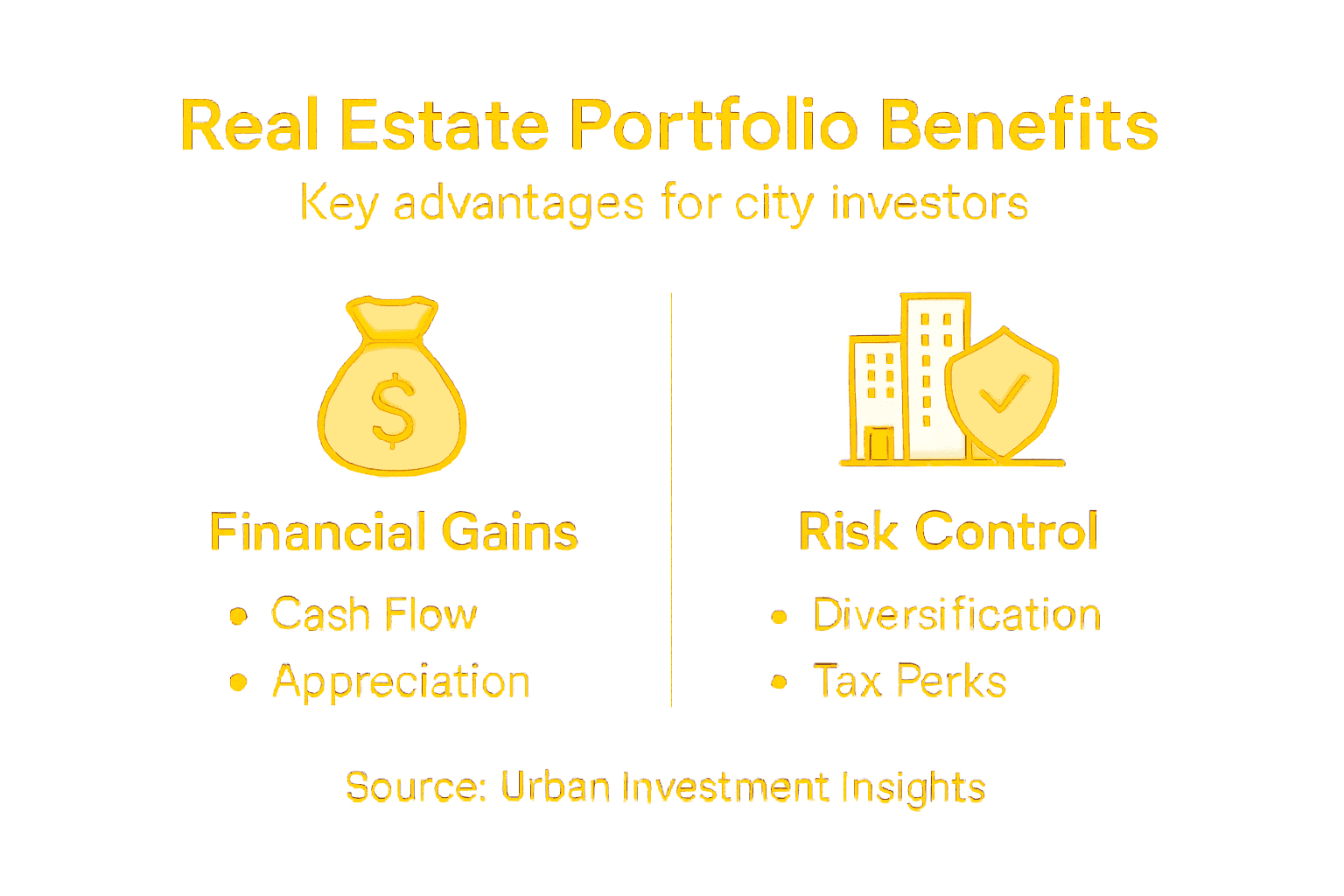
Tax benefits represent another significant advantage of real estate investing. Investors can leverage deductions for mortgage interest, property taxes, operating expenses, depreciation, and maintenance costs. These deductions can substantially reduce taxable income, effectively increasing the overall return on investment. Some investors also benefit from strategies like 1031 exchanges, which allow deferring capital gains taxes by reinvesting proceeds from property sales into similar investment properties.
This table highlights how different investment returns benefit urban real estate portfolios:
| Investment Return Type | Key Mechanism | Portfolio Impact |
|---|---|---|
| Cash Flow | Monthly rental income | Provides steady income stream |
| Appreciation | Market growth, improvements | Increases long-term property value |
| Tax Benefits | Deductions, depreciation | Reduces taxable income, boosts ROI |
Pro tip: Consult a tax professional specializing in real estate to develop a comprehensive tax strategy that maximizes your deductions and optimizes your investment returns.
Diversification and Risk Management for Urban Investors
Successful urban real estate investing requires strategic diversification to mitigate potential risks and optimize investment returns. Real estate portfolio diversification involves spreading investments across multiple property types, geographic locations, and market segments to reduce overall investment vulnerability.
Diversification strategies for urban investors include:
- Geographic Diversification: Investing in properties across different neighborhoods or cities
- Property Type Variation: Mixing single-family homes, multi-unit properties, and townhouses
- Investment Strategy Mix: Combining properties with different cash flow and appreciation potential
- Tenant Demographic Targeting: Selecting properties that attract diverse tenant populations
Risk management extends beyond portfolio composition. Urban investors must conduct thorough due diligence, including comprehensive property inspections, market research, and financial analysis. Understanding local zoning regulations, potential economic shifts, and neighborhood development trends can help investors anticipate and mitigate potential challenges. Maintaining financial reserves for unexpected expenses and potential vacancy periods is also crucial for maintaining portfolio stability.
Pro tip: Develop a risk management plan that includes a minimum 3-6 month emergency fund for each property and regularly review your portfolio’s performance and market conditions.
Costs, Pitfalls, and Legal Responsibilities in Property Investing
Urban real estate investing requires careful navigation of complex financial and legal landscapes. Real property legal responsibilities encompass a broad range of obligations that can significantly impact an investor’s success and potential liability.
Key financial costs urban investors must anticipate include:
- Acquisition Expenses: Down payment, closing costs, inspection fees
- Ongoing Operational Costs: Property taxes, insurance, maintenance, utilities
- Management Expenses: Property management fees, repairs, tenant screening
- Potential Renovation Investments: Updates to improve property value and rental potential
Legal responsibilities extend far beyond simple property ownership. Investors must comply with fair housing regulations, understand landlord-tenant laws, maintain proper property insurance, and ensure all rental agreements meet local and state legal requirements. Potential pitfalls include zoning violations, improper tenant screening, inadequate property maintenance, and failure to address safety and habitability standards. Neglecting these responsibilities can result in significant financial penalties, legal disputes, and potential loss of investment.
Pro tip: Consult with a real estate attorney specialized in urban property investments to develop a comprehensive understanding of your legal obligations and create robust risk mitigation strategies.
Start Building Your Urban Real Estate Portfolio with Confidence
Many urban investors face challenges like understanding tax benefits, managing risks, and finding the right properties to diversify their real estate portfolios. This article highlights key concepts such as cash flow, appreciation, and strategic diversification to help you overcome these obstacles. Bold Street AI is designed to eliminate those common hurdles by offering tailored resources that connect you with investor-friendly agents, lenders, and property managers who simplify every step of your investment journey.
Take control of your real estate future today. Explore curated investment opportunities, access expert guidance through the Bold Academy, and join a community that empowers you with the knowledge to grow your portfolio smartly. Don’t wait to leverage the benefits of strategic urban real estate investing. Visit Bold Street AI now and start turning your investment goals into reality.
Frequently Asked Questions
What is a real estate portfolio?
A real estate portfolio is a strategic collection of property investments aimed at generating wealth, passive income, and long-term financial stability. It typically includes multiple properties across various locations and types.
Why is diversification important in real estate investing?
Diversification minimizes risk by spreading investments across different property types, geographic locations, and tenant demographics. This strategy helps stabilize returns and reduce overall vulnerability in an investment portfolio.
How do cash flow and appreciation differ in real estate investing?
Cash flow refers to the monthly income generated from rental properties after expenses, while appreciation involves the increase in property value over time due to market trends and improvements. Both are crucial for maximizing investment returns.
What are the common costs associated with urban real estate investing?
Urban real estate investors should anticipate various costs, including acquisition expenses (down payment, closing costs), ongoing operational costs (property taxes, insurance), management expenses (property management fees), and potential renovation investments to enhance property value.
Recommended
- 2024 is the Perfect Time to Become a Real Estate Investor – Bold Street AI
- Navigating the Terrain: Common Challenges for Real Estate Agents Working with Residential Real Estate Investors – Bold Street AI
- Top 5 Cities for Residential Investing in 2025 – Bold Street AI
- Top 10 Deals in Kansas City, MO – Bold Street AI