
Finding reliable connections in the American real estate market can be a challenge for new investors eager to grow. Building strong investor networks brings more than just shared opportunities. It offers mentorship, expands access to crucial market intelligence, and supports risk management through collective knowledge. This guide explains the core functions of an investor network, highlighting how strategic relationship building can open doors to lasting success in residential property investment.
Table of Contents
- Defining An Investor Network In Real Estate
- Types Of Connections And Their Importance
- How Networks Drive Opportunity And Growth
- Key Elements Of A Strong Investor Network
- Common Pitfalls And Mistakes To Avoid
Key Takeaways
| Point | Details |
|---|---|
| Importance of Investor Networks | Investor networks enhance individual investment potential through collaboration and shared expertise. |
| Types of Connections Matter | Different connection types serve unique strategic purposes, impacting overall investment success. |
| Quality Over Quantity | Prioritize building meaningful, high-quality relationships rather than accumulating superficial contacts. |
| Proactive Network Management | Regularly assess and nurture network relationships to maintain effectiveness and trust among members. |
Defining an Investor Network in Real Estate
An investor network in real estate represents a strategic collaboration of individuals and institutions who pool their resources, knowledge, and opportunities to achieve collective investment success. Unlike traditional investment approaches, these networks create symbiotic relationships that amplify individual potential through shared expertise and collective intelligence.
In real estate, an investor network typically includes diverse professionals such as:
- Individual property investors
- Real estate agents and brokers
- Private equity specialists
- Property managers
- Mortgage lenders
- Legal and financial advisors
The fundamental purpose of these networks goes beyond mere transactional interactions. Institutional investors leverage collaborative strategies to enhance long-term portfolio performance and mitigate individual investment risks. By connecting with other professionals, real estate investors gain access to:
- Expanded deal sourcing opportunities
- Shared market intelligence
- Risk distribution mechanisms
- Collective negotiation power
- Diverse investment perspectives
Building a robust investor network requires deliberate strategy and consistent engagement. Successful networks are not random collections of contacts but carefully curated ecosystems of complementary skills and shared goals. Investors must approach networking as a professional development tool, focusing on mutual value creation rather than transactional exchanges.
Pro tip: Start building your investor network by attending local real estate investment meetups, participating in online forums, and proactively offering value to potential connections before seeking personal benefits.
Types of Connections and Their Importance
Real estate investor networks feature multiple critical connection types that serve distinct strategic purposes. Relationship dynamics within these networks are complex and multifaceted, requiring nuanced understanding and deliberate cultivation of professional interactions.
The primary connection types in real estate investor networks include:
- Vertical Connections: Interactions between different levels of investment hierarchy
- Horizontal Connections: Peer-level relationships among similar investor types
- Strategic Partnerships: Formal collaborative arrangements with specific investment goals
- Mentorship Connections: Knowledge transfer between experienced and emerging investors
- Transactional Connections: Deal-specific professional interactions
Investor relations involve intricate relationship management that goes beyond simple networking. These connections act as critical bridges between fundraisers, investment managers, and potential investors. Each connection type serves a unique function in creating a robust and dynamic investment ecosystem.

The following table compares key types of connections in real estate investor networks by their unique functions and impact on investment outcomes:
| Connection Type | Strategic Function | Impact on Success |
|---|---|---|
| Vertical Connections | Link investors of different levels | Enhances expertise sharing |
| Strategic Partnerships | Formalize targeted collaboration | Strengthens negotiation power |
| Mentorship Connections | Facilitate skill and knowledge transfer | Accelerates professional growth |
| Transactional Connections | Enable deal-specific exchanges | Expands investment opportunities |
Successful investor networks recognize that connection quality matters more than quantity. Strategic relationship building requires understanding each connection’s potential value, maintaining transparency, and consistently demonstrating mutual benefit. Market cycles and investment dynamics demand adaptive relationship strategies that can evolve with changing economic landscapes.
Effective investor connections are characterized by:
- Trust and credibility
- Mutual value proposition
- Clear communication channels
- Aligned investment objectives
- Willingness to share market insights
Trust is the foundational currency in real estate investor networks, more valuable than any single transaction.
Pro tip: Prioritize building deep, meaningful connections with fewer high-quality professionals rather than accumulating numerous superficial contacts.
How Networks Drive Opportunity and Growth
Investor networks are powerful catalysts that transform individual real estate investment potential into collective economic opportunity. Network momentum creates extraordinary pathways for growth by connecting diverse professionals, sharing critical market intelligence, and expanding strategic possibilities beyond traditional investment boundaries.
Economic impacts of real estate networks demonstrate remarkable potential for driving investment success. These networks generate value through multiple interconnected mechanisms:
- Information sharing and rapid market intelligence
- Risk mitigation through collective knowledge
- Access to exclusive investment opportunities
- Collaborative deal sourcing
- Accelerated learning and skill development
- Enhanced negotiation capabilities
The transformative power of investor networks extends far beyond simple professional connections. Relationship ecosystems create multiplicative effects where individual investor capabilities are exponentially amplified through strategic interactions. Successful networks function like sophisticated information and opportunity exchange platforms, enabling members to navigate complex market dynamics with greater confidence and precision.
These networks generate tangible economic benefits by:
- Reducing individual investment risks
- Providing immediate access to market insights
- Creating collaborative investment strategies
- Facilitating faster decision-making processes
- Enabling knowledge transfer between experienced and emerging investors
Real estate investment networks transform individual potential into collective economic power.
Pro tip: Approach network building as a strategic investment in your professional capital, focusing on quality connections that offer mutual growth opportunities.
Key Elements of a Strong Investor Network
Building a powerful real estate investor network requires strategic design and intentional cultivation of key relationship components. Network architecture goes beyond simple connections, demanding sophisticated approaches that create meaningful and productive professional ecosystems.
Investor relations strategies emphasize transparent communication and understanding diverse investor profiles. The most effective networks incorporate multiple critical elements:
- Consistent and transparent communication
- Diverse professional representation
- Mutual value proposition
- Trust and credibility
- Structured knowledge sharing mechanisms
- Clear engagement protocols
- Collaborative problem-solving frameworks
Successful investor networks are not random collections of contacts but carefully curated professional communities. Strategic networking requires deliberate selection of members who bring complementary skills, perspectives, and resources. Each participant should contribute unique value while simultaneously benefiting from collective intelligence and shared opportunities.
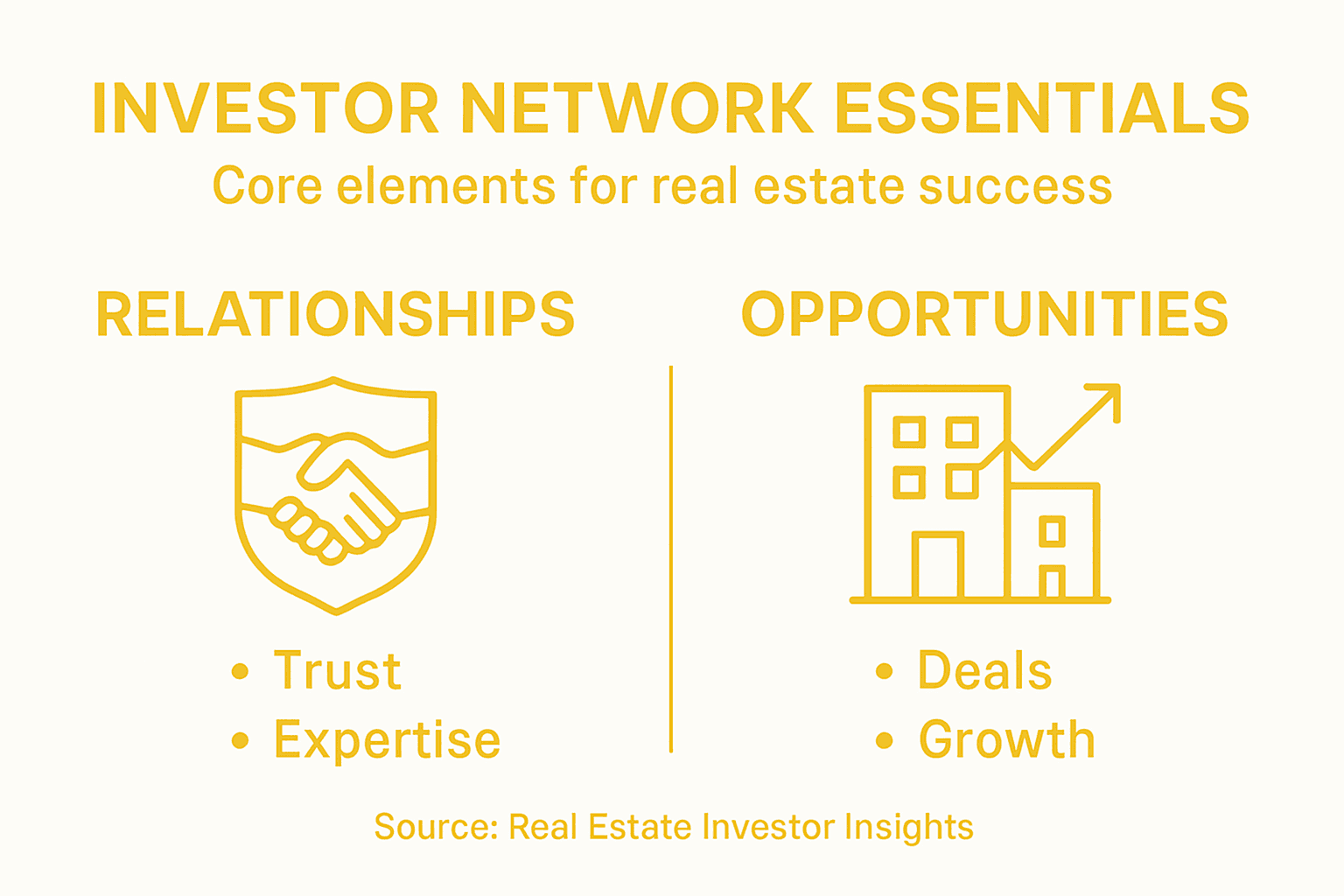
Key performance indicators for a strong investor network include:
Here’s a table summarizing core metrics to assess the health of an investor network:
| Network Metric | What It Reveals | Improvement Opportunity |
|---|---|---|
| Knowledge Exchange Rate | Speed of shared insights | Promote regular information flow |
| Member Retention | Stability of relationships | Enhance member satisfaction |
| Collaboration Frequency | Frequency of joint projects | Initiate more group investments |
| Adaptability | Resilience in changing markets | Encourage flexible engagement |
- Rate of knowledge exchange
- Number of collaborative deals initiated
- Speed of information transmission
- Quality of member interactions
- Depth of professional relationships
- Adaptability to market changes
- Member satisfaction and retention
Trust and mutual respect form the foundational currency of exceptional investor networks.
Pro tip: Invest time in understanding each network member’s strengths, goals, and potential contributions before actively seeking connections.
Common Pitfalls and Mistakes to Avoid
Building a successful real estate investor network requires understanding potential landmines that can derail collaborative efforts. Network vulnerability emerges from common strategic mistakes that can compromise the entire investment ecosystem’s effectiveness and long-term sustainability.
Investor relations challenges include communication failures and misaligned expectations. The most critical pitfalls to avoid include:
- Superficial networking without genuine relationship building
- Neglecting due diligence on potential network members
- Failing to establish clear communication protocols
- Overemphasizing quantity of connections over quality
- Inconsistent or non-transparent information sharing
- Unrealistic return expectations
- Rigidity in network engagement strategies
Successful investor networks demand continuous adaptation and strategic refinement. Network maintenance requires proactive management, recognizing that relationships are dynamic and require consistent nurturing. Investors must remain vigilant about potential disconnects that can undermine network effectiveness.
Key warning signs of a deteriorating investor network include:
- Declining communication frequency
- Reduced collaboration opportunities
- Misaligned investment objectives
- Increasing conflicts of interest
- Lack of mutual value generation
- Diminishing trust among network members
- Resistance to shared learning
Sustainable investor networks are built on trust, transparency, and mutual respect.
Pro tip: Regularly audit your network’s health by conducting candid assessments of relationship quality and addressing potential friction points proactively.
Build a Real Estate Investor Network That Works for You
The article highlights the challenge of creating a trustworthy, high-quality investor network where connections go beyond superficial contacts to deliver real value, transparency, and mutual growth. If you are looking to avoid common pitfalls like fragmented communication and shallow relationships the solution lies in partnering with a platform designed to simplify and strengthen your real estate connections.
Bold Street AI offers exactly that by serving as a comprehensive hub where you can discover curated investment opportunities, connect directly with trusted agents, lenders, and property managers, and access educational resources to grow your confidence. This approach supports building strategic partnerships, mentorship connections, and a network founded on trust and transparency — precisely the key elements emphasized in the article.
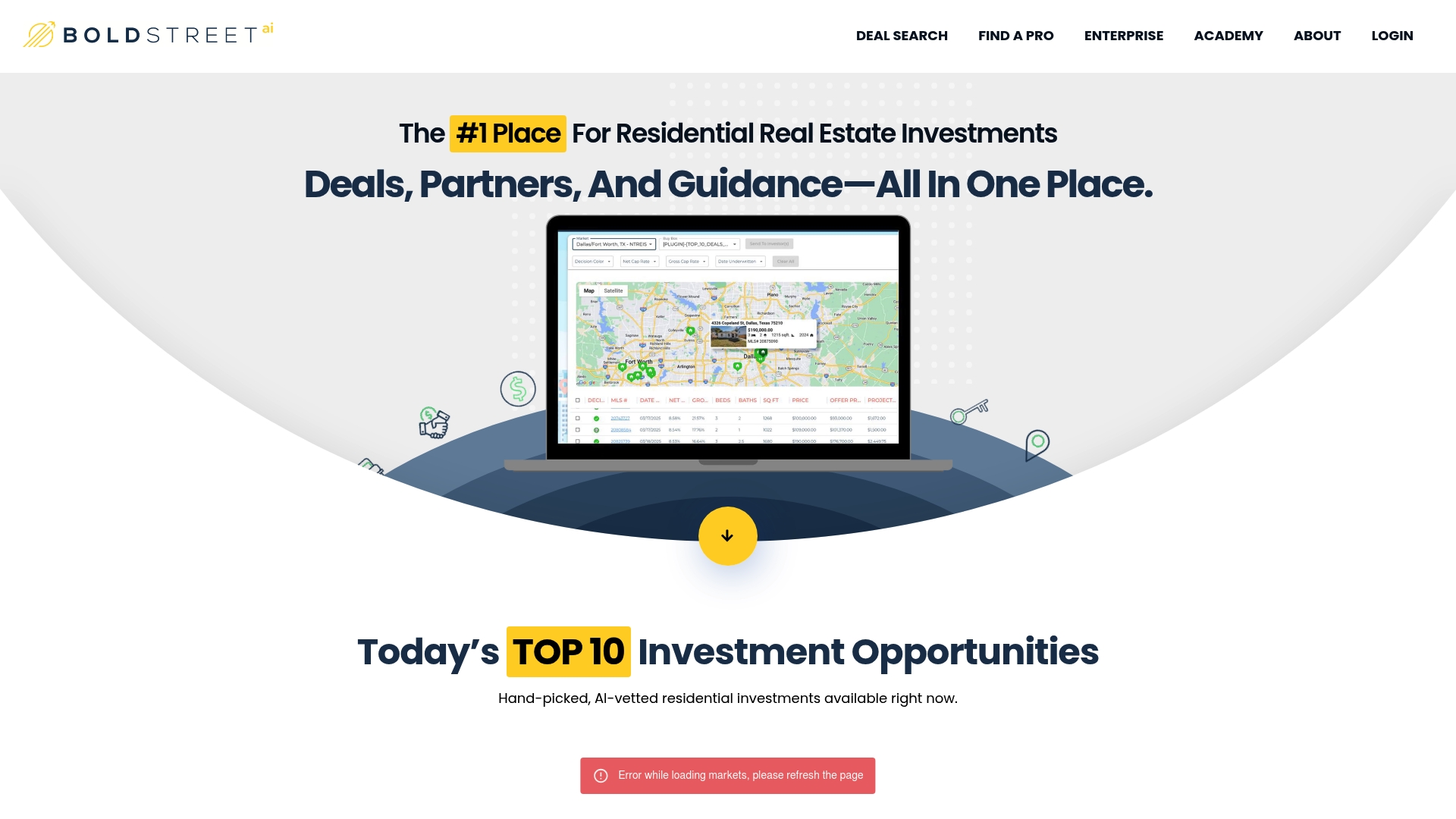
Don’t let fleeting contacts hold back your growth. Take control today by exploring our platform at Bold Street AI to match with investor-friendly professionals and tap into community insights. Start building a resilient network designed for long-term success and unlock new real estate opportunities now. Visit our landing page and begin your journey toward an empowered investor network.
Frequently Asked Questions
What is an investor network in real estate?
An investor network in real estate is a collaborative group of individuals and institutions who share resources, knowledge, and opportunities to enhance collective investment success. It includes various professionals such as property investors, real estate agents, and financial advisors.
Why is building an investor network important for real estate success?
Building an investor network is crucial for gaining access to expanded deal sourcing opportunities, shared market intelligence, and collective negotiation power. It also helps to mitigate individual investment risks through collaborative strategies.
What are the types of connections within a real estate investor network?
Types of connections in real estate investor networks include vertical connections (between different investment levels), horizontal connections (peer-level relationships), strategic partnerships, mentorship connections, and transactional connections. Each serves a unique purpose in enhancing investment success.
How can I effectively build and maintain my investor network?
Effective network building involves attending real estate events, engaging on online platforms, and prioritizing meaningful relationships based on mutual value. Consistent communication, trust, and a focus on shared goals are essential for maintaining a strong investor network.
Recommended
- How to Build Investor Network for Real Estate Success | Bold Street AI
- How to Connect With Investors for Real Estate Success | Bold Street AI
- How to Build Investor Partnerships for Real Estate Success | Bold Street AI
- Navigating the Terrain: Common Challenges for Real Estate Agents Working with Residential Real Estate Investors – Bold Street AI
- Eredicasa – Agenzia Immobiliare | Vuoi Vendere Casa? | Verona e Provincia
- 3 Important Reasons To Have a Podcast in 2019 (For Business Owners)