
Buying your first investment property can feel overwhelming when every decision could impact your financial future. For many new American investors, choosing the right real estate agent is often the turning point between confusion and confidence. Licensed professionals do more than open doors; they guide you, negotiate on your behalf, and provide critical insights that help you make smart choices every step of the way. This look at an agent’s true role will help you understand why the right guide matters.
Table of Contents
- Defining The Agent’s Role In Real Estate Investing
- Types Of Agents Serving Residential Investors
- Key Functions Agents Perform For Investors
- Licensing, Legal Duties, And Ethical Standards
- Benefits, Costs, And Common Pitfalls To Avoid
Key Takeaways
| Point | Details |
|---|---|
| Agent Expertise is Crucial | Real estate agents provide essential market insights and strategies that can help avoid costly mistakes and maximize returns in investments. |
| Selecting the Right Agent Type Matters | Different types of agents cater to various investment needs, making it important to choose one aligned with your specific investment strategy. |
| Understanding Legal and Ethical Standards | Agents must adhere to strict legal and ethical guidelines, ensuring they act in clients’ best interests throughout the transaction process. |
| Assess Costs and Benefits Carefully | While agents charge commission fees, their specialized knowledge can save time and improve investment quality, making fees worthwhile in many cases. |
Defining the Agent’s Role in Real Estate Investing
In residential real estate investing, agents play a pivotal role that extends far beyond simple property transactions. These licensed professionals serve as critical navigators who help investors identify, evaluate, and secure profitable investment opportunities. Real estate agents represent clients by negotiating sales, managing complex documentation, and providing market expertise that can significantly impact investment success.
The core responsibilities of a real estate agent in investment contexts include several key functions:
- Market Analysis: Providing comprehensive insights into local property values, rental potential, and neighborhood trends
- Property Identification: Locating potential investment properties that match specific investor criteria
- Negotiation Support: Leveraging professional skills to secure favorable purchase terms and pricing
- Transaction Management: Coordinating legal documentation, inspections, and closing processes
- Investment Advisory: Offering strategic guidance based on current market conditions and investment goals
Professional agents are particularly valuable because they bring specialized knowledge that individual investors might lack. Licensed professionals help clients navigate complex transactions by understanding intricate market dynamics, legal requirements, and investment strategies. Their expertise can help mitigate risks and identify opportunities that might otherwise go unnoticed.
Pro tip: When selecting a real estate agent for investment properties, prioritize professionals with demonstrated experience in investment transactions rather than just traditional home sales.
Types of Agents Serving Residential Investors
Residential real estate investing requires working with specialized agents who understand the unique dynamics of property investment. Real estate brokers and sales agents play diverse roles that cater to different investor needs and strategies. These professionals are not a one-size-fits-all solution, but rather specialists with distinct capabilities designed to support specific investment objectives.
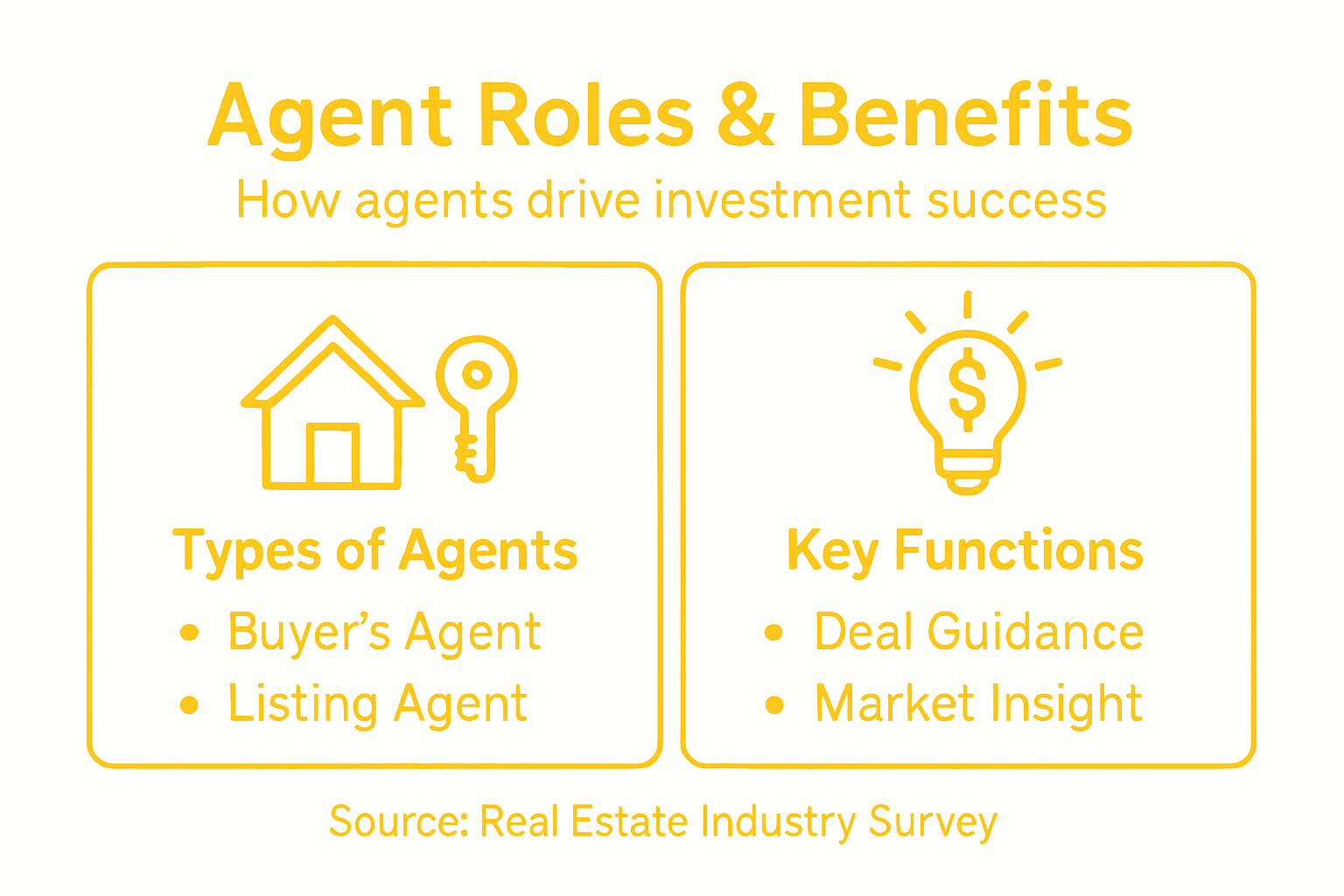
The primary types of agents serving residential investors include:
- Buyer’s Agents: Dedicated to finding and negotiating investment properties for purchasers
- Listing Agents: Focused on helping investors sell properties at optimal market prices
- Investment Property Specialists: Experts with deep understanding of rental market dynamics
- Property Management Agents: Handle day-to-day operations of rental properties
- Dual Agency Agents: Represent both buyers and sellers in the same transaction
Each agent type brings unique skills and perspectives to residential real estate investing. Specialized investment agents understand critical factors like local market trends, potential rental yields, property appreciation rates, and neighborhood development prospects. Their expertise helps investors make informed decisions by providing comprehensive market insights that go beyond basic property transactions.
Successful residential investors recognize that choosing the right type of agent can significantly impact their investment strategy. Different agents offer specialized knowledge tailored to specific investment goals, whether you’re interested in fix-and-flip properties, long-term rentals, or multi-unit residential investments.
Here’s a comparison of key agent types serving residential investors:
| Agent Type | Typical Clients | Primary Strength | Most Valuable For |
|---|---|---|---|
| Buyer’s Agent | Property purchasers | Property sourcing expertise | Finding undervalued assets |
| Listing Agent | Property sellers | Pricing and marketing savvy | Maximizing sale prices |
| Investment Property Specialist | Real estate investors | Deep rental market insight | Portfolio strategy consulting |
| Property Management Agent | Landlords | Operational management skills | Enhancing rental efficiency |
| Dual Agency Agent | Buyers and sellers | Transaction facilitation | Streamlined negotiation |
Pro tip: Interview multiple agents and request their specific experience with residential investment properties to ensure alignment with your investment strategy.
Key Functions Agents Perform for Investors
Residential real estate investors rely on agents to perform critical functions that transform complex property transactions into strategic investment opportunities. Agents provide essential services that go far beyond simple property searches, acting as comprehensive investment partners who mitigate risks and maximize potential returns.
The key functions agents perform for investors include:
- Market Research: Conducting in-depth analysis of local property trends and investment potential
- Property Sourcing: Identifying and screening potential investment properties that match specific criteria
- Financial Analysis: Evaluating potential return on investment, rental yields, and property appreciation prospects
- Negotiation: Securing optimal purchase prices and favorable transaction terms
- Due Diligence: Coordinating property inspections, appraisals, and comprehensive investment assessments
- Transaction Management: Handling complex documentation and ensuring legal compliance
Investment transaction guidance extends beyond mere property acquisition. Successful agents help investors navigate financing options, understand market dynamics, and develop strategic approaches to building their real estate portfolios. They serve as critical advisors who translate market data into actionable investment insights.
The most effective agents understand that their role transcends traditional real estate transactions. They become strategic partners who help investors identify unique opportunities, avoid potential pitfalls, and make data-driven decisions that align with long-term investment goals.

Pro tip: Request a comprehensive investment portfolio review from potential agents to assess their depth of market knowledge and strategic capabilities.
Licensing, Legal Duties, and Ethical Standards
Real estate agents operate within a complex framework of legal and ethical requirements that protect both investors and clients. Licensed professionals are regulated by state real estate commissions, ensuring accountability and maintaining high standards of professional conduct in real estate transactions.
Key legal and ethical responsibilities for real estate agents include:
- Fiduciary Duty: Prioritizing client interests above personal gain
- Full Disclosure: Transparently communicating all material facts about properties
- Confidentiality: Protecting sensitive client information
- Conflict of Interest Avoidance: Maintaining professional independence
- Legal Compliance: Adhering to state and federal real estate regulations
Professional ethical standards form the backbone of real estate investment interactions. These standards require agents to demonstrate unwavering integrity, competence, and fairness throughout every transaction. Investors can rely on these professional guidelines to ensure that their agents will act with the highest level of professionalism and respect for legal boundaries.
Each state maintains specific licensing requirements that agents must meet, including mandatory education, background checks, and ongoing professional development. These rigorous standards ensure that agents possess the knowledge and ethical foundation necessary to guide investors through complex real estate transactions effectively.
Pro tip: Always verify an agent’s current license status and professional credentials before engaging their services.
Benefits, Costs, and Common Pitfalls to Avoid
Investors must carefully evaluate the pros and cons of working with real estate agents to maximize their investment potential. Real estate investment analysis reveals both significant advantages and potential drawbacks that require thorough consideration.
Key benefits of working with real estate agents include:
- Expert Market Knowledge: Access to deep local market insights
- Negotiation Skills: Professional ability to secure better purchase terms
- Time Savings: Streamlined property search and transaction processes
- Network Access: Connections to additional investment resources
- Risk Mitigation: Professional guidance to avoid costly mistakes
Agent performance research highlights critical considerations for investors. Not all agents possess equal expertise, making it crucial to thoroughly vet potential representatives. The most significant pitfalls include hiring inexperienced agents, misaligning investment goals, and failing to conduct comprehensive due diligence.
The financial implications of agent involvement are complex. While agents charge commissions that impact overall returns, their expertise can potentially save investors substantially more through informed decision-making and strategic property selection. Investors should view agent fees as an investment in professional guidance rather than simply a cost.
The table below summarizes common benefits and potential drawbacks of working with real estate agents:
| Advantage | Business Impact | Possible Pitfall | Risk Consequence |
|---|---|---|---|
| Expert market knowledge | Better investment decisions | Hiring inexperienced agents | Missed opportunities |
| Negotiation skills | Improved purchase terms | Misaligned investment goals | Reduced returns |
| Time savings | Faster transaction completion | Poor due diligence | Costly investment mistakes |
| Network access | Wider resource pool | Lack of transparency | Loss of trust |
Pro tip: Request a detailed performance history and investment track record from potential agents before engaging their services.
Elevate Your Real Estate Investing with Expert Agent Connections
Navigating the complex role of real estate agents in investment success requires more than just understanding market trends and legal duties. If you’ve faced challenges locating the right agent who offers deep investment expertise, skilled negotiation, and strategic guidance, you are not alone. Many investors struggle to find professionals who align perfectly with their goals and can unlock true opportunity in residential real estate.
Bold Street AI is designed to bridge this gap by connecting you with investor-friendly agents who specialize in residential properties and understand the intricacies highlighted in the article such as fiduciary duty, market analysis, and negotiation support. Our platform also offers curated investment deals and access to financing solutions so you can confidently build your portfolio and avoid common pitfalls.

Discover how partnering with the right agent accelerates your investment growth. Visit Bold Street AI today to explore expert real estate connections, access the educational resources at Bold Academy, and join a thriving community that empowers every step of your investment journey. Take action now because in real estate investing, the right agent changes everything.
Frequently Asked Questions
What is the primary role of a real estate agent in investment transactions?
Real estate agents help investors by providing market analysis, identifying potential properties, negotiating terms, managing transactions, and offering strategic investment advice.
How can I choose the right type of real estate agent for my investment goals?
It’s essential to assess an agent’s experience with investment transactions. Look for a buyer’s agent if you’re purchasing, a listing agent if you’re selling, or an investment property specialist for rental properties.
What are the key functions that agents perform for residential real estate investors?
Agents conduct market research, source properties, evaluate financial returns, negotiate deals, manage due diligence, and handle transaction documentation, ensuring a smoother investment process.
What are some common pitfalls investors should avoid when working with agents?
Investors should avoid hiring inexperienced agents, not aligning investment goals with agent expertise, and neglecting to perform due diligence on the agent’s track record and performance history.
Recommended
- Navigating the Terrain: Common Challenges for Real Estate Agents Working with Residential Real Estate Investors – Bold Street AI
- Why Use Real Estate Agents for US Investors | Bold Street AI
- How to Connect With Investors for Real Estate Success | Bold Street AI
- How to Build Investor Partnerships for Real Estate Success | Bold Street AI
- The Importance of Expertise in Real Estate: How Industry Knowledge Shapes Better Housing Decisions – Luxury Apartments for Rent in Boca Raton | Premium Boca Raton Apartments | Aapartments Boca Raton